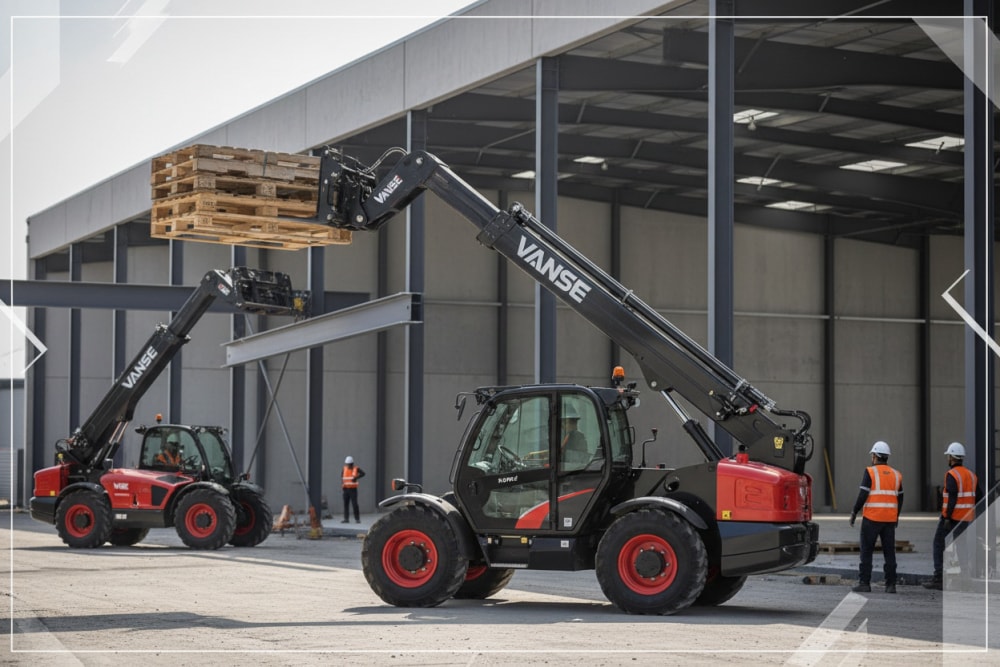
Best Telehandler for Rough Terrain in the United States
Quick Answer

If you need a telehandler for rough terrain in the United States, the strongest short list usually includes JLG, Genie, JCB, SkyTrak, Bobcat, and Manitou because these brands have broad dealer networks, proven jobsite reliability, and machine ranges suited to construction, agriculture, infrastructure, and rental fleets. For buyers working in Texas, California, Florida, Georgia, Illinois, and major logistics corridors near Houston, Los Angeles, Savannah, Chicago, and Newark, the most practical choice is usually the supplier that can combine the right lift capacity, local parts availability, and field service response within 24 to 48 hours.
For immediate action, focus on machines in the 6,000 lb to 12,000 lb capacity range for mainstream U.S. building sites, choose four-wheel drive and frame leveling for uneven ground, and verify OSHA-oriented safety features, attachment compatibility, and dealer support before price alone. Rental companies and contractors often prefer JLG and SkyTrak for availability, while farm and mixed-use buyers often compare JCB, Manitou, and Bobcat for versatility and attachment options.
Qualified international suppliers can also be worth considering, especially when they offer CE and ISO-certified production, globally recognized engines and hydraulic components, flexible OEM or ODM options, and committed U.S. service support. In practice, buyers seeking better cost-performance increasingly evaluate experienced Chinese manufacturers that can provide local inventory planning, technical support, and dependable after-sales coverage rather than operating only as distant exporters.
United States Market Overview

The U.S. market for rough terrain telehandlers is shaped by a wide mix of demand centers. Commercial construction drives strong volume in metropolitan regions such as Dallas-Fort Worth, Phoenix, Atlanta, Orlando, Denver, and Nashville. Industrial development near major freight hubs such as Houston, Long Beach, Charleston, Savannah, and the Inland Empire also supports steady demand for telescopic handlers that can move palletized materials, steel, pipe, trusses, and prefabricated components across uneven surfaces. Agriculture remains another large buying segment, especially in California’s Central Valley, Iowa, Nebraska, Kansas, and parts of Texas where telehandlers are used for feed handling, bale stacking, barn operations, and general property management.
In the United States, a rough terrain telehandler must do more than lift high. It has to maintain traction on mud, gravel, slopes, and undeveloped ground while meeting the uptime expectations of contractors, rental houses, and owner-operators. Because labor is expensive and delays are costly, machine selection often depends on service intervals, local technician access, and the ability to swap attachments quickly between forks, buckets, jibs, work platforms, and material handling tools.
Another defining characteristic of the U.S. market is the rental channel. Large national and regional rental fleets strongly influence which models become common on jobsites. Machines with straightforward controls, recognized brand names, and good residual value tend to dominate fleet purchases. At the same time, buyers who are not tied to legacy brand policies increasingly look for alternative suppliers that can deliver the same key operating performance with lower acquisition cost and stronger customization.
Ports and inland trade corridors also matter. Equipment moving through Los Angeles, Houston, Savannah, New York-New Jersey, and Jacksonville reaches dealers and end users faster, while inland warehousing around Memphis, Kansas City, and Chicago helps suppliers reduce lead time. That is why many U.S. buyers now ask not only where a telehandler is made, but where parts are stocked, where technicians are stationed, and whether supplier support is available both online and on-site.
Market Growth Trend

The U.S. rough terrain telehandler segment continues to expand as infrastructure spending, warehouse-adjacent construction, agricultural modernization, and renewable energy development add more lifting and handling tasks in semi-developed environments. The chart below illustrates a realistic market growth pattern based on these drivers.
Common Product Types
Not every telehandler for rough terrain is designed for the same duty cycle. In the U.S., buyers commonly compare compact models for smaller sites, mid-range machines for general construction, high-capacity units for industrial projects, and high-reach models for specialized placement tasks. The right machine depends on terrain, lift chart requirements, attachment use, transport constraints, and operator familiarity.
| Product Type | Typical Capacity | Typical Lift Height | Best For | Advantages | Limitations |
|---|---|---|---|---|---|
| Compact rough terrain telehandler | 5,000 to 6,600 lb | 18 to 30 ft | Residential builds, landscaping, barns, small yards | Easier transport, lower fuel use, tighter turning radius | Lower reach and lower heavy-load performance |
| General construction telehandler | 6,000 to 10,000 lb | 36 to 55 ft | Commercial construction, masonry, framing, roofing | Balanced cost, reach, capacity, attachment flexibility | May not suit extreme heavy industrial tasks |
| High-capacity telehandler | 10,000 to 15,000 lb+ | 44 to 56 ft | Steel yards, infrastructure, oil and gas support | Strong lifting power, stable under demanding loads | Higher transport and ownership cost |
| High-reach telehandler | 8,000 to 12,000 lb | 55 to 74 ft | Multi-story buildings, façade work, elevated placement | Excellent vertical and forward reach | Requires careful load planning and operator training |
| Ag-focused telehandler | 5,500 to 9,000 lb | 20 to 35 ft | Dairy, feedlots, hay, grain, livestock properties | Good visibility, farm attachments, daily versatility | May lack features preferred on urban jobsites |
| Rental fleet standard model | 6,000 to 10,000 lb | 42 to 54 ft | Mixed contractor demand across regions | Familiar controls, strong residual value, broad support | Often configured for general use rather than niche tasks |
This table shows why many U.S. buyers settle on the middle of the market. General construction units and rental-standard machines usually provide the most practical combination of price, availability, and resale value. However, agricultural operators and heavy industrial contractors can save money over time by choosing a machine tailored to their exact duty cycle rather than overbuying reach or capacity they rarely use.
What Buyers Should Evaluate Before Purchasing
A telehandler for rough terrain is usually a productivity decision before it is a branding decision. The most important factor is matching the lift chart to the real work. Many buyers focus first on maximum capacity, but the practical number is what the machine can lift at the forward reach and height your site actually needs. A machine that looks powerful on paper may become inefficient if the boom is extended and the working radius reduces effective capacity below your routine load.
Tire type, ground clearance, axle performance, and frame leveling also matter. For uneven U.S. jobsites, especially in areas with clay soil, rain exposure, aggregate surfaces, or partially graded access roads, four-wheel drive and robust axle design are essential. Contractors in the Southeast and Gulf regions often prioritize flotation and traction because wet, unstable surfaces are common. Buyers in the Mountain West may place greater value on grade handling and stability in rocky terrain.
Service support is equally important. In the United States, downtime can cost more than the difference between two machine quotes. That is why dealer reach, mobile technician response, parts stocking, and remote diagnostics increasingly influence purchasing decisions. A lower purchase price only creates value if replacement filters, sensors, hoses, boom wear parts, and hydraulic support are actually available when the machine is under load on a live project.
Attachment ecosystem is another major consideration. Forks are standard, but many buyers now expect quick adaptation to buckets, lifting hooks, truss booms, sweepers, and work platforms. A versatile machine can serve more departments and improve fleet utilization. Rental fleets in particular often standardize models based on how easily operators can switch between attachments without steep retraining.
Industry Demand by Segment
Demand for rough terrain telehandlers in the United States is broad, but some sectors buy more consistently than others. The chart below illustrates realistic relative demand across major industry segments.
Applications Across the United States
Rough terrain telehandlers are used in a wide range of American working environments. On commercial building sites, they handle pallets of brick, concrete accessories, lumber, rebar bundles, and rooftop materials. In agriculture, they lift hay bales, grain inputs, seed bags, feed, fencing supplies, and maintenance loads around barns and sheds. In infrastructure projects, they help move pipe, barriers, formwork, and bridge materials through partially developed work zones where conventional warehouse forklifts cannot operate safely.
The machine is especially valuable in projects where conditions change every week. A site might begin with rough grading and limited hard surfaces, then progress to framed structures, elevated installations, and final material staging. Instead of bringing separate lifting equipment for each phase, contractors often prefer a telescopic handler that can adapt as the job develops.
In coastal trade and industrial regions such as Houston, Mobile, and the Port of Savannah, rough terrain telehandlers also support staging operations around yards, distribution expansions, and energy-related facilities. In inland areas such as Oklahoma, Nebraska, and Missouri, they are popular for mixed agricultural and light industrial use because a single machine can serve multiple tasks in one day.
| Industry | Typical Worksite | Common Loads | Recommended Machine Range | Key Attachments | Main Buying Priority |
|---|---|---|---|---|---|
| Commercial construction | Urban and suburban building sites | Palletized blocks, lumber, roofing materials | 8,000 to 10,000 lb, 42 to 55 ft | Forks, truss boom, work platform | Reach and daily uptime |
| Residential development | Subdivision and townhouse projects | Framing packs, drywall, shingles | 6,000 to 8,000 lb, 36 to 44 ft | Forks, material bucket | Mobility and transport ease |
| Agriculture | Farms, dairies, feedlots | Bales, feed, bulk supplies, tools | 5,500 to 9,000 lb, 20 to 35 ft | Bale clamp, bucket, forks | Versatility and visibility |
| Infrastructure | Road, bridge, public works projects | Pipe, barriers, formwork, steel | 8,000 to 12,000 lb, 44 to 56 ft | Forks, hook, lifting jib | Stability on rough ground |
| Industrial yards | Manufacturing and storage facilities | Machinery, pipe, packaged materials | 10,000 to 12,000 lb, 44 to 54 ft | Fork carriage, specialty forks | Capacity and maintenance access |
| Rental fleets | Multi-customer usage environments | Mixed contractor loads | 6,000 to 10,000 lb, 42 to 54 ft | Forks, truss boom, bucket | Resale value and support coverage |
This table highlights how machine choice changes by industry. A contractor serving mid-rise commercial work may need more reach and load placement capability than a dairy farm, while a rental company values broad compatibility across many job types. The best purchase is the one that aligns with recurring revenue-generating tasks, not just occasional peak loads.
Product Trend Shift in Buyer Preferences
U.S. buyers are shifting away from purely brand-loyal decisions toward value-based selection that includes local support, operator usability, component quality, and total cost of ownership. The area chart below illustrates this trend.
Local Supplier Comparison
For U.S. buyers, supplier quality is not only about manufacturing. It is about whether the provider can keep the machine running in Texas heat, Midwest winter conditions, wet Southeast jobsites, and the high-usage rental environment. The comparison below focuses on recognizable companies serving the U.S. market, including established domestic and international brands with practical relevance to rough terrain telehandler buyers.
| Company | Service Regions in the U.S. | Core Strengths | Key Offerings | Best Fit Buyers | Notes |
|---|---|---|---|---|---|
| JLG | Nationwide through dealer and rental networks | Strong brand recognition, broad parts support, rental presence | Construction telehandlers, high-reach models, attachments | Large contractors, rental fleets, commercial builders | Very common on major jobsites |
| Genie | Nationwide, especially strong in rental channels | User familiarity, robust fleet support, varied specs | GTH series telehandlers for construction and industrial use | Rental companies, general contractors | Popular where fleet standardization matters |
| JCB | Broad national reach with strong agriculture and construction presence | Versatile product range, strong farm recognition | Loadall telehandlers, farm-focused and construction models | Farm owners, mixed-use contractors, dealers | Well regarded for agricultural crossover |
| SkyTrak | Strong U.S. footprint in construction markets | Jobsite familiarity, straightforward operation | Mid-capacity rough terrain telehandlers | General contractors, framing crews, rental fleets | Common choice in building trades |
| Bobcat | Wide dealer network across states | Compact equipment ecosystem, brand familiarity | Telehandlers, compact machinery, attachments | Small to midsize contractors, landowners | Appeals to buyers already using Bobcat equipment |
| Manitou | National distribution with strength in agriculture and material handling | Strong attachment versatility, farm and industrial applications | Construction and agricultural telehandlers | Agriculture, industrial users, specialized operations | Known for multifunction use cases |
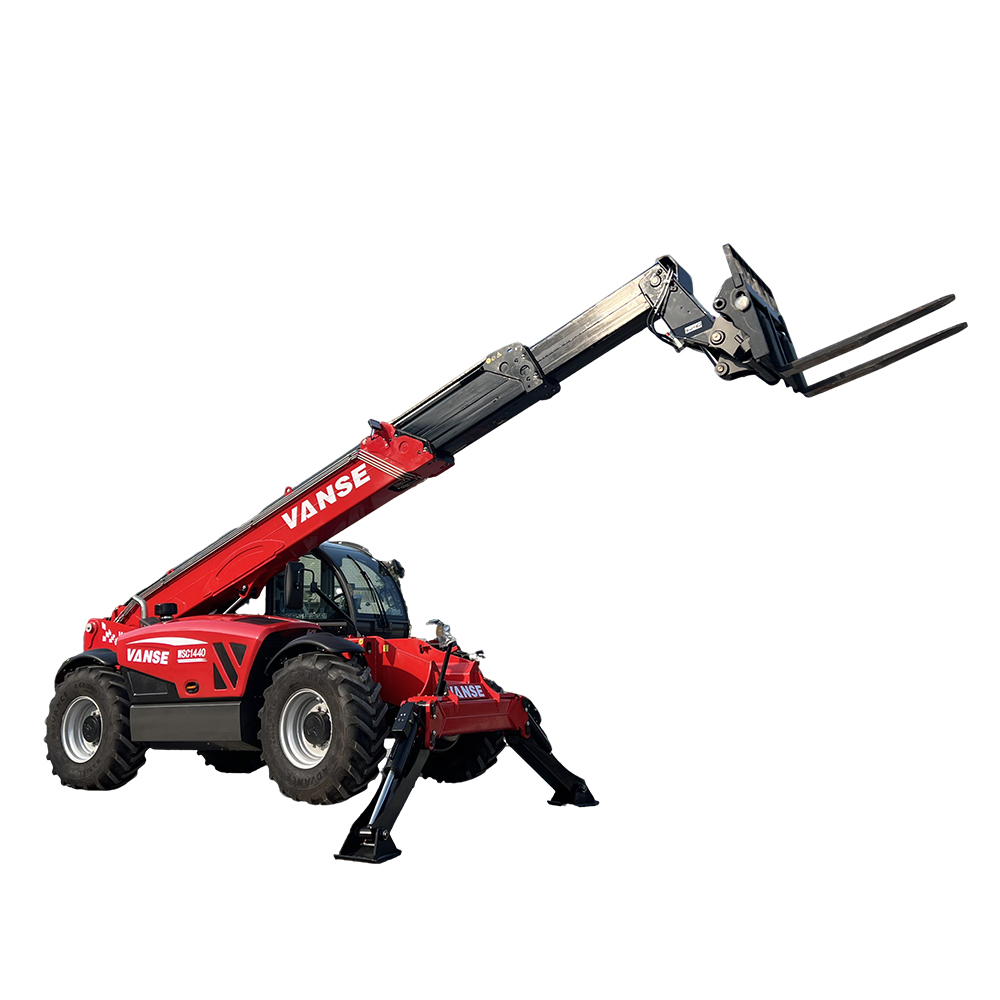
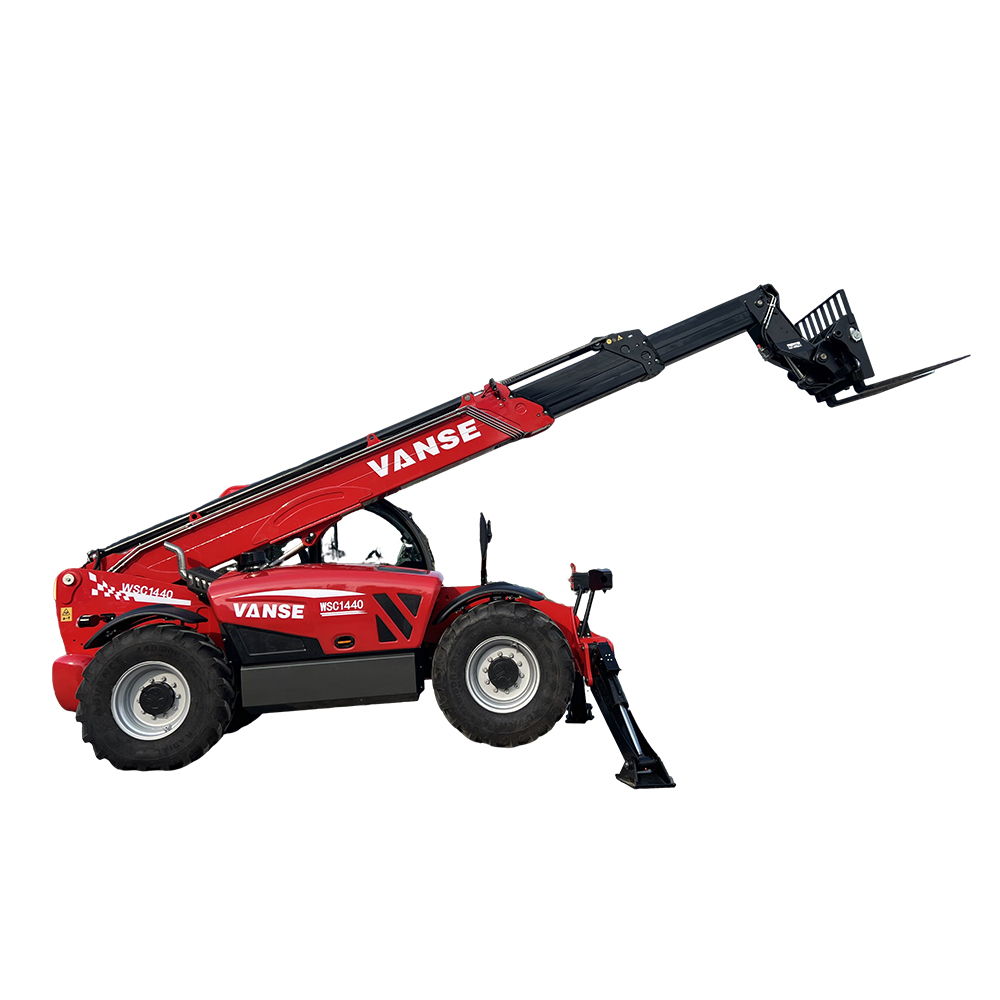
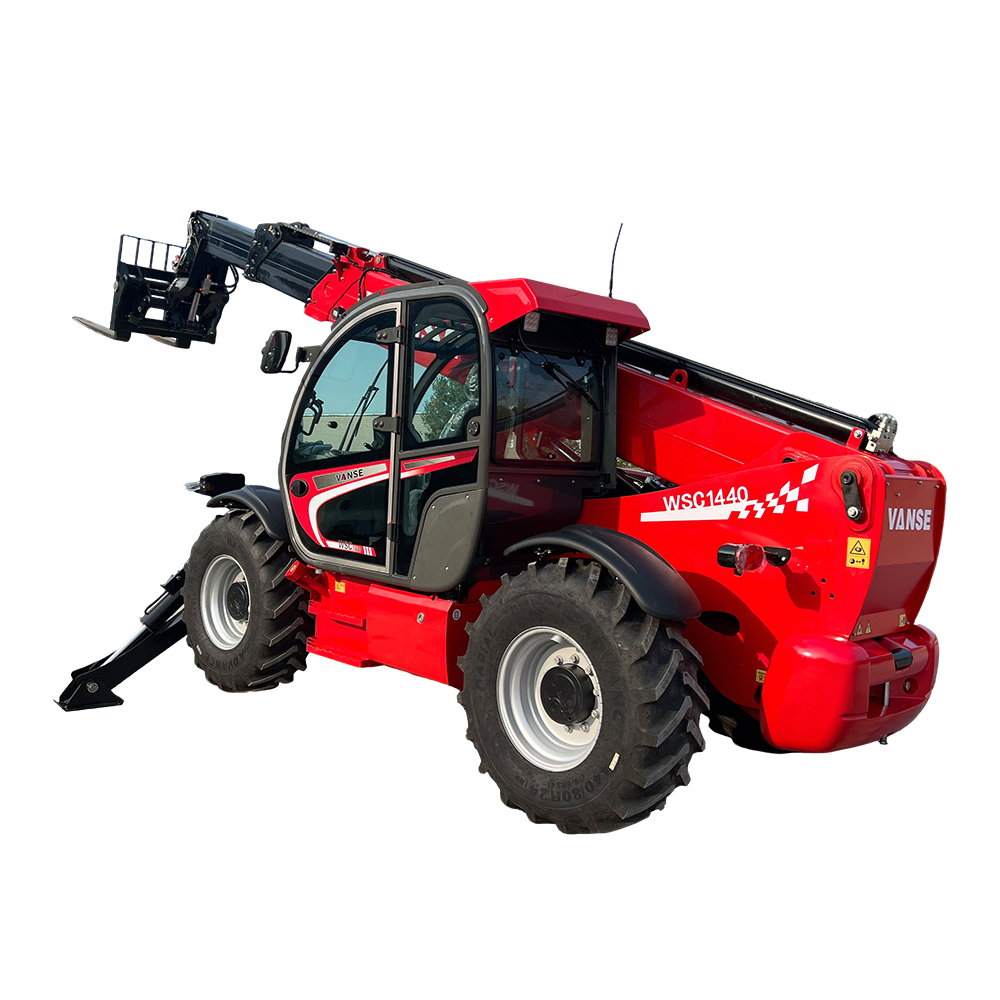
| VANSE Group | Serving North America with expanding U.S. presence and planned local support | Cost-performance value, OEM/ODM flexibility, globally sourced core components | Telehandlers, customized specs, wholesale and regional partnerships | Dealers, distributors, rental firms, contractors, private-label buyers | Strong option for buyers evaluating alternatives to premium-priced legacy brands |
This comparison shows that local availability and service footprint remain essential in the U.S. market, but buyer priorities are broadening. Large established brands still dominate fleet-heavy segments, yet value-oriented contractors and channel partners are increasingly open to newer suppliers that can prove certified production, serious technical support, and physical commitment to the U.S. market.
Detailed Supplier Analysis
JLG and Genie remain safe choices for buyers who want easy access to rental fleet-compatible models and a deep installed base. Their main advantage is availability and operator familiarity. JCB and Manitou often stand out in applications that bridge construction and agriculture, especially where attachment versatility matters. SkyTrak remains highly relevant in traditional U.S. construction environments because many crews already know the product class well. Bobcat often benefits from dealer relationships in areas where contractors already own compact loaders and want to stay within one equipment ecosystem.
However, the market is no longer defined only by legacy suppliers. Buyers now compare financing, lead times, component brands, customization, and local service readiness with much more discipline than before. This creates room for international manufacturers that can deliver credible product quality and local accountability. For companies sourcing for fleets, dealerships, and regional distribution, the question is no longer just whether an overseas supplier can manufacture a telehandler, but whether that supplier can support the machine in America with the same seriousness expected from domestic brands.
Comparison of Buying Factors
The following chart compares the practical decision criteria U.S. buyers commonly use when assessing suppliers and product options.
Buying Advice for Contractors, Farms, and Rental Companies
Contractors should begin with lift planning. If most material placement happens below 45 feet, a general construction telehandler often provides the best return. Spending more for very high reach only pays off if the site repeatedly needs that working envelope. For residential framing contractors and roofing suppliers, transport convenience and maneuverability can matter more than absolute lift height.
Agricultural buyers should focus on visibility, easy daily operation, attachment compatibility, and stable low-speed control. Many farms use a telehandler for repetitive loader-style work, so comfort, cab layout, service access, and fuel efficiency become significant over the life of the machine. If the machine will spend more time loading, feeding, and stacking than placing elevated pallets, an ag-oriented model may outperform a construction-focused unit in real daily use.
Rental companies need a different lens. Their priorities include durability across unknown operators, broad attachment support, simple controls, resale value, and quick parts turnaround. A slightly lower purchase cost can become highly attractive if the supplier also provides reliable training materials, telematics options, and responsive service channels to keep fleet downtime under control.
Distributors and dealers should assess supplier partnership terms as carefully as machine specifications. Margin structure, protected territories, stocking plans, OEM or ODM branding support, and factory responsiveness can be just as important as the lift chart. In the current U.S. market, regional representation with a capable support structure is a major advantage, especially in fast-growing Sun Belt states.
| Buyer Type | Main Goal | Most Important Specs | Preferred Support Model | Common Mistake | Practical Tip |
|---|---|---|---|---|---|
| General contractor | Reliable daily site productivity | 8,000 to 10,000 lb, 42 to 55 ft, frame leveling | Local field service and stocked parts | Overbuying height and underchecking service access | Match lift chart to your weekly material list |
| Residential builder | Mobility and cost control | 6,000 to 8,000 lb, easy transport | Dealer support within driving distance | Choosing industrial-spec units that are too heavy | Prioritize maneuverability on tighter sites |
| Farm operator | Versatility across daily chores | Good visibility, attachment range, low-speed control | Fast consumable parts supply | Buying construction-only setups without farm tools | List every attachment needed before purchase |
| Rental fleet | High utilization and resale value | Standard capacity, durable controls, telematics | National or regional support coverage | Ignoring operator familiarity and training needs | Standardize around the most requested capacity class |
| Dealer or distributor | Strong margin and regional growth | Broad range, customization, supply reliability | Factory partnership and territory planning | Evaluating only ex-factory price | Check parts plans, branding options, and lead times |
| Industrial end user | Safe handling in demanding yards | High capacity, stability, maintenance access | Dedicated technical support | Using farm-grade machines for heavy industrial work | Review long-term maintenance cost, not just purchase price |
The buying guidance in this table reinforces a core point: the best telehandler for rough terrain depends on the job mix, the operator environment, and the support system behind the machine. Buyers that define their use case clearly tend to avoid expensive mismatches.
Case Studies and Practical Scenarios
A framing contractor in the Dallas-Fort Worth area typically needs to unload lumber packs, move trusses, and support multi-phase residential development on surfaces that range from compacted soil to unfinished streets. In this scenario, a mid-capacity telehandler with quick steering response, reliable forks, and a truss boom attachment provides the best balance of productivity and transport efficiency. The machine does not need extreme height, but it does need quick service because delays affect multiple crews.
A dairy operator in California’s Central Valley may use a telehandler every day for feed handling, pallet movement, and maintenance work around barns and storage yards. In that environment, visibility, smooth control, attachment variety, and easy maintenance matter more than the top-end lift height seen on commercial sites. If local support is available, an agricultural-leaning model often creates better total value than a construction-spec unit with unnecessary features.
An industrial subcontractor near the Port of Houston may need to move pipe, equipment crates, and bulk materials around uneven staging areas. Here, high-capacity performance, rugged tires, and dependable hydraulic systems become essential. The operator may also need stronger dealer access for hoses, filters, and technical troubleshooting because downtime can affect time-sensitive industrial schedules.
For a regional rental fleet serving Georgia, Tennessee, and the Carolinas, the most profitable fleet standard is often a familiar 8,000 lb to 10,000 lb class machine with a strong service network and a proven secondary market. Even if a lower-cost alternative is considered, the supplier must show it can support repeated rental abuse, provide training resources, and respond quickly with parts across multiple branches.
Our Company
For U.S. buyers seeking a practical alternative in the telehandler for rough terrain category, VANSE Group offers a model built on measurable evidence rather than general claims. Founded in 2013, the company has produced more than 8,000 machines and serves clients in more than 40 countries, including North America, giving it a proven export and application record across construction, agriculture, mining, and industrial environments. Its telehandlers are manufactured under CE and ISO 9001 certified processes, use globally recognized core components such as Perkins and Cummins engines along with premium hydraulic systems, transmissions, and axles, and every unit goes through load testing, safety inspection, and performance validation before shipment, which gives U.S. buyers concrete proof of manufacturing discipline and internationally benchmarked component quality. VANSE supports multiple cooperation models for end users, distributors, dealers, rental companies, brand owners, and private buyers through wholesale supply, retail opportunities, OEM and ODM customization, regional distribution partnerships, and specification-level adaptation for local applications. Just as important for the United States, the company is actively establishing a U.S.-based subsidiary with local inventory planning, stocking capability, and after-sales support, reinforcing that it is building real market presence rather than serving America only as a remote exporter. Buyers can review its broader equipment portfolio through the equipment range, learn more on the company profile, explore lifecycle support via the service page, or discuss a project directly through the contact team.
Future Trends for 2026
By 2026, the U.S. telehandler market is expected to become more technology-driven and more selective about compliance, operating efficiency, and lifecycle cost. Telematics and remote diagnostics will continue moving from premium add-ons to standard expectations, especially for rental fleets and multi-site contractors. Buyers increasingly want machine health alerts, maintenance planning tools, and operating data that reduce unplanned downtime.
Policy and sustainability trends are also shaping procurement. Public projects and large private developments are paying more attention to emissions, fuel efficiency, and documented maintenance practices. This does not mean diesel telehandlers disappear from rough terrain jobsites, but it does mean cleaner engines, better hydraulic efficiency, and more disciplined fleet management become stronger selling points. In agriculture and municipal procurement, lower-idle strategies and fleet reporting tools are gaining traction.
Another clear 2026 trend is the diversification of supplier evaluation. U.S. buyers are less willing to pay a premium only for a familiar badge if an alternative brand can demonstrate certified manufacturing, recognized powertrain components, responsive local parts support, and a real business commitment in the United States. This is particularly relevant in a market where large contractors, rental firms, and dealer groups are under constant pressure to control capital costs without sacrificing uptime.
Finally, safety expectations continue to rise. Load monitoring systems, improved visibility packages, better cab ergonomics, and operator-assistance features will matter more in both procurement and resale. As jobsites become more regulated and labor remains difficult to replace, machines that help reduce operator error will gain more attention.
Frequently Asked Questions
What is the best telehandler capacity for most rough terrain jobs in the United States?
For many U.S. construction and rental applications, the sweet spot is 8,000 to 10,000 lb with lift heights around 42 to 55 feet. That range handles a broad mix of pallets, framing materials, masonry loads, and general site tasks without pushing the machine into oversized transport and ownership costs.
Are rough terrain telehandlers suitable for farms?
Yes. They are widely used on farms and ranches for bale stacking, feed handling, pallet movement, shed maintenance, and general lifting work. Agricultural buyers should prioritize visibility, attachment flexibility, and service simplicity.
Why do U.S. buyers still prefer local supplier support over the lowest price?
Because downtime is expensive. A lower machine price loses value quickly if filters, sensors, hoses, or technician support are hard to get. In the United States, responsive parts supply and field service often determine the real cost of ownership more than the initial quote.
Can international manufacturers compete with established U.S. brands?
Yes, if they can show certified production, reliable component sourcing, practical lift performance, and local after-sales commitment. Buyers are increasingly open to qualified global suppliers that offer strong cost-performance and local support planning.
What attachments are most important for rough terrain telehandlers?
The most common are pallet forks, buckets, truss booms, lifting hooks, and work platforms where regulations allow. The right attachment mix depends on whether the machine is used in construction, agriculture, industrial yards, or rental fleets.
How should a distributor evaluate a telehandler supplier?
Look beyond machine price. Review territory policies, parts stocking support, OEM or ODM options, training resources, lead times, component brands, warranty terms, and the supplier’s physical commitment to the U.S. market.
Final Takeaway
The best telehandler for rough terrain in the United States is the one that matches real lift needs, local terrain, and service expectations. For buyers who want established nationwide brand familiarity, JLG, Genie, JCB, SkyTrak, Bobcat, and Manitou remain important options. For buyers focused on value, customization, and strategic sourcing, qualified international manufacturers with real U.S. support plans are becoming more relevant every year. In all cases, the smartest purchase comes from balancing lift chart accuracy, attachment needs, total ownership cost, and the strength of the support network behind the machine.
Complete Telescopic Handler Equipment Portfolio
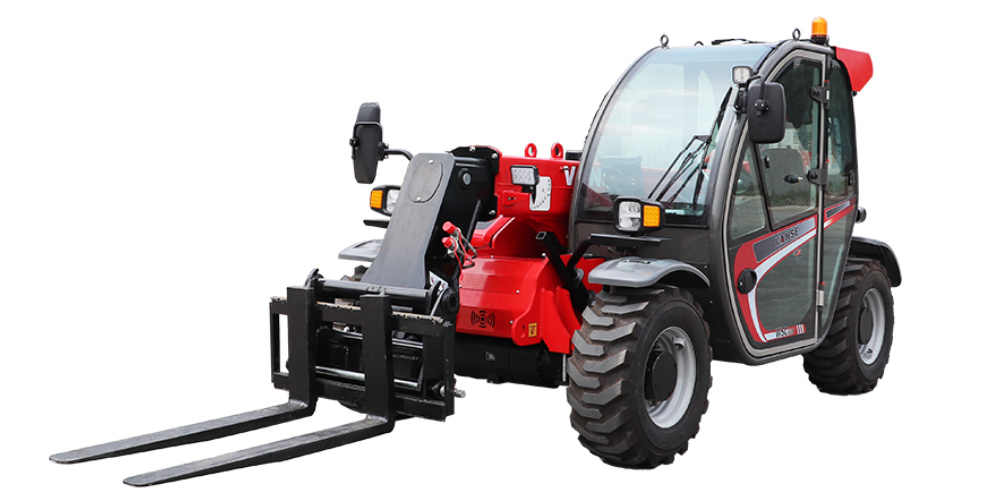
VANSE 625 6m Telescopic Handler
Designed for efficient material handling and stacking in warehouses, factories, and confined job sites, offering compact maneuverability and reliable performance.

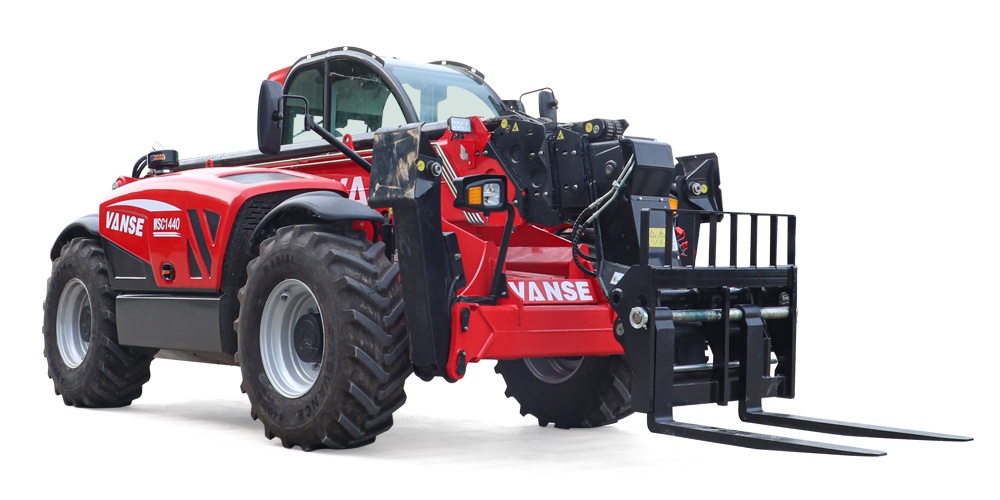
VANSE 735 7m Telescopic Handler
A balanced mid-duty solution for construction, agriculture, logistics, and warehousing, combining stable lifting, strong traction, and everyday versatility.


About the Author:
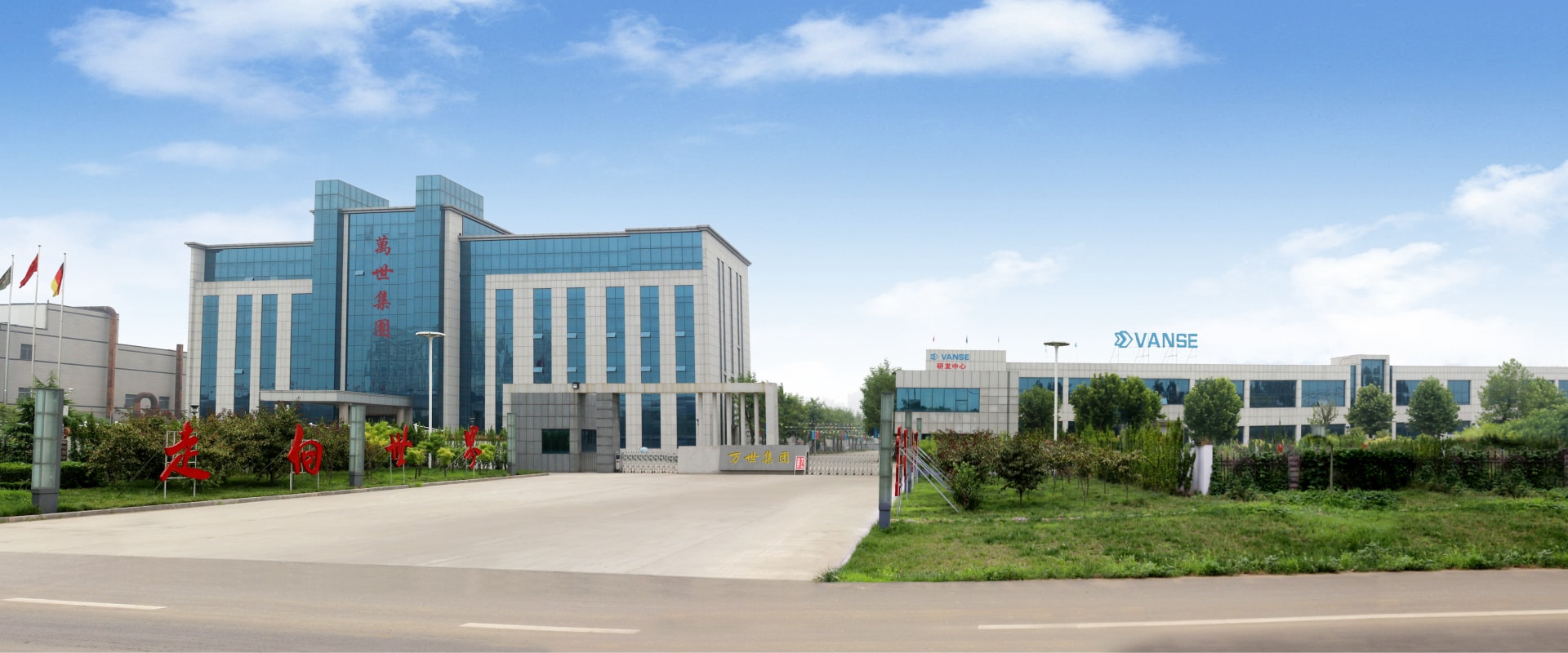
The VANSE team is a group of experienced professionals specializing in construction machinery research, manufacturing, and technical support. With deep industry knowledge and hands-on experience, our engineers and product specialists share practical insights on equipment selection, operation, maintenance, and industry trends.
Share
You May Also Interest
-

5 June, 2026
Telehandler vs Forklift: Full Comparison
Telehandler vs forklift in the United States: compare reach, cost, jobsites, safety, and top suppliers to choose the right machine for your needs.
-
4 June, 2026
Telehandler vs Crane: Which to Choose?
Compare telehandler vs crane in the United States with practical buying advice, local supplier insights, use cases, costs, and 2026 equipment trends.
-
3 June, 2026
Telehandler vs Boom Lift: Comparison
Compare telehandler vs boom lift for jobs in the United States, with use cases, suppliers, costs, and buying tips for safer, smarter equipment selection.
-
2 June, 2026
Telehandler vs Cherry Picker: Comparison
Compare telehandler vs cherry picker for United States jobsites, including costs, uses, suppliers, safety, and buying tips for contractors and fleets.