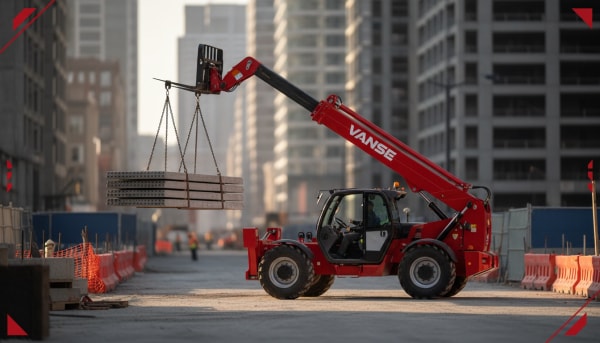
How Much Can a Telehandler Lift in the United States?
Quick Answer

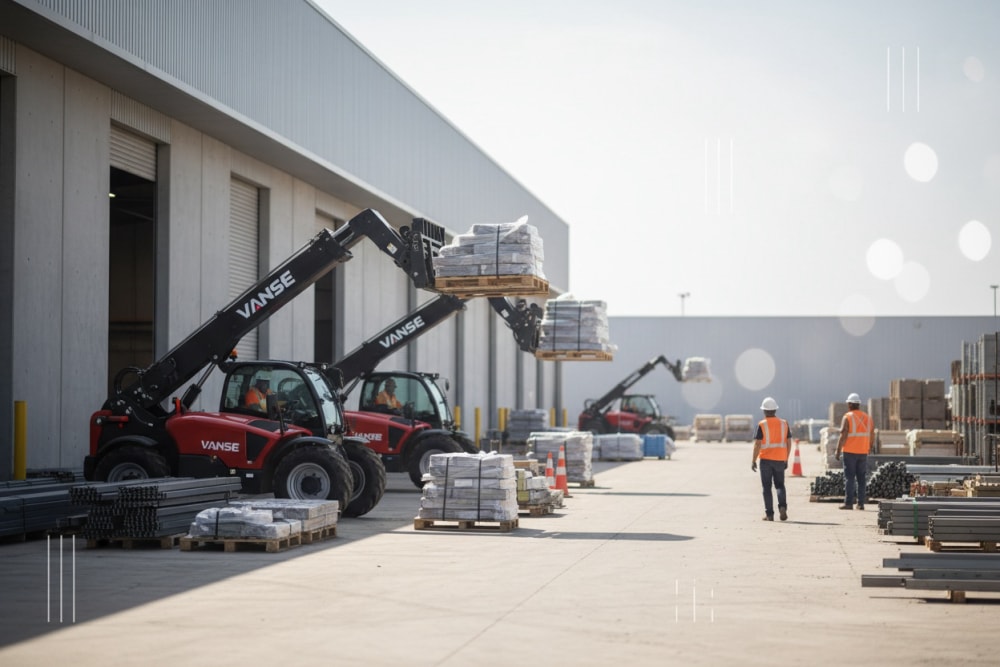
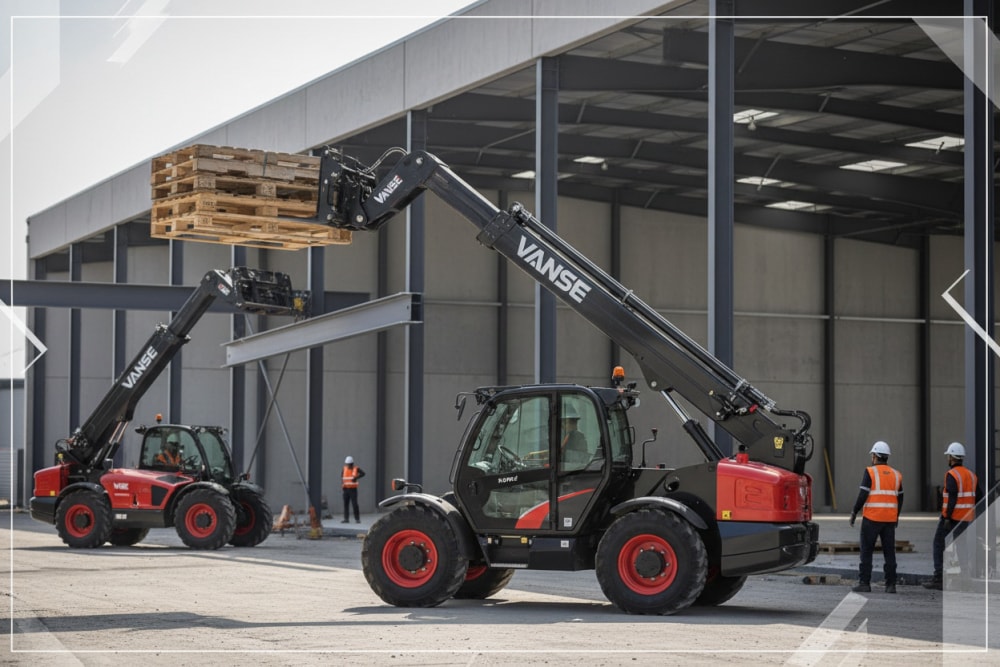
A telehandler in the United States typically lifts anywhere from 5,000 lb to 26,000 lb, depending on the model, boom configuration, attachment, and lift height. Compact jobsite telehandlers commonly handle 5,000 to 8,000 lb, mainstream construction units often lift 10,000 to 12,000 lb, and heavy-duty high-capacity machines can exceed 20,000 lb. The most important point is that rated lift capacity changes as the boom extends forward or upward, so a machine that lifts 10,000 lb at a low, retracted position may lift far less at maximum reach.
For fast decision-making in the United States market, buyers usually match machine class to use case: masonry and framing crews often choose 6,000 to 10,000 lb models, large commercial sites move into the 10,000 to 12,000 lb range, and ports, energy, mining, and precast handling may require 15,000 lb and above. Major local brands such as JLG, Genie, SkyTrak, JCB, Caterpillar, and Bobcat dominate dealer networks across cities like Houston, Dallas, Atlanta, Chicago, Los Angeles, and inland logistics hubs near Savannah and Long Beach. Qualified international suppliers can also be worth considering, especially when they provide CE or ISO-backed production systems, recognized powertrain components, and strong U.S. pre-sales and after-sales support, because that combination can deliver a better cost-performance ratio for fleet buyers and distributors.
What Determines How Much a Telehandler Can Lift?

Telehandler lifting capacity is not a single fixed number. In real jobsite conditions, the answer depends on several variables that directly affect stability, hydraulic performance, and safe operating load. The rated capacity published on a machine data plate usually refers to a specific position, often with the boom retracted and the load centered properly on forks. Once the operator raises the boom, extends it, works on uneven ground, or changes attachments, the available capacity may drop sharply.
In the United States, OSHA-focused site managers and rental fleets pay close attention to load charts because telehandlers are regularly used on mixed terrain, slab work, warehouse yards, residential developments, agricultural sites, and industrial projects. A telehandler operating in Phoenix on dry, level ground with pallet forks will not behave the same way as one handling pipe in Houston mud or lifting trusses on a sloped subdivision near Nashville.
| Factor | How It Affects Lift Capacity | Typical U.S. Jobsite Impact | Buyer Takeaway |
|---|---|---|---|
| Rated machine size | Larger chassis and counterweight allow higher base lifting capacity | Commercial contractors choose 10,000 lb+ classes for structural materials | Start with base capacity before looking at height and reach |
| Boom extension | More forward reach reduces safe load due to leverage | Framing and roofing work often needs more reach than raw lifting power | Review the load chart, not just brochure maximums |
| Lift height | Capacity often declines at maximum elevation | Warehouse, steel, and multi-story construction require high lift positions | Check capacity at the exact working height |
| Attachment type | Buckets, jibs, truss booms, and clamps change weight and load center | Rental fleets swap attachments frequently across users | Include attachment weight in the real calculation |
| Terrain condition | Soft or uneven ground reduces stability margin | Common on agriculture, utility, and unfinished building sites | Choose frame leveling and stabilizers when needed |
| Operator practice | Improper loading or travel position can create unsafe conditions | Multi-crew sites may have varying operator experience | Training and clear load chart use are essential |
This table matters because many buyers compare machines only by headline capacity. In practice, the correct question is not just “how much can a telehandler lift,” but “how much can it lift at the exact height, reach, and attachment setup used on my site.” That is the key to reducing downtime, avoiding overload incidents, and choosing the right model for the job.
Typical Telehandler Lift Capacity Ranges in the United States

The U.S. market covers a broad spread of telehandler classes. Compact machines serve farms, lumberyards, and smaller contractors. Mid-range machines dominate general construction and rental fleets. High-capacity telehandlers are more common in bridge work, energy, infrastructure, precast, heavy industry, and logistics yards connected to major freight corridors.
| Telehandler Class | Typical Rated Capacity | Common Lift Height | Typical U.S. Applications | Best Fit Buyer |
|---|---|---|---|---|
| Compact | 5,000 to 6,000 lb | 16 to 20 ft | Farms, feed yards, landscaping supply, residential construction | Small contractors and agricultural operations |
| Light construction | 6,000 to 8,000 lb | 19 to 36 ft | Roofing, framing, palletized materials, lumber movement | Builders, rental houses, material yards |
| Mainstream jobsite | 8,000 to 10,000 lb | 36 to 44 ft | Masonry, drywall staging, structural packages, site logistics | General contractors and medium fleets |
| Heavy construction | 10,000 to 12,000 lb | 44 to 56 ft | Commercial builds, steel, concrete forms, large framing packages | Commercial contractors and regional rental companies |
| High capacity | 12,000 to 15,000 lb | 48 to 70 ft | Industrial plants, infrastructure, ports, oil and gas yards | Industrial users and infrastructure contractors |
| Ultra high capacity | 15,000 to 26,000 lb+ | Up to 70+ ft depending on design | Precast, mining, marine cargo, energy equipment handling | Specialized fleets and heavy industry buyers |
The most common range in the United States is still the 6,000 to 10,000 lb category because it balances mobility, cost, availability, and compatibility with standard forks, buckets, and work platforms. For buyers in fast-growing metro areas such as Austin, Charlotte, Tampa, and Denver, this class covers many day-to-day construction needs without moving into the higher acquisition and transport costs of a heavy industrial machine.
How Lift Height and Forward Reach Change Capacity
The relationship between boom position and safe lifting ability is one of the most important things a buyer must understand. A telehandler may be advertised with an impressive rated capacity, but that number often applies only when the boom is low and close to the machine. The farther the load moves forward, the more tipping force is created. Manufacturers address this through counterweight design, frame geometry, hydraulic control logic, and in many cases load management systems.
For example, a 10,000 lb telehandler may comfortably place palletized block at a lower level but may only be rated for a much lighter load near full height or maximum outreach. On U.S. commercial sites where crews often need to place materials over obstacles, fencing, trenches, or partially completed structures, the working envelope matters as much as the base rating.
The area chart shows a realistic pattern seen across many telehandler classes: available lift drops as reach and height increase. Exact values vary by machine design, but the trend is consistent. Buyers comparing telehandlers for U.S. framing, mechanical, masonry, and industrial tasks should request the load chart, not only the specification sheet headline.
U.S. Telehandler Market Overview
The United States remains one of the most active telehandler markets in the world because the machine fills a gap between forklifts, cranes, and loaders. Construction remains the largest demand driver, but agriculture, industrial maintenance, logistics support, mining, and energy also contribute. Rental companies have strong influence because many contractors prefer to rent standard machines but buy specialty or frequently used models.
Regional demand patterns vary. Texas, Florida, California, Georgia, and the Carolinas show strong construction pull. The Midwest supports agricultural use and warehouse-adjacent applications. Gulf Coast industrial corridors and inland energy projects drive interest in heavier machines. Port-adjacent logistics around Los Angeles, Long Beach, Savannah, Houston, and Newark also create demand for high-capacity handling equipment.
The line chart reflects a realistic growth pattern based on continued demand from rental fleets, non-residential construction, warehouse expansion, and equipment replacement cycles. For buyers asking how much can a telehandler lift, market growth matters because it affects dealer inventory, lead times, resale values, and the availability of application-specific models.
Product Types and What They Usually Lift
Not every telehandler is designed the same way. Product type influences lifting capacity, turning radius, transport profile, and attachment compatibility. Buyers in the United States often narrow the field by deciding whether they need compact maneuverability, general-purpose reach, rotating capability, or high-capacity industrial performance.
| Product Type | Usual Capacity Range | Main Advantage | Typical U.S. Use | Watch-Out |
|---|---|---|---|---|
| Compact telehandler | 5,000 to 6,000 lb | Small footprint, easier transport | Barns, feed lots, landscape yards, tight residential sites | Limited height and reach compared with larger machines |
| Standard fixed-boom telehandler | 6,000 to 12,000 lb | Best balance of price and versatility | Construction, rental, distribution yards | Capacity falls at long reach |
| High-reach telehandler | 8,000 to 12,000 lb | Greater lift height for multi-story work | Masonry, glazing, urban commercial jobs | Higher machine cost and transport considerations |
| High-capacity telehandler | 12,000 to 26,000 lb+ | Heavy material handling | Precast, industrial sites, ports, mining support | Requires experienced operators and larger site access |
| Rotating telehandler | 8,000 to 15,000 lb | 360-degree upper structure adds placement flexibility | Complex urban construction, facade, specialized lifting | Higher price and more specialized service needs |
| Agricultural telehandler | 5,500 to 9,000 lb | Excellent visibility and farm attachment versatility | Hay, feed, grain, manure, bale handling | Not always optimized for heavy commercial lifting cycles |
This table helps clarify that the answer to how much can a telehandler lift depends partly on machine family. A farm telehandler and an industrial precast telehandler solve very different problems, even if both belong to the same broad equipment category.
Industries That Depend on Telehandler Lifting Power
Telehandlers have become standard material-handling tools in multiple U.S. industries because they combine lifting height, all-terrain mobility, and attachment versatility. Capacity requirements vary sharply by sector, so industry context is one of the best ways to narrow the buying decision.
The bar chart shows why construction leads the U.S. telehandler market, but it also highlights meaningful demand from agriculture, industrial operations, and energy. That spread supports both rental-oriented standard models and direct-purchase specialty machines.
Construction
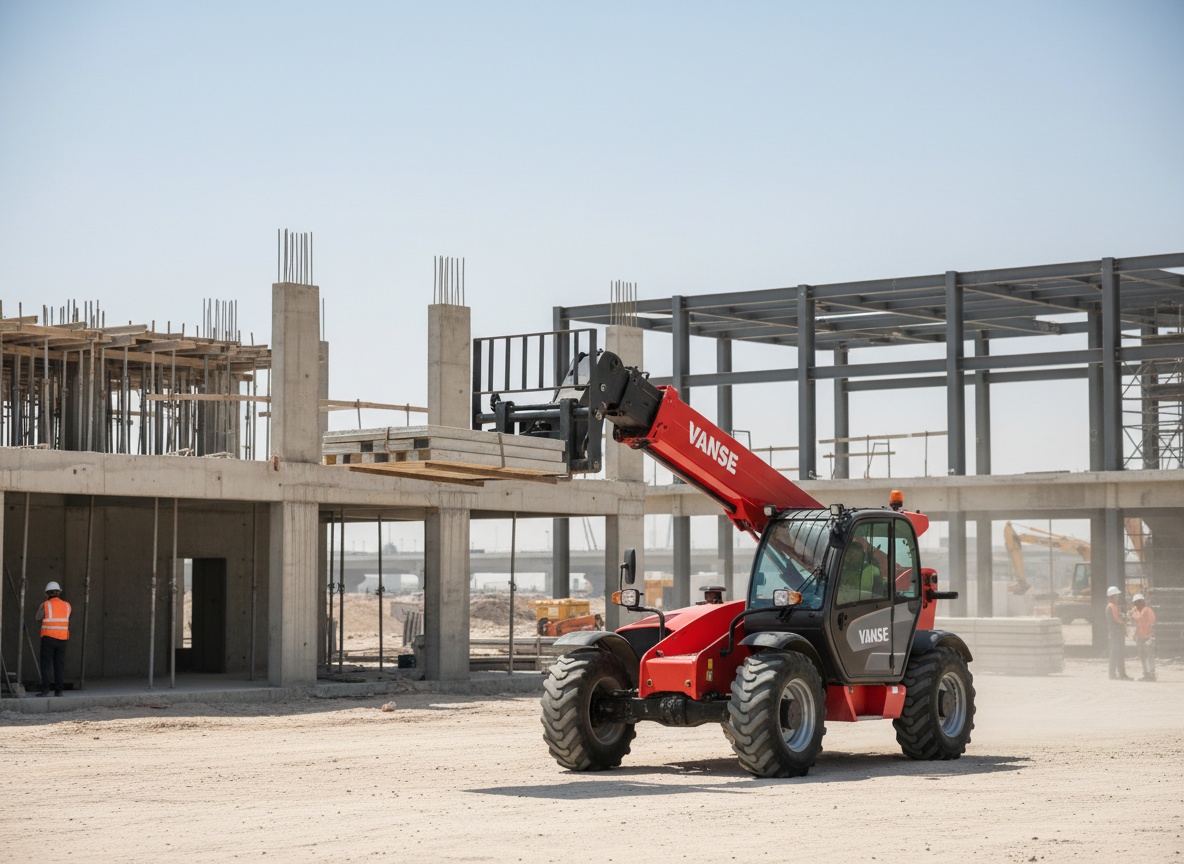
Construction drives the largest volume of telehandler purchases and rentals. Common loads include bundles of lumber, pallets of block, drywall packs, roofing materials, trusses, steel components, and jobsite supplies. Typical capacities range from 6,000 to 12,000 lb depending on site scale.
Agriculture
Farm users value telehandlers for moving round bales, feed, seed pallets, fertilizer totes, and barn materials. Capacity often ranges from 5,500 to 9,000 lb, but lift height and attachment speed may matter more than raw maximum rating. Dairy and feedyard operations in states such as Wisconsin, Kansas, Nebraska, and California often prefer reliable mid-capacity machines with good visibility and fast hydraulic cycling.
Industrial and Manufacturing
Factories, equipment yards, and plant maintenance teams use telehandlers for machine parts, rigging support, palletized raw material, and shutdown maintenance operations. Higher-capacity machines become common where heavy tooling, molds, or fabricated steel must be positioned.
Mining and Energy
In mining support yards and oil and gas service areas, telehandlers move pipe, containers, equipment skids, and maintenance supplies. Buyers in the Permian Basin, Appalachia, and Gulf Coast corridors often prioritize heavier chassis, durable axles, enclosed cabs, and dependable service parts.
Applications: Matching Capacity to Real Jobs
Capacity selection works best when tied to a repeatable work cycle. A contractor who only occasionally lifts 10,000 lb may still be better served by an 8,000 lb fleet machine plus selective crane use. On the other hand, a precast yard that routinely handles 12,000 lb loads should not compromise on reserve capacity. Safety, productivity, and cost per lift are all affected by sizing decisions.
| Application | Typical Load | Recommended Telehandler Class | Common U.S. Location Type | Practical Note |
|---|---|---|---|---|
| Lumber and framing packages | 3,000 to 7,000 lb | 6,000 to 8,000 lb | Residential growth markets like Dallas and Phoenix | Need enough reach to place over slab edges and scaffolding |
| Masonry block and brick pallets | 4,000 to 8,000 lb | 8,000 to 10,000 lb | Commercial building sites in Atlanta and Charlotte | Check chart performance at elevated slab placements |
| Roof trusses and long material | 2,500 to 6,000 lb | 6,000 to 10,000 lb | Suburban housing developments | Jib or truss boom attachment changes load calculation |
| Drywall and interior pallets | 3,000 to 5,500 lb | 6,000 to 8,000 lb | Mixed-use urban projects | Height and clear access matter more than only capacity |
| Precast concrete components | 10,000 to 20,000 lb | 12,000 to 26,000 lb+ | Infrastructure yards and industrial projects | Stability and operator skill are critical |
| Pipe, tanks, and industrial skids | 8,000 to 18,000 lb | 10,000 to 20,000 lb+ | Gulf Coast energy and manufacturing sites | Often requires rough-terrain mobility and strong service backup |
The value of this table is practical planning. Instead of choosing based on brochure marketing, buyers can align a telehandler’s lift class with the materials they actually handle every week.
Buying Advice for U.S. Buyers
If you are evaluating telehandlers in the United States, avoid buying too small just to reduce upfront price and avoid buying too large just to chase an impressive spec. The best purchase usually sits where the machine can handle the heaviest common load with a safety margin while still remaining transportable, fuel-efficient, and easy to deploy.
Start by listing your top three lifts by weight, height, and reach. Then verify which attachment will be used. After that, review whether the machine must travel between sites on a standard trailer, whether it will work indoors or outdoors, and how critical local parts availability is. In a large market such as the United States, dealer support can be as important as the machine itself.
Rental companies often buy telehandlers that fit the broadest demand window, usually 6,000 to 10,000 lb. End users with repetitive lifting tasks can justify specialized models because the productivity gain offsets purchase cost. Distributors and brand owners evaluating private-label options should also consider whether the manufacturer can support localized configurations, operator documentation, and long-term parts planning.
Local Suppliers and Major Brands in the United States
The supplier landscape in the United States combines global OEMs, established dealer networks, and growing opportunities for direct-import partnerships. Buyers who need immediate fleet availability often work with major brands through regional dealers, while larger distributors and fleet owners may also explore OEM or ODM cooperation with overseas manufacturers that have strong quality systems and localized support commitments.
| Company | Service Region in the United States | Core Strengths | Key Telehandler Offerings | Best For |
|---|---|---|---|---|
| JLG | Nationwide through broad dealer and rental channels | Strong construction presence, parts support, recognized resale value | Fixed-boom telehandlers across mainstream capacity classes | General contractors and rental fleets |
| Genie | Nationwide with strong access equipment distribution | Reliable fleet-friendly machines, strong rental market familiarity | Construction telehandlers in common U.S. lift categories | Rental houses and mixed jobsite fleets |
| SkyTrak | Especially strong in North American construction channels | Known brand in framing and material handling applications | Standard telehandlers for residential and commercial building | Builders and contractors wanting familiar controls |
| JCB | Nationwide with good agriculture and construction overlap | Broad product range, visibility in farm and contractor markets | Construction and agricultural telehandlers, including Loadall lines | Mixed-use buyers across farm and jobsite settings |
| Caterpillar | Supported through Cat dealer footprint in many states | Dealer reputation, parts access, integration with heavy equipment fleets | Telehandlers aligned with construction and industrial use | Large contractors and multi-equipment fleet owners |
| Bobcat | Nationwide through compact equipment dealer network | Strong compact equipment relationships, growing telehandler lineup | Compact to mid-range telehandlers for material handling | Small to mid-size contractors and rural buyers |
| Manitou | Nationwide with strength in agriculture and specialty handling | Experience in telehandlers and rotating models | Agricultural, construction, and rotary telehandlers | Specialty lifting and agriculture-heavy users |
For most U.S. buyers, these brands represent the fastest route to established dealer coverage. However, supplier selection should still be tied to local response times, technician availability, and the exact load class needed. A machine that looks strong on paper but lacks timely parts support in your state can quickly become expensive downtime.
Supplier Comparison by Capacity and Value Position
Brand selection in the United States often comes down to balancing lift capacity, support density, initial purchase price, and fleet standardization. Some buyers accept higher acquisition cost for brand familiarity and resale, while others focus on lower total cost of ownership or private-label expansion opportunities.
This comparison chart gives a practical view of how buyers frequently think about the market rather than representing a single public ranking. It reflects the fact that well-known U.S. brands score highly on support and familiarity, while value-focused OEM suppliers can compete strongly where pricing, customization, and direct partnership models matter.
Case Studies from Common U.S. Scenarios
Real selection decisions become easier when tied to actual job patterns. The following examples reflect common U.S. buying logic.
Residential Builder in Texas
A homebuilder working across Dallas-Fort Worth subdivisions needs to place trusses, lumber, and palletized material across multiple active lots. Most loads stay below 6,000 lb, but reach over foundation edges and uneven terrain is frequent. A 6,000 to 8,000 lb telehandler is typically the sweet spot. Going larger increases transport and operating cost without much productivity gain.
Commercial Masonry Contractor in Georgia
A masonry contractor around Atlanta handles block pallets and facade materials for schools and mid-rise buildings. Loads often sit in the 6,000 to 8,000 lb range, with repeated elevated placements. An 8,000 to 10,000 lb machine provides stronger chart performance and more reserve when working at height.
Industrial Plant Shutdown on the Gulf Coast
A contractor performing maintenance around Houston needs to move valves, piping, skids, and maintenance gear within a heavy industrial plant. Loads are irregular and sometimes exceed 10,000 lb. A 10,000 to 15,000 lb telehandler with strong local service support is usually more appropriate than a lighter construction machine.
Precast Yard Near a Port Corridor
A supplier serving projects near Savannah or Long Beach handles dense concrete components and yard logistics. Lift demands may exceed 15,000 lb, especially when moving finished precast elements. A high-capacity telehandler or other dedicated heavy handler becomes necessary, with careful review of fork length, ground conditions, and load center.
Our Company
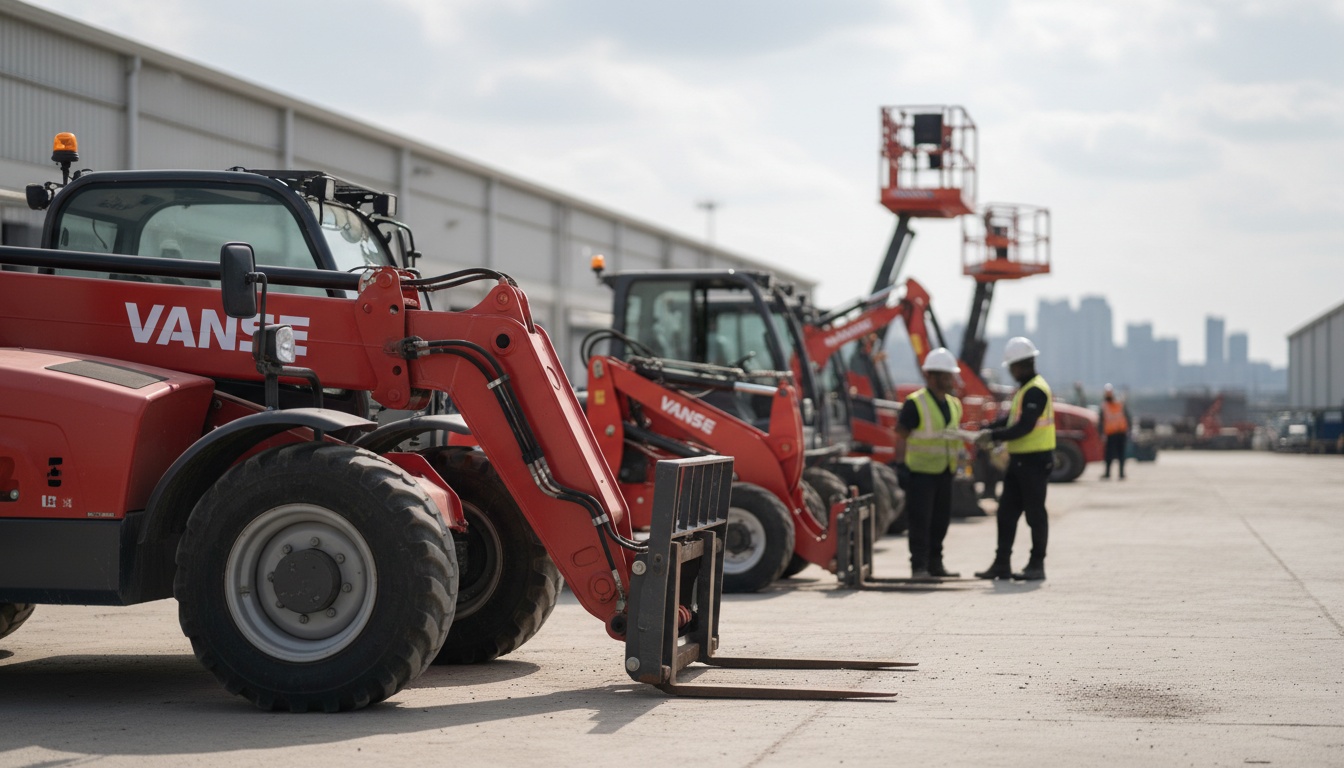
For buyers in the United States looking beyond traditional domestic brands, VANSE offers a telehandler-focused manufacturing platform built around measurable evidence rather than generic claims. The company has been producing construction machinery since 2013 and has delivered more than 8,000 units globally, with exports to over 40 countries, including established business across North America. Its telehandlers are manufactured under CE and ISO 9001 certified systems, use internationally recognized core components such as Perkins and Cummins engines alongside premium hydraulic and driveline systems, and pass comprehensive load testing, safety inspection, and performance validation before shipment, which gives U.S. buyers concrete proof of compliance-minded engineering and repeatable factory quality. From a cooperation standpoint, VANSE supports end users, distributors, dealers, rental companies, brand owners, and individual buyers through flexible wholesale supply, retail channels, regional distribution, and full OEM/ODM customization for specifications, branding, colors, and configurations, making it suitable for both direct fleet purchase and private-label market development. Just as important for trust in the U.S. market, the company is actively establishing a U.S.-based subsidiary with local inventory, stocking capability, and after-sales support, backed by online and offline pre-sale consultation, technical assistance, lifecycle service, and practical parts coordination, showing that it is building a long-term operating presence rather than serving the market only as a remote exporter. Buyers exploring telehandler equipment options can also review the company background on the about us page, evaluate support details through its service network, or discuss model matching and dealership opportunities through the contact team.
How to Compare U.S. and International Sourcing Options
U.S. buyers today have more sourcing flexibility than before. Domestic dealer brands remain the default choice for many contractors because of familiar financing and established service footprints. At the same time, qualified international suppliers are increasingly relevant where fleet buyers want better price positioning, tailored specifications, or private-label distribution opportunities.
The right decision depends on whether the buyer values immediate dealer proximity, customization, volume pricing, or strategic supply partnerships. This is especially relevant in markets where rental fleets, regional distributors, and construction supply companies want to widen their offerings without carrying premium-brand cost on every unit.
| Comparison Point | Established U.S. Brand Route | Qualified International OEM Route | Best Fit Scenario |
|---|---|---|---|
| Dealer familiarity | Very strong in most states | Improving when local warehousing is in place | Choose U.S. brands for immediate plug-in fleet use |
| Purchase price | Usually higher | Often more competitive | International OEMs appeal to value-focused fleet buyers |
| Customization | Limited compared with private-label manufacturing | Strong with OEM/ODM support | Useful for dealers and brand owners |
| Parts and service setup | Mature dealer systems | Depends on local inventory and support commitment | Verify physical U.S. support before buying |
| Lead time flexibility | Stock-dependent | Can be favorable on planned volume orders | Good for procurement planning and distribution programs |
| Resale perception | Typically stronger brand recognition | Growing where product quality and service are proven | Matters more to rental fleets than owner-operators |
This comparison is important because more U.S. buyers are no longer asking only which brand is famous; they are also asking which supplier can provide the best combination of verified quality, workable support, and financial return.
Future Trends for 2026
By 2026, telehandler buying decisions in the United States will be shaped by technology, labor constraints, sustainability pressure, and policy trends. Lift capacity will remain a core buying factor, but digital controls and fleet integration will become more important in specifying machines.
First, load management systems will continue improving. Buyers increasingly expect onboard sensors, overload warnings, attachment recognition, and clearer operator displays. These features reduce misuse and help less experienced operators work more safely. Second, telematics will matter more for rental companies and larger contractors. Machine tracking, idle-time reporting, maintenance alerts, and geo-fencing are becoming standard expectations, especially in multi-state operations.
Third, sustainability pressure is pushing interest in lower-emission engines, more efficient hydraulic systems, and eventually electrified or hybrid telehandler segments for select indoor or urban applications. While diesel remains dominant for heavy-duty U.S. telehandlers, stricter environmental expectations in urban construction and public procurement may accelerate development. Fourth, infrastructure and reshoring projects are likely to support ongoing demand for medium and heavy telehandlers in industrial corridors, logistics campuses, and manufacturing expansions.
Policy also plays a role. State-level clean equipment incentives, federal infrastructure spending, and emphasis on domestic warehousing and port efficiency all shape equipment deployment. Buyers around major trade gateways such as Houston, Savannah, Los Angeles, and Newark may see continued demand for specialized lifting equipment tied to supply-chain investment.
FAQ
Can a telehandler lift more than a forklift?
Often yes, but it depends on the machine class. A telehandler usually offers far better reach and rough-terrain ability than a conventional forklift. Some telehandlers also exceed forklift lift capacity, especially high-capacity models, but the key difference is that telehandler capacity changes significantly with boom extension and height.
How much can a 10,000 lb telehandler actually lift at full reach?
Usually much less than 10,000 lb. The exact amount depends on the machine’s load chart, boom geometry, attachment, and ground conditions. In many cases, capacity at full reach may drop to a fraction of the headline rating.
What is the best telehandler size for general construction in the United States?
For many contractors, the best all-around range is 6,000 to 10,000 lb. That class works well for framing, masonry, roofing, drywall staging, and standard palletized materials on common U.S. jobsites.
What telehandler capacity is common for agriculture?
Many farms use telehandlers in the 5,500 to 9,000 lb range. These machines typically offer enough capacity for bales, feed, fertilizer totes, and general yard work while staying maneuverable around barns and storage areas.
Should I buy based only on maximum lift capacity?
No. You should evaluate lift height, forward reach, attachment weight, terrain, transport limits, operator skill, local service support, and total cost of ownership. A machine with a higher rated capacity is not automatically the best fit for your actual workflow.
Are international telehandler suppliers a realistic option in the United States?
Yes, if they offer verified certifications, proven export track records, recognized components, and concrete U.S. service commitments such as local inventory, parts planning, and pre-sale and after-sales support. For distributors and fleet buyers, this route can be especially attractive when price-performance and customization matter.
Final Takeaway
So, how much can a telehandler lift in the United States? In practical terms, the answer ranges from about 5,000 lb for compact machines to more than 26,000 lb for specialized heavy-duty units, with 6,000 to 10,000 lb being the most common range for mainstream U.S. construction and rental work. The right answer for any buyer depends on the real load, actual lift height, forward reach, attachment, and ground conditions, not just the marketing headline. Buyers in the United States should compare load charts carefully, verify local support, and select suppliers that combine dependable product engineering with strong service coverage. That approach delivers safer lifts, better uptime, and a more profitable equipment investment.
Complete Telescopic Handler Equipment Portfolio
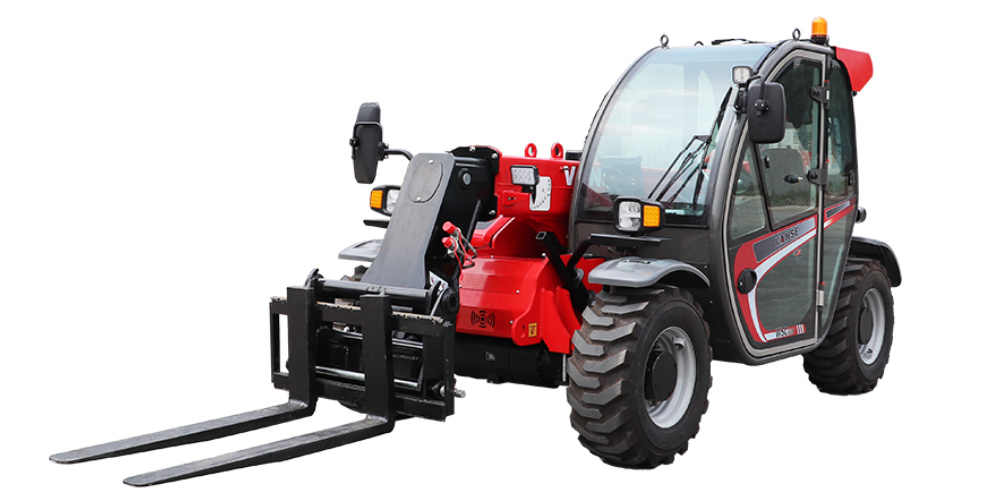
VANSE 625 6m Telescopic Handler
Designed for efficient material handling and stacking in warehouses, factories, and confined job sites, offering compact maneuverability and reliable performance.

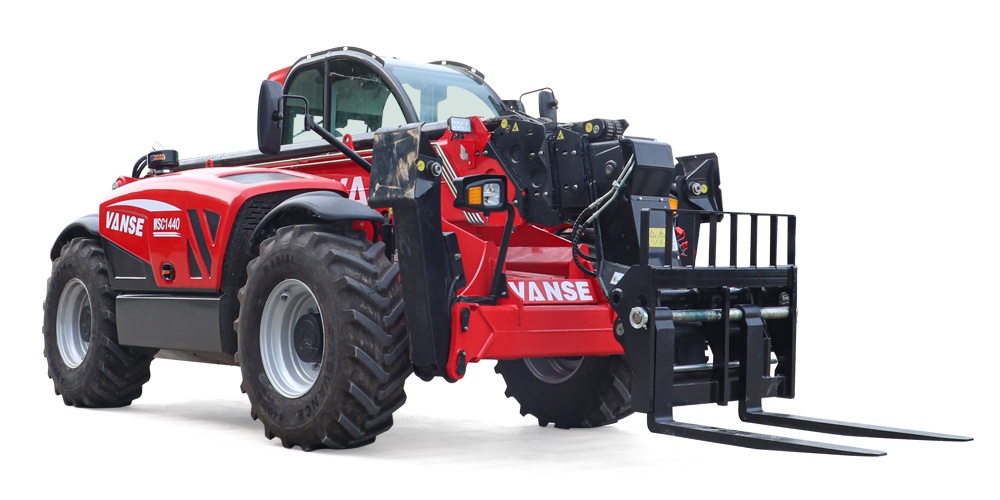
VANSE 735 7m Telescopic Handler
A balanced mid-duty solution for construction, agriculture, logistics, and warehousing, combining stable lifting, strong traction, and everyday versatility.


About the Author:
The VANSE team is a group of experienced professionals specializing in construction machinery research, manufacturing, and technical support. With deep industry knowledge and hands-on experience, our engineers and product specialists share practical insights on equipment selection, operation, maintenance, and industry trends.
Share
You May Also Interest
-

May 7, 2026
Telehandler OSHA Requirements: Guide
Learn telehandler OSHA requirements in the United States, including training, inspections, safe operation, jobsite compliance, and buying guidance.
-
May 6, 2026
Telehandler for Rough Terrain: Guide
Find the best telehandler for rough terrain in the United States, compare suppliers, machine types, applications, costs, and local support options.
-

May 5, 2026
Telehandler Inspection Checklist Guide
Use this telehandler inspection checklist for United States jobsites to verify safety, service points, documents, and uptime before each shift.
-

May 4, 2026
Telehandler Dimensions: Size Guide
Explore telehandler dimensions in the United States, including height, width, length, lift classes, jobsite fit, and practical sizing advice for buyers.