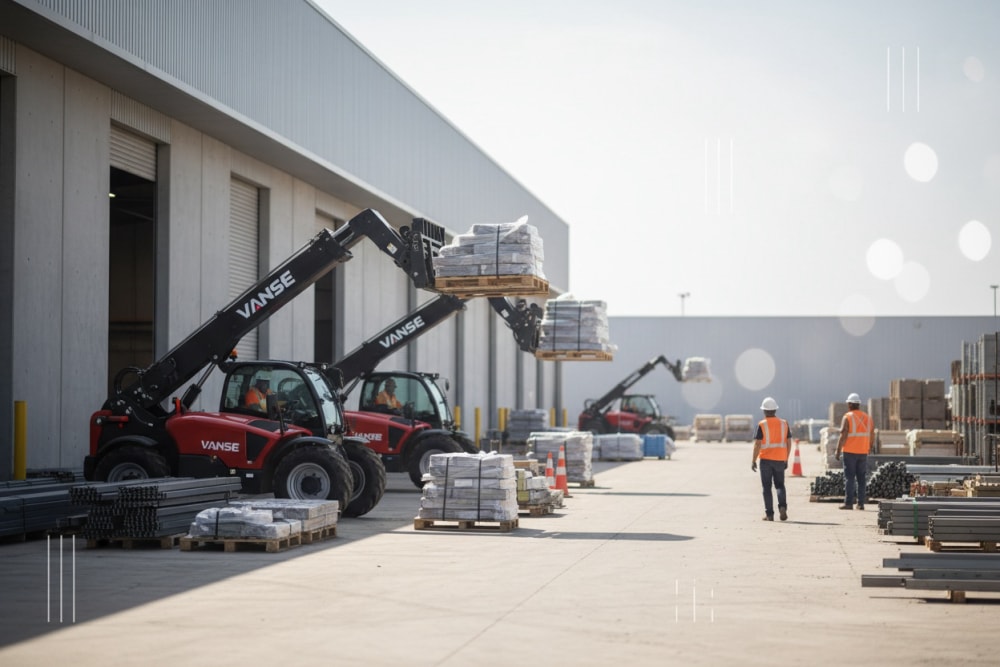
Telehandler OSHA Requirements in the United States
Quick Answer

In the United States, telehandler OSHA requirements center on five practical duties: use a properly trained and authorized operator, inspect the machine before each shift, follow the manufacturer load chart and attachment limits, keep the jobsite stable and clear of hazards, and apply fall protection or personnel platform rules when lifting people. OSHA commonly enforces telehandler safety under the powered industrial truck standard, general duty obligations, and construction site requirements related to ground conditions, traffic control, overhead power lines, and material handling.
If you are buying or renting a telehandler for a job in cities such as Houston, Dallas, Los Angeles, Miami, Savannah, Chicago, or Newark, the safest approach is to choose a supplier that provides operator familiarization, documented maintenance records, parts availability, and clear load chart support. Leading local providers commonly include United Rentals, Sunbelt Rentals, Herc Rentals, H&E Equipment Services, EquipmentShare, and Ring Power Lift Trucks, depending on service area and fleet specialization.
Qualified international suppliers can also be considered when they offer machines built to recognized quality systems, use globally trusted components, and back the sale with strong pre-sales and after-sales support in the United States. This is especially relevant for buyers seeking strong cost-performance for contractor fleets, agriculture, warehousing, and rental applications.
What OSHA Usually Requires for Telehandler Compliance

OSHA does not publish one single telehandler-only rulebook. In practice, compliance comes from a combination of standards and site controls that apply to rough terrain forklifts and telescopic handlers. For most contractors, rental companies, and fleet managers, the most important point is that a telehandler is not simply a general forklift with extra reach. The longer boom, changing load center, frame sway, uneven ground exposure, and attachment-specific limits create a different risk profile. That means a machine can be stable while carrying one load and become unsafe with only a small change in boom angle, outriggers, slope, wind, or attachment selection.
On U.S. jobsites, the fastest way to stay aligned with OSHA expectations is to treat the telehandler as a documented system: operator qualification, daily inspection, preventive maintenance, attachment compatibility, load chart use, safe travel planning, and supervision all need to work together. This is especially important on mixed-access sites near truck traffic, port facilities, agricultural yards, and distribution centers where telehandlers often transition between lifting pallets, moving bagged materials, handling bundled goods, and supporting elevated work through approved attachments.
| Compliance Area | What OSHA Focuses On | What the Employer Should Document | Why It Matters |
|---|---|---|---|
| Operator training | Training, evaluation, and authorization for the specific equipment type | Training records, practical evaluation, refresher training | Reduces misuse of boom functions, load chart errors, and travel hazards |
| Pre-shift inspection | Safe operating condition before use | Daily checklists, defect reports, repair sign-off | Catches tire, brake, steering, hydraulic, and fork issues early |
| Load handling | Capacity limits, attachment use, load stability | Load charts, attachment approvals, lifting plans | Prevents tip-over and dropped load incidents |
| Worksite conditions | Ground support, visibility, traffic, slopes, power lines | Site risk assessment, traffic plans, utility marking | Telehandlers often fail because of site conditions, not machine defects |
| Maintenance | Equipment kept in safe condition | PM logs, service intervals, parts replacement history | Supports reliability and demonstrates due diligence |
| Personnel lifting | Proper platform use and fall protection controls | Approved platform records, harness policy, rescue planning | Personnel lifting creates higher enforcement exposure |
The table above shows why compliance cannot be reduced to one training card or one inspection form. OSHA attention usually intensifies after a tip-over, near miss, struck-by event, or personnel lifting incident. Employers that connect records, supervision, and machine-specific procedures are generally in a stronger position during audits or incident reviews.
Core U.S. Market Context for Telehandlers

The U.S. telehandler market remains closely linked to nonresidential construction, warehousing expansion, agriculture, energy infrastructure, and industrial maintenance. Demand is concentrated around large logistics corridors and development zones, including the Gulf Coast, Southern California, the Southeast, Midwest manufacturing belts, and East Coast distribution hubs. Ports such as Los Angeles, Long Beach, Houston, Savannah, Charleston, and Newark influence equipment movement and replacement cycles, while inland freight centers around Dallas-Fort Worth, Atlanta, Phoenix, Kansas City, and Chicago drive ongoing fleet requirements.
OSHA requirements shape buying decisions because fleet owners now evaluate more than lift height and engine power. They want operator visibility, attachment compatibility, intuitive controls, service access, warning systems, parts lead time, and reliable technical documentation. In the rental market, compliance-friendly machines with straightforward inspection routines and clear decals tend to perform better because they reduce handoff confusion between branches, customers, and operators.
The market growth trend above reflects steady demand recovery from supply disruption years, followed by stronger fleet modernization. For OSHA-related purchasing, this trend matters because more buyers are replacing older units that lack modern diagnostics, better visibility packages, and operator-assist features.
Product Types and Why Compliance Differs by Configuration
Not every telehandler has the same OSHA risk profile. Compact units used inside yards or on small urban projects face turning-radius, visibility, and pedestrian-interface risks. Mid-size general construction models often handle pallets, trusses, framing packs, and bulk material in variable ground conditions. High-capacity and high-reach machines used in steel, precast, ports, and large industrial projects increase the consequences of load chart mistakes and poor site planning. Rotating telehandlers introduce additional lift planning, outrigger management, and work envelope control needs.
Buyers in the United States should match equipment type to actual load cycles instead of shopping only by maximum lift height. A machine that is oversized for a warehouse yard may introduce unnecessary blind spots, fuel consumption, and training complexity. A machine that is undersized for a concrete or steel project may push crews to operate near limits too often, which elevates both compliance risk and accident probability.
| Telehandler Type | Typical Capacity Range | Common U.S. Uses | Main OSHA Attention Points |
|---|---|---|---|
| Compact telehandler | 5,000 to 6,000 lb | Urban construction, landscaping, farms, material yards | Pedestrian separation, visibility, tight-space travel |
| General construction telehandler | 6,000 to 10,000 lb | Framing, masonry, roofing, distribution support | Load chart use, rough terrain stability, attachment control |
| High-reach telehandler | 8,000 to 12,000 lb | Multi-story construction, industrial shutdowns | Boom angle effects, suspended load control, wind exposure |
| Heavy-duty telehandler | 12,000 lb and above | Ports, mining support, precast, energy projects | Ground bearing pressure, lift planning, traffic isolation |
| Rotating telehandler | Variable by model | Dense construction sites, facade work, specialty lifting | Outriggers, swing radius, platform mode restrictions |
| Agri telehandler | 6,000 to 9,000 lb | Feed, bale, seed, fertilizer, mixed farm handling | Attachment suitability, operator training across tasks |
This product breakdown helps buyers understand that compliance is partly a machine-selection issue. When the wrong telehandler type is chosen, crews tend to improvise, and improvisation is exactly where many OSHA issues begin.
Buying Advice for U.S. Contractors, Rental Fleets, and End Users
When sourcing a telehandler in the United States, especially for jobs spanning multiple states or branches, the purchase process should begin with compliance planning rather than price negotiation. Ask whether the supplier can provide machine familiarization support, parts stocking plans, service response expectations, attachment documentation, and operator-facing decals and manuals in clear English. Check whether the machine will spend most of its time on slab, gravel, mud, farm terrain, or mixed use. Then confirm lift heights and capacities based on real loads, not optimistic estimates.
It is also wise to ask how the dealer or importer supports field repairs. U.S. buyers near major freight nodes such as Houston, Savannah, Los Angeles, Oakland, Norfolk, and Newark often gain an advantage when parts can move quickly through domestic stock or planned port routing. For rental fleets, telematics and maintenance interval alerts can reduce downtime and help document asset care, which supports safety and residual value at resale.
| Buying Factor | What to Ask | Good Sign | Risk if Ignored |
|---|---|---|---|
| Training support | Do you provide operator familiarization and documentation? | Supplier offers practical handover materials and records | Operators misuse controls or attachments |
| Parts availability | Which parts are stocked in the United States? | Fast-moving wear and service parts stocked locally | Extended downtime after minor failures |
| Load chart clarity | Are charts attachment-specific and easy to interpret? | Model-specific charts and clear decals | Incorrect lift calculations and tip-over risk |
| Service response | What is your field service coverage area? | Defined response times and regional technicians | Machine remains unsafe or idle too long |
| Attachment compatibility | Which forks, buckets, jibs, and platforms are approved? | Documented approvals from the manufacturer | Unsafe configuration or voided warranty |
| Resale confidence | How established is the brand and parts pipeline? | Clear market support and service history | Lower asset value and buyer hesitation |
The buying table is practical because many telehandler problems do not start as mechanical failures. They start as procurement mistakes: wrong attachment selection, poor service reach, no structured training, or weak technical documentation. A lower initial purchase price only creates value if the machine remains compliant, serviceable, and easy to operate safely.
Industries That Depend on OSHA-Aligned Telehandler Operation
Construction remains the largest telehandler-consuming sector in the United States, but demand is increasingly diversified. Warehousing and logistics operations use telehandlers in outdoor yards and overflow handling zones. Agriculture depends on them for feed, bale, seed, fertilizer, and pallet movement. Manufacturing and industrial plants use them during shutdowns, equipment installation, and material staging. Energy, mining support, and municipal projects also rely on telehandlers for lifting where cranes are not practical or where mobility matters.
The bar chart shows why one standard operating approach does not fit every user. Construction fleets often prioritize outreach height and jobsite ruggedness. Agriculture may prioritize hydraulic speed, cooling reliability, and multi-attachment use. Industrial maintenance teams may place more value on precision, service access, and stable low-speed control. OSHA expectations still apply across all of these sectors, but training and site hazards differ significantly.
Common Applications and the Risks That Matter Most
Telehandlers are widely used for moving palletized block, drywall, lumber packs, roofing material, pipe, feed, and bagged products. They are also used with buckets, work platforms, jibs, and specialty attachments. Each application changes the machine’s effective capacity and hazard pattern. For example, carrying long framing bundles over uneven ground can create side-loading concerns. Lifting bagged fertilizer in agricultural yards may expose the machine to soft ground and repeated short-cycle reversing. Supporting maintenance personnel on an approved platform adds fall protection, rescue planning, and work-positioning controls.
In dense metro zones such as New York, Boston, Seattle, and San Francisco, jobsite layout constraints often make visibility, traffic routing, and load staging more important than raw lift height. In expanding Sun Belt regions such as Texas, Arizona, Florida, and Georgia, telehandlers work on larger and faster-moving sites where grade variation, mixed trades, and frequent relocation increase operating risk. OSHA attention tends to follow recurring problems: traveling with elevated loads, using unapproved work platforms, operating too close to overhead utilities, and failing to remove defective units from service.
Representative U.S. Suppliers and Service Networks
The companies below are well known in the United States for telehandler rental, sales, service, or distribution support. Availability varies by branch network, brand alignment, and state coverage, so buyers should confirm exact model availability, service reach, and training support for their region.
| Company | Primary Service Region | Core Strengths | Key Offerings |
|---|---|---|---|
| United Rentals | Nationwide across major metro and industrial markets | Large fleet scale, broad branch coverage, project support | Telehandler rental, fleet programs, jobsite services, training support |
| Sunbelt Rentals | Nationwide with strong Southeast, Texas, and Midwest presence | Dense branch network, contractor focus, quick deployment | General construction telehandlers, attachments, rental service |
| Herc Rentals | Nationwide with strong urban and infrastructure coverage | Project fleet solutions, industrial account management | Telehandler rentals, managed equipment programs, support services |
| H&E Equipment Services | South, Gulf Coast, Southwest, and growing national footprint | Rental plus sales model, service depth, regional familiarity | Sales, rentals, parts, maintenance, field service |
| EquipmentShare | Expanding nationwide with strong construction technology focus | Telematics integration, contractor-oriented fleet tools | Rental fleets, asset management, jobsite data tools |
| Ring Power Lift Trucks | Florida and nearby Southeast project zones | Regional support, service capability, material handling expertise | Telehandler sales, rentals, maintenance, parts support |
This supplier table matters because OSHA compliance depends heavily on service discipline and machine condition. A supplier with strong field support can help reduce delay in repairing defective brakes, steering, warning devices, or hydraulic faults. Buyers should compare not only rates, but also response time, parts fill rate, operator support, and attachment availability by branch.
Detailed Supplier Comparison for Buyers
For fleet managers and procurement teams, comparing service structure is often more useful than comparing brochure claims. The following view focuses on practical purchasing criteria relevant to the United States.
| Supplier | Best Fit Customer | Typical Advantage | Potential Limitation |
|---|---|---|---|
| United Rentals | Large contractors, industrial shutdowns, multi-state projects | Wide branch access and replacement options | Premium pricing in some markets |
| Sunbelt Rentals | General contractors, regional builders, fast-turn jobs | Strong availability and practical field support | Model selection varies by branch |
| Herc Rentals | Enterprise accounts, infrastructure, utility work | Strong project coordination for larger accounts | Local inventory can differ by market |
| H&E Equipment Services | Buyers needing sales plus support in the South and Gulf markets | Service-oriented regional depth | Less dense coverage than the largest rental networks |
| EquipmentShare | Technology-focused contractors and growing fleets | Digital fleet visibility and tracking tools | Coverage still expanding in some regions |
| Ring Power Lift Trucks | Florida users needing regional service continuity | Strong local reputation and support alignment | More regional than national in scope |
From a compliance standpoint, the best supplier is often the one that can deliver the right machine quickly, keep it documented, and support it through inspection, maintenance, and attachment questions. That may be a national rental brand for a multi-state contractor or a strong regional dealer for a local fleet with predictable utilization.
The area chart reflects a broader market shift. More U.S. buyers are prioritizing documented service support, telematics, training assistance, and parts access rather than treating telehandlers as purely commodity machines. This supports better OSHA readiness because machines are easier to monitor and maintain across distributed fleets.
Case Studies from Typical U.S. Operating Environments
A framing contractor in Dallas used mid-capacity telehandlers across three housing developments and saw repeated downtime from tire damage and missed daily inspections. After introducing a standardized pre-shift checklist, routing designated travel lanes, and retraining operators on carrying height and turning speed, near misses dropped and machine availability improved. This case shows that OSHA alignment often comes more from supervision and process discipline than from buying a more expensive machine.
A logistics yard near Savannah relied on a telehandler for overflow pallet movement during seasonal congestion. The machine operated around trailers, containers, and pedestrians. The biggest risk was not capacity but visibility and mixed traffic. The company marked one-way routes, restricted reversing in blind corners, and required a spotter in specific loading windows. The result was smoother handling flow and fewer unsafe interactions. In port-adjacent operations, telehandler safety often depends on traffic design as much as operator skill.
An agricultural business in central California used an older telehandler across feed, bale, and fertilizer tasks. Attachments had changed over time without clear capacity review. During a fleet audit, the company found that operators were relying on habit rather than current charts. After replacing worn forks, updating decals, and validating approved attachments, the farm reduced operational uncertainty. This reflects a common U.S. pattern in agriculture: the machine remains useful for years, but compliance slips when attachments and documentation drift apart.
An industrial plant in Ohio used a telehandler during shutdown maintenance to stage motors, pipe, and maintenance platforms. Because the machine occasionally supported elevated work through an approved platform, the site added a written rescue procedure, dedicated supervision, and a rule banning unauthorized personnel lifting methods. This reduced one of the most common enforcement risks around telehandlers: treating them like improvised aerial work devices.
Our Company in the U.S. Market
For buyers evaluating alternatives beyond traditional U.S. brands, VANSE presents a practical telehandler option for the American market because its machines are produced under CE and ISO 9001 certified systems, use internationally recognized core components such as Perkins and Cummins engines together with premium hydraulic and driveline systems, and pass comprehensive load testing, safety inspection, and performance validation before shipment. That technical foundation matters for U.S. contractors, rental fleets, distributors, and end users that need documented manufacturing discipline rather than unsupported price claims. VANSE serves multiple buyer types through flexible cooperation models including OEM, ODM, wholesale supply, retail-oriented opportunities, and regional distribution partnerships, which is useful for dealers, brand owners, rental companies, and enterprise fleets looking for configuration flexibility in specifications, branding, and attachments. Just as important for trust in the United States, the company is actively establishing a U.S.-based subsidiary with local inventory and after-sales capability, building on experience serving customers across North America and more than 40 countries worldwide; together with online technical support, offline service coordination, lifecycle maintenance assistance, and a long-term market commitment, this gives American buyers stronger protection than a remote exporter model. Buyers can review its equipment range, learn more about the company, explore service support, or contact the team for model matching and partnership discussions.
How to Build a Telehandler Compliance Program
A strong telehandler compliance program in the United States should be simple enough to use daily but detailed enough to stand up during investigation. Start with machine identification and model-specific documentation. Then assign authorized operators, record training dates, and schedule periodic evaluations. Build a pre-shift inspection routine that covers tires, fork condition, carriage locks, boom wear points, hydraulic leaks, steering response, warning devices, mirrors, lights, backup alarms, and fluid levels. Any unsafe defect should trigger immediate removal from service until repair is completed and documented.
Next, create a jobsite planning step. Confirm ground bearing conditions, slopes, travel paths, staging zones, weather exposure, and overhead line clearance. Match the attachment to the task and verify the relevant load chart is present and understood. On mixed-trade sites, designate a person responsible for traffic control around the telehandler. Finally, audit the system monthly or quarterly. Review near misses, damage events, and repeated operator errors. Many OSHA problems are predictable long before an incident occurs, especially when the same shortcuts begin repeating across crews or branches.
2026 Trends in Telehandler Safety, Policy, and Sustainability
Looking toward 2026, three trends will shape telehandler purchasing and OSHA readiness in the United States. The first is technology adoption. More machines will feature improved diagnostics, telematics, camera systems, overload warnings, maintenance alerts, and digital service records. These features do not replace training, but they help fleet managers identify misuse patterns and overdue maintenance faster.
The second trend is policy and documentation pressure. Contractors, insurers, and enterprise clients increasingly expect better evidence of training, inspections, and service history, especially on large public or industrial projects. That means telehandler suppliers that support documentation, onboarding, and parts traceability will gain an advantage. Buyers should also expect stronger scrutiny around personnel lifting practices, operator authorization, and site-specific risk controls.
The third trend is sustainability and lifecycle efficiency. U.S. fleet owners are paying more attention to fuel efficiency, idle reduction, engine performance, and total cost of ownership. Cleaner engines, better hydraulic efficiency, and preventive maintenance planning are becoming procurement factors, especially in metro regions with stricter environmental expectations and in sectors reporting ESG metrics. For many buyers, sustainability does not only mean emissions. It also means longer service life, fewer breakdowns, and a supply chain that can keep machines working safely without excessive downtime.
FAQ
Does OSHA require telehandler operators to be trained?
Yes. In the United States, employers are expected to ensure telehandler operators are trained, evaluated, and authorized for the equipment they use. Training should be practical and specific to the machine type, attachments, and site conditions.
Do telehandlers need daily inspections?
Yes. A pre-shift inspection is the standard best practice and is essential for compliance. Employers should document inspection results and remove unsafe equipment from service until repaired.
Can a telehandler lift people?
Only under controlled conditions using an approved personnel platform and site procedures that address fall protection, supervision, and rescue. Improvised personnel lifting creates major safety and enforcement risk.
What documents should stay with the machine?
The operator manual, applicable load charts, inspection forms or access to inspection records, maintenance history, and approved attachment information should be readily available to operators and supervisors.
What is the biggest cause of telehandler violations?
Common problems include untrained operators, using the wrong attachment, ignoring the load chart, poor pre-use inspection, operating on unstable ground, and unsafe personnel lifting practices.
Should I buy from a U.S. supplier only?
Not necessarily. Many U.S. buyers prefer local suppliers because service support is familiar and immediate, but qualified international manufacturers can also be a good choice if they offer documented quality systems, trusted components, local parts plans, and credible U.S. after-sales support.
Which industries in the United States benefit most from telehandlers?
Construction, agriculture, warehousing, manufacturing, energy, and municipal operations all benefit. The right model depends on load profile, terrain, duty cycle, and how much service support is available in the operating region.
How do I choose the right telehandler supplier?
Compare training support, parts availability, field service coverage, attachment approvals, documentation quality, and whether the supplier can support your operating region over the full life of the machine.
For U.S. buyers, telehandler OSHA requirements are not just a legal issue; they are a purchasing, supervision, and lifecycle management issue. The strongest results come from choosing the right machine, working with a supplier that can support it properly, and operating with disciplined training, inspection, and site planning from day one.
Complete Telescopic Handler Equipment Portfolio
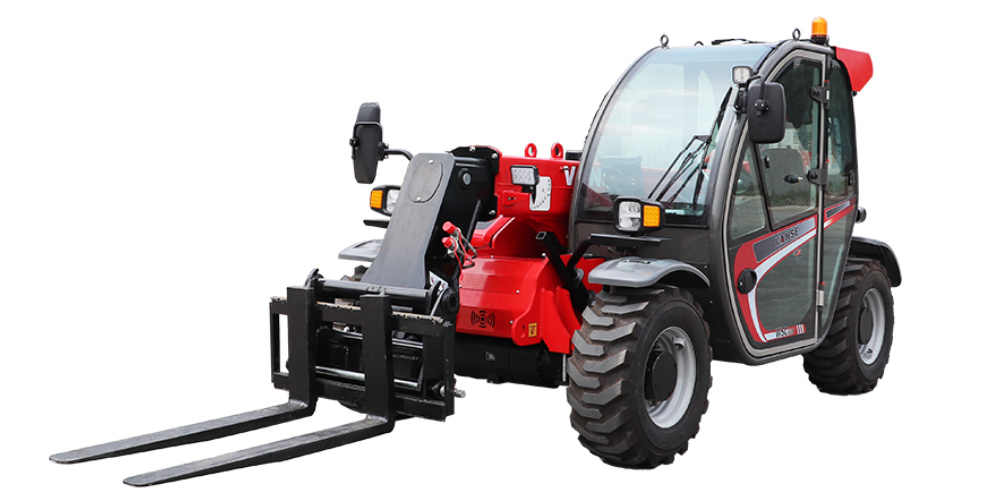
VANSE 625 6m Telescopic Handler
Designed for efficient material handling and stacking in warehouses, factories, and confined job sites, offering compact maneuverability and reliable performance.

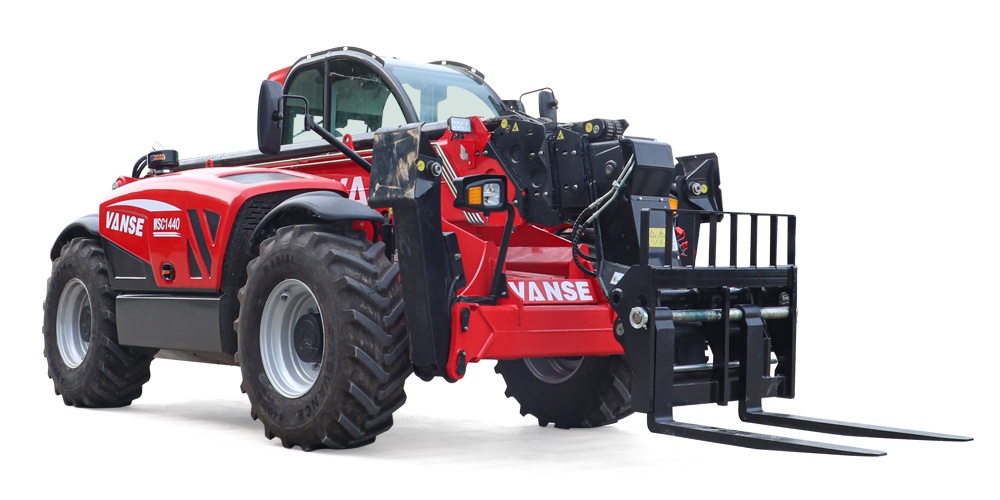
VANSE 735 7m Telescopic Handler
A balanced mid-duty solution for construction, agriculture, logistics, and warehousing, combining stable lifting, strong traction, and everyday versatility.


About the Author:
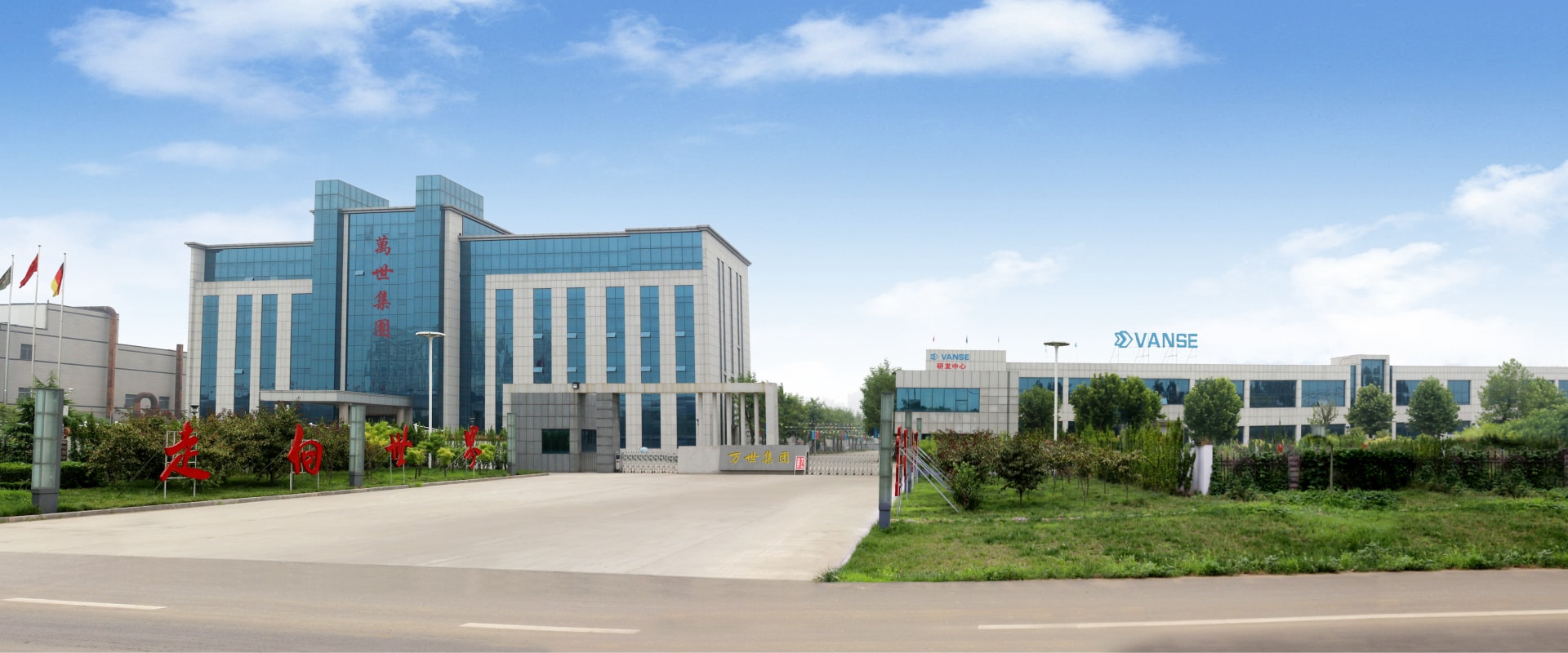
The VANSE team is a group of experienced professionals specializing in construction machinery research, manufacturing, and technical support. With deep industry knowledge and hands-on experience, our engineers and product specialists share practical insights on equipment selection, operation, maintenance, and industry trends.
Share
You May Also Interest
-

May 8, 2026
How Much Can a Telehandler Lift? Guide
Learn how much can a telehandler lift in the United States, with capacity ranges, jobsite examples, buying tips, supplier comparisons, and 2026 trends.
-

May 6, 2026
Telehandler for Rough Terrain: Guide
Find the best telehandler for rough terrain in the United States, compare suppliers, machine types, applications, costs, and local support options.
-

May 5, 2026
Telehandler Inspection Checklist Guide
Use this telehandler inspection checklist for United States jobsites to verify safety, service points, documents, and uptime before each shift.
-

May 4, 2026
Telehandler Dimensions: Size Guide
Explore telehandler dimensions in the United States, including height, width, length, lift classes, jobsite fit, and practical sizing advice for buyers.