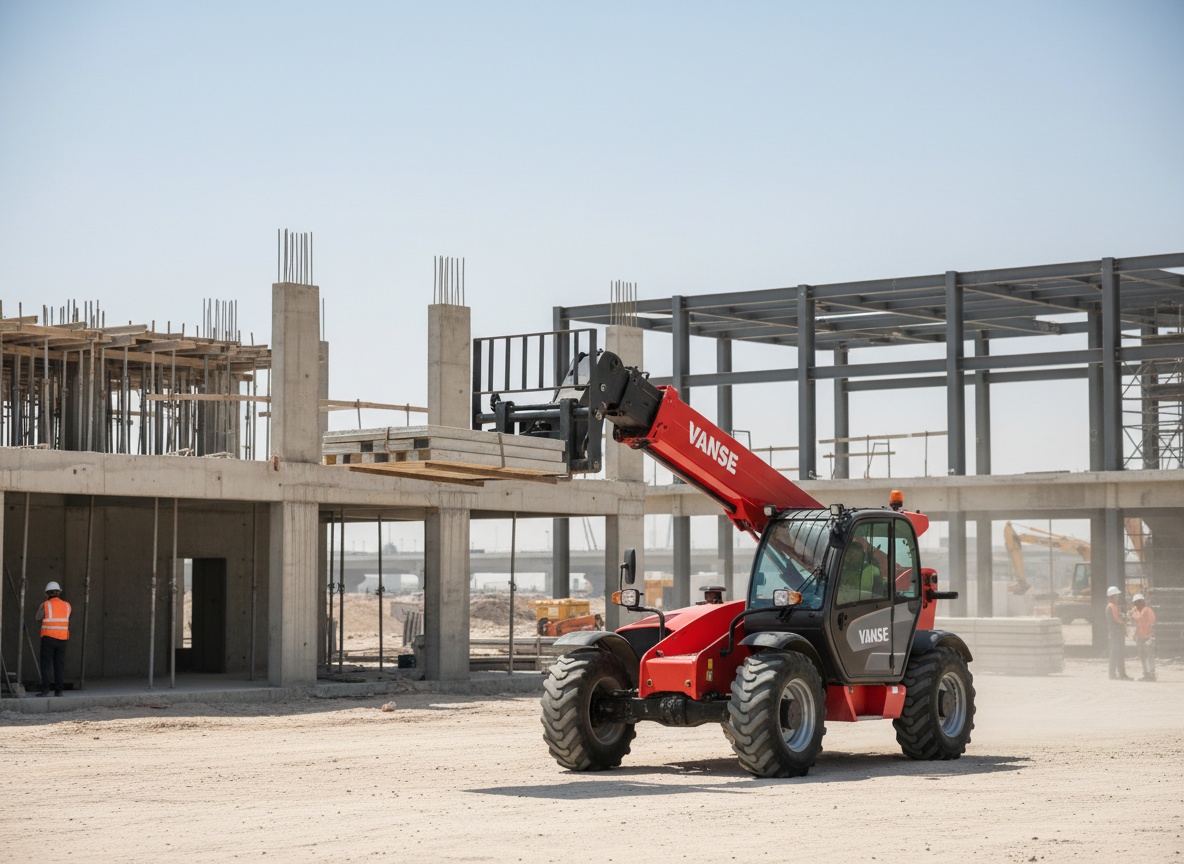
Telehandler Dimensions in the United States: Size Guide
Quick Answer

In the United States, standard telehandler dimensions usually fall into three practical size bands. Compact units often measure about 6 to 7 feet wide, 14 to 18 feet long, and 6.5 to 8 feet high, making them suitable for urban construction, landscaping, and indoor-adjacent material handling. Mid-size machines commonly run about 7 to 8 feet wide, 18 to 22 feet long, and 7.5 to 8.5 feet high, which fits general construction, masonry, and rental fleets. High-capacity or high-reach telehandlers can exceed 8 feet in width, 22 feet in length, and 8.5 feet in height, especially when configured for mining, heavy industrial yards, ports, and energy projects.
For most U.S. buyers, the fastest way to choose the right size is to check five points first: maximum lift height, forward reach, operating weight, transport width, and whether the machine clears site gates, barns, warehouses, or bridge restrictions. Popular suppliers active across the U.S. market include JLG, Genie, JCB, SkyTrak, Manitou, and Bobcat, with strong coverage in major hubs such as Houston, Chicago, Atlanta, Los Angeles, Dallas, and Savannah-linked distribution corridors. Qualified international suppliers can also be worth considering, especially manufacturers with CE and ISO-backed production, globally recognized core components, and strong pre-sales and after-sales support, because they can offer very competitive cost-performance for fleets, dealers, and end users.
Understanding Telehandler Dimensions in the U.S. Market

When buyers search for telehandler dimensions, they are usually trying to answer a practical question: will the machine fit the worksite, perform the required lift, and move legally and efficiently through U.S. transport and operating conditions? In the United States, that decision is shaped by several local realities. Urban jobs in cities such as New York, Boston, and San Francisco often require narrow access and compact turning envelopes. Large agricultural states such as Iowa, Kansas, Nebraska, and California prioritize reach into barns, grain facilities, and feed operations. Gulf Coast energy and port corridors from Houston to New Orleans frequently need higher-capacity machines with robust stability, heavier counterweight designs, and attachment flexibility.
Dimension planning also affects trailer selection, permits, yard layout, container loading strategy, and operator safety. Overall length matters for maneuvering in tight laydown areas. Width matters for lanes, gates, and storage aisles. Height matters for enclosed transport, parking structures, and low-clearance entrances. Wheelbase and turning radius influence cycle times on residential and commercial jobsites. Ground clearance and tire package can subtly change effective machine height and stability profile, especially on rough terrain. Because of this, dimension data should never be read as a single number; it should be read as an operating envelope.
American rental companies and large contractors usually segment telehandlers into compact, general construction, heavy lift, rotating, and specialty agricultural categories. That approach reflects how the U.S. market buys equipment: based on application, productivity, and total jobsite compatibility rather than lift height alone. Buyers who compare dimensional specs carefully often reduce idle time, improve trailer utilization, and avoid expensive site access surprises.
Telehandler Size Categories and Typical Dimensions

The table below shows typical telehandler dimensions seen in the United States. Actual specifications vary by manufacturer, tire choice, cab configuration, stabilizers, and attachment package, but these ranges are a practical reference for buyers comparing fleet options.
| Telehandler Category | Typical Lift Height | Typical Capacity | Overall Width | Overall Length | Overall Height | Common U.S. Use |
|---|---|---|---|---|---|---|
| Compact telehandler | 15 to 19 ft | 4,000 to 5,500 lb | 6.0 to 7.0 ft | 14 to 18 ft | 6.5 to 7.8 ft | Landscaping, small sites, barns, municipal work |
| Small construction telehandler | 20 to 27 ft | 5,000 to 6,000 lb | 6.5 to 7.3 ft | 16 to 19 ft | 7.0 to 8.0 ft | Residential framing, roofing, remodeling |
| Mid-size telehandler | 30 to 36 ft | 6,000 to 8,000 lb | 7.0 to 8.0 ft | 18 to 22 ft | 7.5 to 8.5 ft | Commercial construction, masonry, rental |
| Extended-reach telehandler | 42 to 56 ft | 8,000 to 12,000 lb | 8.0 to 8.5 ft | 21 to 24 ft | 8.0 to 8.8 ft | Steel, precast, infrastructure |
| High-capacity telehandler | 44 to 56 ft | 12,000 to 20,000 lb | 8.2 to 10.0 ft | 23 to 28 ft | 8.5 to 10.5 ft | Industrial yards, ports, heavy civil |
| Rotating telehandler | 55 to 97 ft | 8,000 to 15,000 lb | 8.0 to 8.8 ft | 24 to 28 ft | 9.0 to 10.5 ft | Complex urban construction, crane substitute tasks |
This comparison is useful because many buyers over-focus on reach and under-evaluate transport and access. A 56-foot machine may offer the right boom performance, but if the site gate or hauling setup cannot accommodate the width and length, that extra reach creates more cost than value. On the other hand, a compact telehandler may fit the site perfectly but lack safe capacity at the required forward reach. Matching dimensions to application is what separates efficient ownership from expensive compromise.
Which Dimensions Matter Most
U.S. buyers usually review seven key dimensions before ordering or renting a telehandler. Overall width is critical for trailer loading, lane access, and storage. Overall height affects shipping, warehouse doors, and covered parking. Overall length impacts maneuverability, especially in crowded city jobs. Wheelbase influences stability and turning behavior. Ground clearance matters in undeveloped lots, farms, and muddy jobsites. Turning radius is especially important for warehouses, nurseries, and urban redevelopments. Finally, machine weight affects transport compliance, trailer choice, and surface loading.
The difference between machine dimensions and working dimensions also matters. A telehandler might have an 8-foot transport height, but with outriggers deployed, a larger turning envelope, or a carriage positioned for operation, the actual working footprint can become much larger. Contractors in dense markets such as Miami, Seattle, and downtown Chicago often review site plans with both transport and working envelopes to avoid workflow bottlenecks.
U.S. Market Growth for Telehandlers
The American telehandler market has expanded steadily as more contractors substitute telehandlers for forklifts, cranes, and wheel loaders in mixed-material applications. Rental penetration remains strong, but ownership is increasing in agriculture, manufacturing, energy, and infrastructure. The chart below illustrates a realistic market growth pattern based on broader construction and material handling demand trends.
This trend reflects several factors: continued nonresidential construction activity, infrastructure spending, warehouse expansion, farm mechanization, and the preference for versatile lifting platforms that can work with forks, buckets, truss booms, and work platforms. Demand is especially visible around logistics and trade corridors connected to ports such as Los Angeles, Long Beach, Houston, Savannah, Charleston, and Newark, where material handling flexibility has growing value.
Industry Demand by Application
Different industries prioritize different telehandler dimensions. Agriculture often values lower overall height for building access combined with strong lift capability. Commercial construction tends to buy mid-range machines that balance reach and transportability. Energy, ports, and heavy industry prefer larger frames and higher operating weights for stability and attachment handling. The following chart compares realistic U.S. demand patterns.
For dimension planning, this means there is no single “best” telehandler size for the U.S. market. Instead, there are strong regional and sector-based preferences. Contractors in Texas and Arizona may accept larger dimensions if jobsite access is open and heavy materials dominate. Buyers in the Northeast often need tighter dimensions because of restricted streets, older buildings, and constrained staging areas.
How Dimension Preferences Are Shifting
One of the clearest trends in the U.S. is the shift away from one-size-fits-all fleets. Rental companies and end users are diversifying into more compact units for tight projects and more specialized high-reach or rotating machines for premium applications. This creates a visible shift in dimension preferences over time.
The practical takeaway is simple: compact and mid-size telehandlers increasingly dominate fleet counts because they serve the broadest mix of U.S. tasks, while large machines remain essential but more project-specific. Buyers who understand their actual duty cycle usually avoid overspending on dimensions they rarely use.
Product Types and How Their Dimensions Affect Performance
Telehandlers sold in the United States are not dimensionally identical even when lift height looks similar on paper. Standard fixed-boom construction telehandlers tend to deliver the best balance between simplicity, cost, and transport practicality. Compact telehandlers are designed for lower overall height and narrower width, often favored in agriculture and municipal work. High-capacity machines use larger frames, heavier axles, and more substantial boom sections to manage dense material loads. Rotating telehandlers add turret systems and stabilizers, increasing footprint and transport complexity but also expanding jobsite versatility.
Attachment choice can also influence effective use of dimensions. Pallet forks are the baseline for most spec comparisons, but buckets, truss booms, tire handlers, and work platforms change load center, visibility, and front overhang. A machine that appears dimensionally suitable for a site may become much less practical once the actual attachment package is installed. This is why experienced fleet buyers review both base machine dimensions and configured application dimensions before making a purchase.
Supplier Comparison in the United States
The supplier landscape in the United States includes established domestic and international brands with broad dealer networks, rental fleet presence, and strong application support. The table below compares several real names commonly considered by U.S. buyers. Exact model offerings vary by region and dealer stock, but these companies are widely relevant when discussing telehandler size selection.
| Company | Primary Service Regions | Core Strengths | Key Offerings | Dimension Focus | Best Fit Buyers |
|---|---|---|---|---|---|
| JLG | Nationwide, strong in construction hubs | Large rental presence, broad support network | Construction telehandlers, high-capacity units | Mid-size to large | Rental fleets, general contractors |
| Genie | Nationwide, major metro dealers | Popular in access equipment channels, reliable parts access | Compact to high-reach telehandlers | Compact to extended-reach | Commercial builders, rental companies |
| JCB | Nationwide with strong agriculture and construction reach | Strong multi-sector reputation, broad model variety | Agricultural and construction telehandlers | Compact to heavy-duty | Farms, mixed-use operators, dealers |
| SkyTrak | Strong across North America | Well-known construction telehandler brand identity | Fixed-boom telehandlers for jobsite lifting | Mid-size construction range | Contractors, rental houses |
| Manitou | Nationwide, especially industrial and agriculture markets | Strong rotating and specialized portfolio | Compact, rotating, and heavy application machines | Specialty and premium segments | Industrial users, urban projects |
| Bobcat | Nationwide dealer footprint | Compact equipment customer crossover, easy access for small contractors | Compact and mid-size telehandlers | Compact to mid-size | Small contractors, landscape and farm users |
This supplier view helps buyers understand that dimension choice is tied to channel strength. A machine is only as useful as the support behind it. In the U.S., dealer response time, local parts inventory, and technician coverage can be as important as width or lift height, especially for fleets running high utilization in peak building season.
Detailed Buying Advice for Telehandler Dimensions
Start with site access, not the brochure. Measure gate openings, door clearances, lane widths, turning pockets, trailer deck capacity, and storage areas. Then review the heaviest real load, its true load center, and the maximum placement height. After that, choose the smallest machine that safely and repeatedly completes the task with margin. This method reduces acquisition cost, fuel use, and operator fatigue while preserving transport flexibility.
For construction users in the United States, a mid-size telehandler often offers the strongest return because it covers palletized material, roof trusses, framed walls, scaffold supply, and general site support. For farms and feed operations, lower cab height and compact dimensions can matter more than maximum reach. For industrial yards, larger footprints may be acceptable if the machine handles dense loads, bulk bags, pipe, or steel more efficiently.
Buyers should also think about seasonal resale and rental demand. In the U.S. used market, telehandlers with highly common size classes are easier to remarket because more buyers can use them without changing transport setups. Machines that are too large for standard hauling or too specialized for local demand can cost less to buy but more to own over time.
Industries That Depend on Dimension Accuracy
Dimension errors affect productivity across multiple sectors. Construction companies use telehandlers for block, framing, drywall packs, and roof materials. Agricultural operations rely on them for hay, feed, bagged product, and barn cleaning attachments. Industrial and manufacturing sites handle molds, pallets, bins, and maintenance support. Ports and intermodal yards value reach and attachment flexibility. Energy and mining operations need stable heavy-duty handling in rough conditions. Municipal departments use compact units for storm recovery, streetscape maintenance, and facility support.
In each of these industries, the right size improves job speed and lowers risk. A telehandler that is too large can damage pavement, reduce visibility, and create congestion. One that is too small may require multiple repositioning cycles or operate close to its limits, reducing efficiency and safety margins.
Applications by Typical Dimension Class
The table below translates telehandler dimensions into common U.S. applications. This makes it easier for contractors, rental managers, and fleet buyers to identify a practical size range before comparing individual brands.
| Dimension Class | Width Range | Length Range | Height Range | Typical Application | Why It Works |
|---|---|---|---|---|---|
| Compact farm and facility | 6.0 to 6.8 ft | 14 to 16 ft | 6.5 to 7.3 ft | Barns, feed lots, nurseries | Fits low-clearance structures and narrow lanes |
| Residential construction | 6.5 to 7.2 ft | 16 to 18 ft | 7.0 to 7.8 ft | Homebuilding, roofing, renovation | Good balance of reach and maneuverability |
| General commercial | 7.0 to 7.8 ft | 18 to 21 ft | 7.5 to 8.4 ft | Schools, offices, retail buildouts | Handles palletized materials efficiently |
| Masonry and steel support | 7.5 to 8.3 ft | 20 to 23 ft | 8.0 to 8.8 ft | Mid-rise buildings, structural supply | Improved reach and stability at load |
| Heavy industrial | 8.2 to 9.5 ft | 23 to 27 ft | 8.5 to 10.0 ft | Pipe yards, plants, bulk materials | Stronger frame and larger capacity envelope |
| Urban specialty and rotating | 8.0 to 8.8 ft | 24 to 28 ft | 9.0 to 10.5 ft | Dense city projects, high placement work | Reduces repositioning in restricted spaces |
This table is especially useful for project estimators because it links size to actual working conditions rather than abstract model labels. It also helps dealers recommend inventory that turns faster within local market demand.
Case Studies from U.S. Use Scenarios
In Houston, a steel contractor working on warehouse expansion selected a 42-foot telehandler instead of a heavier 56-foot unit after reviewing transport width and actual placement needs. The smaller machine cleared site bottlenecks and reduced hauling cost while still meeting lift requirements. In central California, a produce operation shifted from a large wheel loader and forklift mix to compact telehandlers with lower cab height, improving barn access and reducing machine idling. In Chicago, a masonry subcontractor chose a rotating telehandler for a tight infill project because the compact working position and upper structure rotation reduced street-side repositioning. In Georgia near the Port of Savannah, a logistics yard adopted higher-capacity telehandlers for flexible pallet and bulk handling, where greater machine dimensions were acceptable due to open yard layout.
These cases show that telehandler dimensions are not only about fit; they influence total operating model, labor efficiency, and fleet versatility. Matching size to the actual environment is what creates measurable return.
Local Suppliers and Service Considerations
Local support remains central to telehandler buying decisions in the United States. A well-sized machine with weak support can quickly become a liability. Buyers should evaluate dealer density, parts stocking, field technician coverage, attachment availability, and response time. Regional markets also matter. Texas and the Southeast often move high volumes through broad dealer territories. The Midwest values dependable agricultural support. Coastal metro areas prioritize fast service because downtime on dense sites is especially expensive.
The following table outlines what U.S. buyers should compare when assessing suppliers and local channels.
| Evaluation Point | What to Check | Why It Matters | Strong Signal | Weak Signal | Buyer Impact |
|---|---|---|---|---|---|
| Dealer coverage | Distance to branch and mobile service | Faster issue resolution | Multiple regional branches | Single remote contact | Less downtime |
| Parts availability | Common wear items stocked locally | Reduces repair delay | Regional warehouse support | Import-only fulfillment | Better uptime |
| Attachment support | Forks, buckets, jibs, platforms | Improves machine versatility | Ready-to-ship attachments | Long lead times | Higher productivity |
| Technical training | Operator and service guidance | Safer, more efficient use | Onsite and online programs | No structured training | Lower misuse risk |
| Financing options | Lease, fleet, seasonal plans | Supports cash flow | Flexible commercial terms | Rigid full-payment model | Broader acquisition options |
| Resale support | Trade-in and used market recognition | Affects lifecycle cost | Established remarketing channel | Unclear secondary demand | Stronger residual value |
For buyers looking to compare broader equipment options and machine categories, the equipment lineup can help frame where telehandlers sit relative to loaders, forklifts, and other material handling solutions in mixed fleets.
Our Company Perspective for U.S. Buyers
For American buyers evaluating cost-performance alternatives, VANSE brings a practical telehandler proposition grounded in production scale, component quality, and local market commitment. Founded in 2013, the company has produced more than 8,000 machines and serves customers in over 40 countries, including North America, which demonstrates real export operating experience rather than speculative market entry. Its telehandlers are built under CE and ISO 9001 certified systems, with comprehensive load testing, safety inspections, and performance validation before shipment, and key models use globally recognized components such as Perkins and Cummins engines along with premium hydraulic, transmission, and axle systems that align with international reliability expectations. For U.S. end users, dealers, distributors, fleet owners, and private-label partners, VANSE supports multiple cooperation models including OEM, ODM, wholesale supply, retail opportunities, and regional distribution partnerships, allowing configurations in branding, color, and specifications to match local demand. Just as important, the company is actively establishing a U.S.-based subsidiary with local inventory, local after-sales capability, and stronger client-facing operations, supported by both online technical support and offline service coordination, which signals long-term physical commitment to the American market rather than a remote exporter relationship. Buyers who want to learn more about the manufacturer can review the company background at about VANSE, explore service capabilities through customer support, or reach out directly via the U.S. inquiry contact page.
Supplier and Product Comparison by Dimension Strategy
This comparison chart shows how different supplier positions typically align with dimension strategies in the U.S. market. It does not rank absolute quality; instead, it illustrates how various brands are often perceived by buyers looking for compact access, mainstream versatility, specialty reach, or value-focused fleet expansion.
For U.S. fleets, the central lesson is that the most attractive telehandler is often the one that fits the broadest number of real jobs with the least transport and support friction. Dimension strategy should therefore be treated as a business decision, not just a technical one.
Buying Checklist for Telehandler Dimensions
Before purchasing, confirm the operating width at the tires, overall cab height, shipping length with standard carriage, machine weight, and rated capacity at both maximum height and forward reach. Check whether the jobsite surface can handle axle loads. Confirm if your transport provider can move the unit without special routing. Review whether the machine can enter all intended structures, yards, and fenced areas. If buying for a fleet, compare how many jobs the machine can cover without needing a second specialized unit. These details often decide whether a machine becomes a daily revenue producer or a limited-use asset.
U.S. buyers should also ask for real machine photos, dimensional drawings, load charts, and attachment compatibility sheets. Those documents are often more revealing than top-line marketing specifications. For direct manufacturer communication or consultation on application matching, the official company website is a practical starting point.
2026 Trends Shaping Telehandler Dimensions
Looking into 2026, telehandler dimensions in the United States will be shaped by three major forces: technology, policy, and sustainability. On the technology side, buyers will see more telematics-enabled fleet monitoring, load management systems, camera packages, and semi-automated safety aids that help operators use machine envelopes more effectively. On the policy side, urban worksite safety requirements, emissions rules in certain jurisdictions, and transport compliance pressures will reward machines that balance productivity with manageable weight and footprint. On the sustainability side, there will be growing interest in lower-idle operating strategies, fuel-efficient powertrains, and eventually more electrified or hybrid solutions in compact classes where site access and emissions restrictions are tightest.
As these trends mature, compact and carefully optimized mid-size telehandlers are likely to gain even more share, especially in metro construction, warehousing, and municipal work. At the same time, specialty rotating and high-capacity units will remain important for high-value applications where space or lift complexity justifies the larger footprint. The future market will not eliminate big machines, but it will reward buyers who can clearly justify every inch of machine size with measurable project value.
FAQ
What are standard telehandler dimensions in the United States?
Most standard U.S. telehandlers are roughly 6 to 8 feet wide, 16 to 22 feet long, and 7 to 8.5 feet high, depending on capacity and reach class.
What is the best telehandler size for general construction?
A mid-size model with about 30 to 36 feet of lift height and moderate transport dimensions is often the most practical choice for general commercial and residential construction.
Are compact telehandlers popular in the United States?
Yes. Compact telehandlers are increasingly popular for agriculture, landscaping, municipal work, and jobsites with tight access or indoor-adjacent operating conditions.
Why is telehandler width so important?
Width determines whether the machine can pass through gates, narrow lanes, and staging areas, and it also affects trailer loading and storage planning.
Do attachments change effective telehandler dimensions?
Yes. Attachments can change front overhang, load center, visibility, and the working footprint, so they should be reviewed during the buying process.
Should U.S. buyers consider international telehandler suppliers?
Yes, especially when those suppliers have recognized certifications, proven export experience, quality component sourcing, and local sales or service commitment in the American market.
How do I choose between a larger and smaller telehandler?
Choose the smallest machine that safely handles your heaviest load at the required reach and still fits all access, transport, and storage constraints.
What should I ask a supplier before buying?
Ask for full dimensional drawings, load charts, transport weight, service coverage, parts support, attachment compatibility, and local warranty response details.
Complete Telescopic Handler Equipment Portfolio
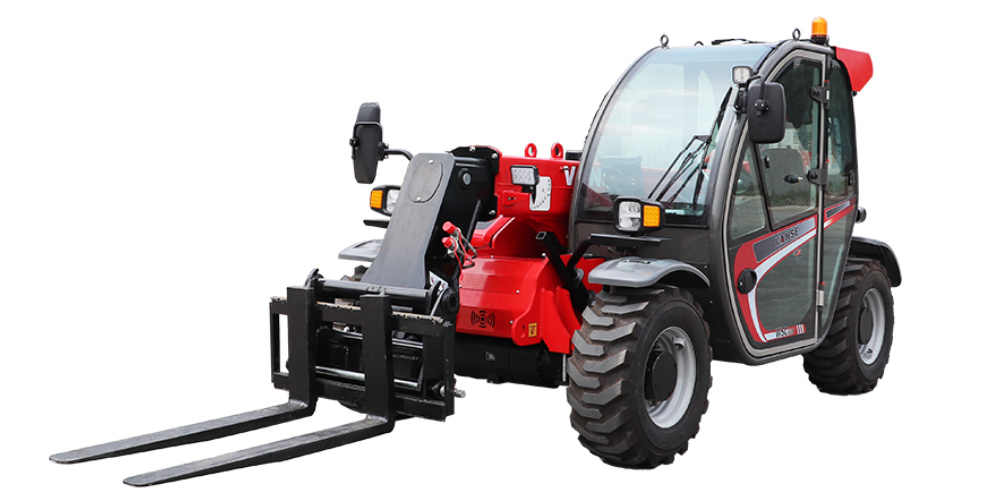
VANSE 625 6m Telescopic Handler
Designed for efficient material handling and stacking in warehouses, factories, and confined job sites, offering compact maneuverability and reliable performance.

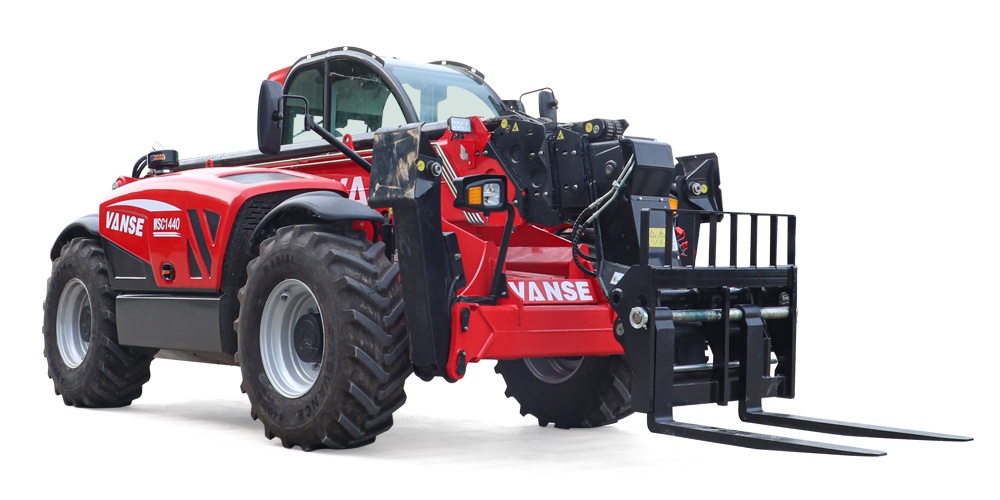
VANSE 735 7m Telescopic Handler
A balanced mid-duty solution for construction, agriculture, logistics, and warehousing, combining stable lifting, strong traction, and everyday versatility.


About the Author:
The VANSE team is a group of experienced professionals specializing in construction machinery research, manufacturing, and technical support. With deep industry knowledge and hands-on experience, our engineers and product specialists share practical insights on equipment selection, operation, maintenance, and industry trends.
Share
You May Also Interest
-

May 8, 2026
How Much Can a Telehandler Lift? Guide
Learn how much can a telehandler lift in the United States, with capacity ranges, jobsite examples, buying tips, supplier comparisons, and 2026 trends.
-

May 7, 2026
Telehandler OSHA Requirements: Guide
Learn telehandler OSHA requirements in the United States, including training, inspections, safe operation, jobsite compliance, and buying guidance.
-
May 6, 2026
Telehandler for Rough Terrain: Guide
Find the best telehandler for rough terrain in the United States, compare suppliers, machine types, applications, costs, and local support options.
-

May 5, 2026
Telehandler Inspection Checklist Guide
Use this telehandler inspection checklist for United States jobsites to verify safety, service points, documents, and uptime before each shift.