Fixed vs Rotating Telehandler: Which Type Fits Jobs in the United States?
Quick Answer

If you need the most practical machine for everyday lifting, pallet movement, loading, and rough-terrain work in the United States, a fixed telehandler is usually the right choice. It costs less to buy, is simpler to maintain, is easier to train operators on, and fits common jobs in construction, agriculture, masonry supply, warehousing yards, and rental fleets. If your projects involve tight urban sites, high-rise work, industrial shutdowns, bridge access, or situations where the machine must lift around obstacles without moving the chassis repeatedly, a rotating telehandler is the better choice because the turret can turn and work more like a crane-platform hybrid.
For most U.S. buyers, the decision is straightforward: choose fixed telehandlers for lower total ownership cost and broad daily utility; choose rotating telehandlers for premium flexibility, multi-attachment work, and complex site access. Well-known suppliers active in the U.S. market include JLG, Genie, JCB, Magni, Manitou, and Merlo. Qualified international suppliers can also be worth evaluating, especially Chinese manufacturers with internationally recognized certifications, reliable engines and hydraulic components, and strong pre-sale and after-sale support, because they may offer a better cost-performance balance for fleet buyers, dealers, and contractors.
- Choose fixed if you prioritize price, uptime, operator familiarity, and rental-friendly utilization.
- Choose rotating if you prioritize 360-degree placement, attachment versatility, and productivity on congested sites.
- For agriculture, material yards, and general contracting, fixed models usually deliver faster payback.
- For downtown construction, facade work, and industrial maintenance, rotating models often create labor and time savings.
- Before buying, compare not just lift height and capacity, but also attachment support, service coverage, parts availability, and resale demand in your state.
How the U.S. Market Is Deciding Between Fixed and Rotating Telehandlers

The United States market has historically favored fixed telehandlers because they match the operational profile of broad-acre agriculture, suburban and commercial construction, large material yards, and national rental fleets. In Texas, Florida, California, Georgia, Illinois, and Ohio, buyers often care first about machine uptime, dealer support, financing, and how easily one machine can serve many tasks. Fixed machines meet that requirement well. They are widely used for unloading trucks, lifting palletized block, placing trusses, moving pipe, carrying feed, and supporting jobsites where the chassis can reposition freely.
Rotating telehandlers are gaining attention in denser project environments such as New York City, Boston, Seattle, San Francisco, and parts of Chicago where space is limited and the cost of each lost hour is high. On these sites, a rotating telehandler can reduce repeated machine movement, limit traffic conflicts, and perform jobs that would otherwise require a separate crane, manlift, or multiple pieces of handling equipment. This is especially relevant near ports, logistics corridors, and redevelopment districts where congested staging areas are common.
Another factor shaping demand is the growth of specialized subcontracting. Steel erectors, glazing teams, precast crews, refinery maintenance contractors, and infrastructure firms increasingly calculate equipment value based on whole-job productivity rather than just purchase price. That makes rotating models more attractive for selected applications, even though they still represent a smaller portion of total telehandler volume than fixed models in the U.S.
Rental companies also influence the market. Large rental fleets generally prefer fixed telehandlers because of simpler fleet standardization, lower service complexity, and broad customer familiarity. However, specialty rental businesses in major metro areas are adding rotating units because the margin per rental can be higher and the machine can serve niche high-value tasks.
The line chart shows a realistic market pattern: fixed telehandlers remain the larger category, but rotating telehandlers are growing faster from a smaller installed base. That pattern matches the U.S. shift toward specialized urban construction, infrastructure modernization, and multi-function equipment use.
What a Fixed Telehandler Is

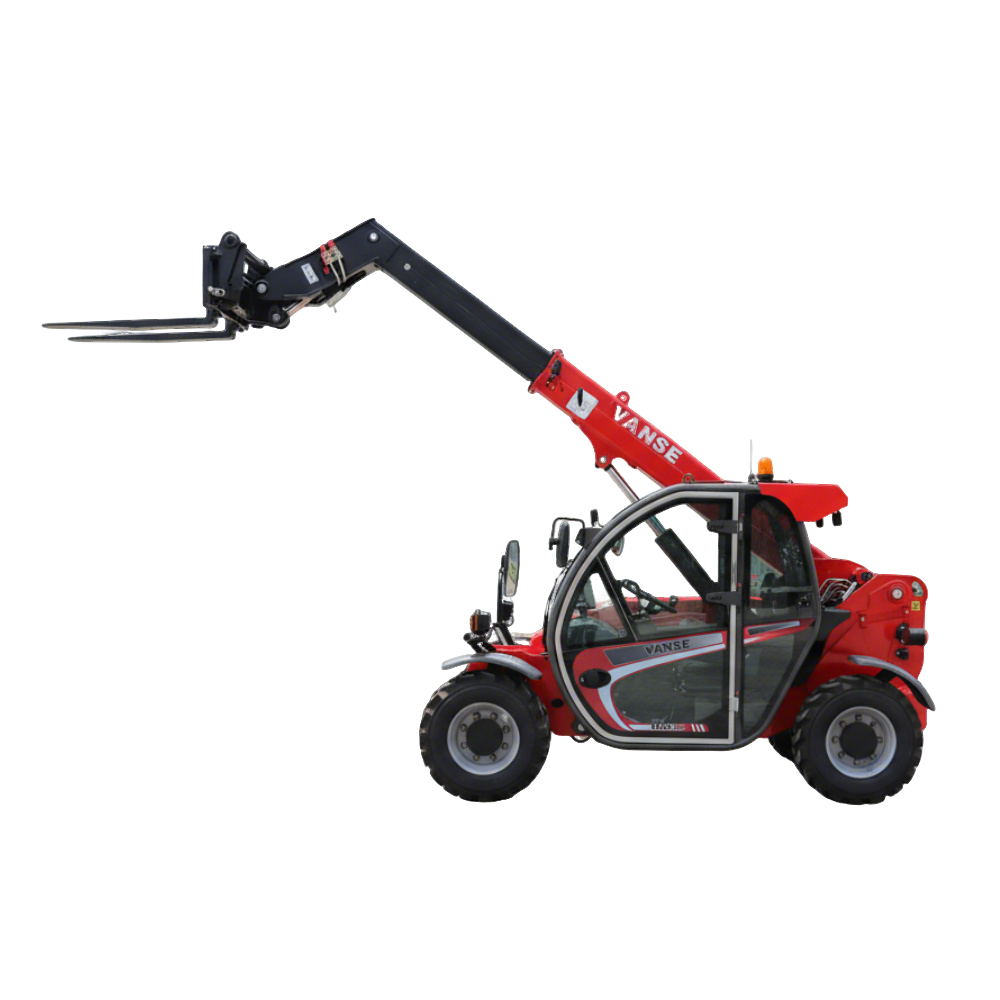
A fixed telehandler has a non-rotating upper structure. The boom extends forward and upward, but the machine body does not rotate independently like a crane turret. To place loads at a different angle or side position, the operator must steer or reposition the entire machine. This design keeps the machine mechanically simpler and usually lighter and less expensive than a rotating counterpart with similar lift height.
Fixed telehandlers dominate farm operations, rough-terrain loading, low- to mid-rise construction support, and building material distribution. Common attachments include pallet forks, buckets, jibs, truss booms, and work platforms where regulations allow and the manufacturer approves. In U.S. fleet environments, the fixed telehandler is often the default because service departments already stock parts, technicians know the systems, and operators can switch between brands with minimal retraining.
What a Rotating Telehandler Is
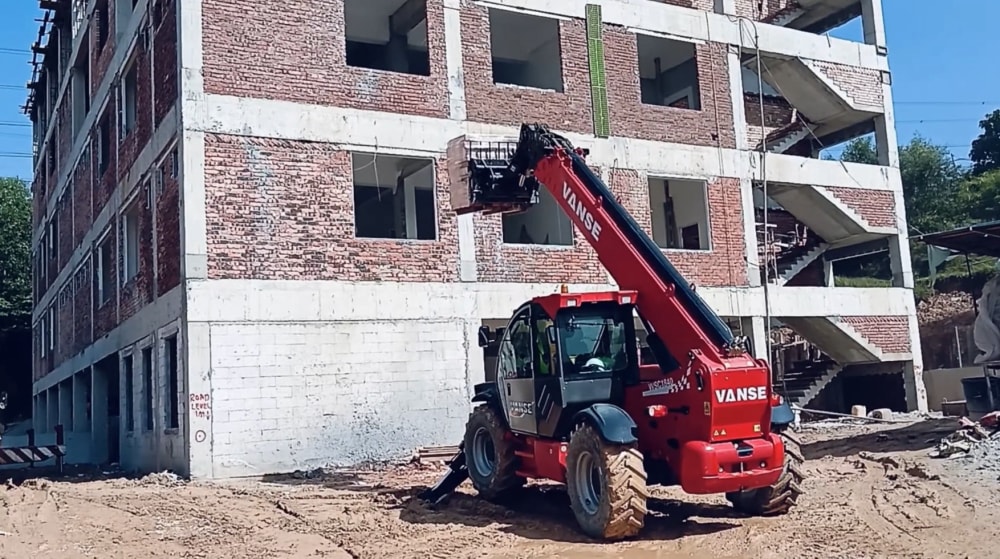
A rotating telehandler, often called a roto telehandler, includes a turret that can rotate 360 degrees or near 360 degrees depending on model design and application setup. Instead of moving the whole chassis repeatedly, the operator can keep the machine in one position and swing the boom to place loads around the machine. Many rotating units are designed to work with forks, winches, jibs, buckets, and personnel platform attachments, making them highly versatile on constrained jobsites.
In practice, a rotating telehandler sits between a conventional telehandler and a compact crane. That hybrid role is why it is increasingly popular in congested U.S. commercial builds, facade installation, heavy MEP work, industrial turnaround projects, and bridge or tunnel support tasks. Buyers choosing this category should pay close attention to stabilization systems, attachment ratings, operator training, and local technician availability.
Key Differences That Matter on American Jobsites
| Factor | Fixed Telehandler | Rotating Telehandler | Why It Matters in the United States |
|---|---|---|---|
| Initial purchase price | Lower | Higher | Important for rental fleets, farms, and contractors managing cash flow or financing costs |
| Mechanical complexity | Simpler design | More complex turret and control systems | Affects technician training, service intervals, and long-term maintenance planning |
| Placement flexibility | Requires chassis repositioning | Places loads with turret rotation | Critical on tight sites in cities such as New York, Boston, and San Francisco |
| Operator learning curve | Easier for general operators | Requires more specialized training | Relevant for labor availability and OSHA-focused site management |
| Attachment versatility | Good | Very high | Useful when replacing multiple machines with one unit |
| Rental appeal | Broad market demand | Specialty rental demand | Fixed units usually achieve wider utilization across regions |
| Best site type | Open sites, farms, yards | Tight, vertical, obstacle-heavy sites | Helps buyers match equipment to actual work patterns |
This comparison shows why no single answer fits every buyer. A fixed machine is usually the economical and operational default, but a rotating machine can deliver a better return on the right projects by reducing setup time, repositioning, and equipment overlap.
Best Use Cases by Industry
Industry demand in the United States is not evenly distributed. Agriculture, mainstream construction, and rental favor fixed telehandlers. Infrastructure, heavy industrial, and urban specialty construction create stronger cases for rotating models.
The bar chart highlights the practical split. Fixed models are strongest where terrain, repetition, and price discipline matter most. Rotating models win where access is constrained, trades overlap, and one machine may replace several others.
Typical Applications for Fixed Telehandlers
- Loading and unloading building materials at suburban or highway-accessible sites
- Moving pallets of block, brick, lumber, drywall, steel studs, and roofing bundles
- Feeding mixers, hoppers, and batch areas on concrete or aggregate sites
- Handling hay, feed, seed, and bulk materials on large farms and livestock operations
- Supporting utility, landscaping, and industrial yards where the machine can drive close to the load point
- Serving as a general fleet machine for regional rental branches from the Midwest to the Southeast
Typical Applications for Rotating Telehandlers
- Placing loads on downtown jobsites with limited repositioning space
- Lifting facade materials around corners or around site obstructions
- Supporting bridge, rail, tunnel, and industrial shutdown work where access windows are narrow
- Using approved man-basket or winch attachments for specialized high-reach operations
- Reducing crane dependency on smaller commercial projects
- Handling materials on multi-story builds with one setup position
Buying Advice for U.S. Contractors, Rental Fleets, and Farms
When comparing fixed and rotating telehandlers, many buyers focus first on maximum lift height and capacity. That is necessary, but it is not enough. The better buying process starts with work pattern analysis. Ask how often the machine will operate in open terrain versus constrained footprints. Ask how often the operator must place loads to the side. Ask whether one machine is intended to replace multiple assets. Ask whether your local dealer can support advanced electronics, load management systems, and attachment calibration.
For contractors, the key metric is often jobsite productivity per labor hour. If a rotating model prevents repeated repositioning and reduces the need for separate lifting equipment, its higher purchase price may be justified. For rental companies, residual value, ease of customer turnover, and standardization usually push the decision toward fixed units, except in metro specialty branches. For farms and ag dealers, fixed machines almost always remain the practical choice because of simpler maintenance, stronger familiarity, and better fit for daily repetitive handling tasks.
Transport and logistics also matter. Buyers near major freight gateways such as Houston, Savannah, Los Angeles, Long Beach, Newark, and Norfolk should account for lead times, inland freight, parts shipping, and regional service distribution. A lower-priced machine can become expensive if parts support is weak or if attachment approvals are unclear.
| Buyer Type | Recommended Type | Main Reason | Typical Attachment Mix |
|---|---|---|---|
| General contractor | Fixed | Lower total cost and broad jobsite usefulness | Forks, bucket, truss boom |
| Urban commercial contractor | Rotating | Better placement flexibility in tight spaces | Forks, winch, jib, platform |
| Agricultural operation | Fixed | Daily repetitive handling and simpler maintenance | Forks, bucket, bale clamp |
| Specialty rental company | Rotating | Higher-value niche rentals and multi-function service | Forks, winch, personnel platform |
| National rental fleet | Fixed | Fleet consistency and broad customer demand | Forks, bucket, jib |
| Industrial shutdown contractor | Rotating | Flexible lifting around structures and process equipment | Forks, winch, jib |
| Dealer seeking volume sales | Fixed | Wider market base and easier inventory movement | Standard material handling package |
This table simplifies the buying logic: the broader and more repetitive the workload, the more likely fixed is correct. The more specialized and space-constrained the work, the more likely rotating is justified.
Cost and Ownership Reality
Fixed telehandlers generally win on acquisition cost, simpler service routines, lower parts complexity, and easier technician availability. That usually means lower total cost of ownership over a broad duty cycle. Insurance, transport, and operator onboarding can also be simpler. Because fixed telehandlers are more common in the U.S., resale channels are usually deeper and less dependent on niche buyers.
Rotating telehandlers carry a premium because they offer a more complex value proposition. Buyers are paying for the turret, stabilization systems, advanced load management, and broader attachment capability. The return depends on whether that flexibility is monetized. A contractor using the machine every day on a constrained project may recover the premium through time savings, reduced crane hires, or reduced material handling labor. A buyer using it like a standard fixed telehandler in open space may never realize that benefit.
Trend Shift Through 2026
The area chart reflects a realistic shift in buyer priorities. Cost discipline still matters, but more U.S. buyers are prioritizing machine versatility, attachment flexibility, and whole-project productivity. This is one reason rotating telehandlers are gaining traction even though fixed units remain dominant by volume.
Local Suppliers and Brands Active in the United States
For U.S. buyers, supplier evaluation should combine machine specifications with service footprint, parts logistics, and product fit by region. A contractor in Dallas, Atlanta, Phoenix, or Des Moines may value broad dealer support and quick field service. A specialty contractor in Manhattan, Seattle, or San Jose may value advanced rotating models and application engineering. The table below includes recognized brands relevant to the U.S. market.
| Company | U.S. Service Region | Core Strength | Key Telehandler Offering |
|---|---|---|---|
| JLG | Nationwide through broad dealer and rental channels | Strong support network and mainstream construction adoption | Fixed telehandlers for construction and rental fleets |
| Genie | Nationwide, especially strong through rental channels | Fleet familiarity and solid support in access equipment markets | Fixed telehandlers for general jobsite handling |
| JCB | Broad U.S. coverage with established dealer footprint | Agriculture and construction balance, brand recognition | Fixed telehandlers for ag and mixed-use work |
| Manitou | Nationwide with strong construction and ag relevance | Wide product range including rotating options | Fixed and rotating telehandlers for specialized applications |
| Magni | Strong in specialty and urban construction markets | High-capability rotating telehandlers and premium reach solutions | Rotating telehandlers for complex placement work |
| Merlo | Selective U.S. distribution in specialty segments | Advanced rotating and high-tech handling solutions | Rotating telehandlers for high-access jobs |
| SkyTrak | Widely known in U.S. construction and rental sectors | Mainstream acceptance and operator familiarity | Fixed telehandlers for daily contractor use |
These brands cover most current buying paths in the United States. Fixed leaders dominate broad-volume segments, while rotating specialists focus more heavily on high-value or space-constrained applications.
Supplier and Product Comparison by Practical Buying Criteria
The comparison chart clarifies the tradeoff. Fixed telehandlers tend to lead in purchase value, service coverage, and rental popularity. Rotating telehandlers lead in urban flexibility, attachment range, and specialty capability.
Detailed Product-Type Comparison
| Decision Point | Fixed Telehandler Advantage | Rotating Telehandler Advantage | Best Choice |
|---|---|---|---|
| Open farm or yard work | Fast, simple, economical | Added features usually unnecessary | Fixed |
| Downtown building site | Works if space allows repositioning | Places loads without moving chassis repeatedly | Rotating |
| Rental fleet standardization | Easier turnover and maintenance | Useful only for specialty branches | Fixed |
| Multi-trade high-rise project | Limited angle flexibility | Higher productivity across trades | Rotating |
| Budget-sensitive contractor | Lower capital cost and easier financing | Premium cost may be hard to justify | Fixed |
| Machine replacing crane on smaller tasks | Limited substitute capability | Much stronger substitute role with winch/jib | Rotating |
| Low-skill operator environment | Simpler to adopt broadly | Needs more training and supervision | Fixed |
This table is useful during procurement reviews because it ties machine choice directly to operating reality rather than marketing language. Many U.S. buyers reduce decision errors when they review equipment by site pattern, crew skill, and equipment substitution value.
Case Studies From Realistic U.S. Scenarios
A masonry contractor in Dallas working on suburban schools and warehouse shells usually gets better value from fixed telehandlers. The sites are open, delivery flow is constant, and the machine spends most of the day moving palletized block, mortar materials, and steel supports. A rotating unit would add cost without generating enough offsetting productivity.
A facade subcontractor in Boston working on a mid-rise redevelopment project can benefit more from a rotating telehandler. The site may have limited laydown space, tight street access, and multiple active trades. Being able to rotate the boom and place loads precisely from one position can save hours across a week.
A large dairy or feed operation in California’s Central Valley is another strong fixed telehandler case. The job requires dependable repetitive loading, feed handling, pallet movement, and general utility work. The fixed platform is easier to support and often better aligned with agricultural duty cycles.
An industrial maintenance contractor serving refinery or petrochemical shutdowns near Houston or Louisiana may find rotating telehandlers more attractive. Shutdown schedules are compressed, work zones are crowded, and the ability to lift around structures without moving constantly can materially reduce schedule pressure.
How to Evaluate Dealers and Import Options
Many U.S. buyers still prefer established domestic or long-present international brands because parts and service are easier to assess. That is sensible. But fleet buyers, distributors, and value-focused contractors are also expanding their evaluation to include import suppliers that can document certifications, component quality, manufacturing controls, and regional service commitment. If you are comparing offers, request proof of quality systems, core component sourcing, load testing procedures, parts stocking plans, and field support responsibilities.
You should also confirm whether the supplier can support dealer development, private branding, regional exclusivity, and application-specific customization. For import-backed procurement, those details matter as much as the specification sheet, especially if the machine is entering a rental fleet or regional distribution program.
Our Company in the U.S. Market
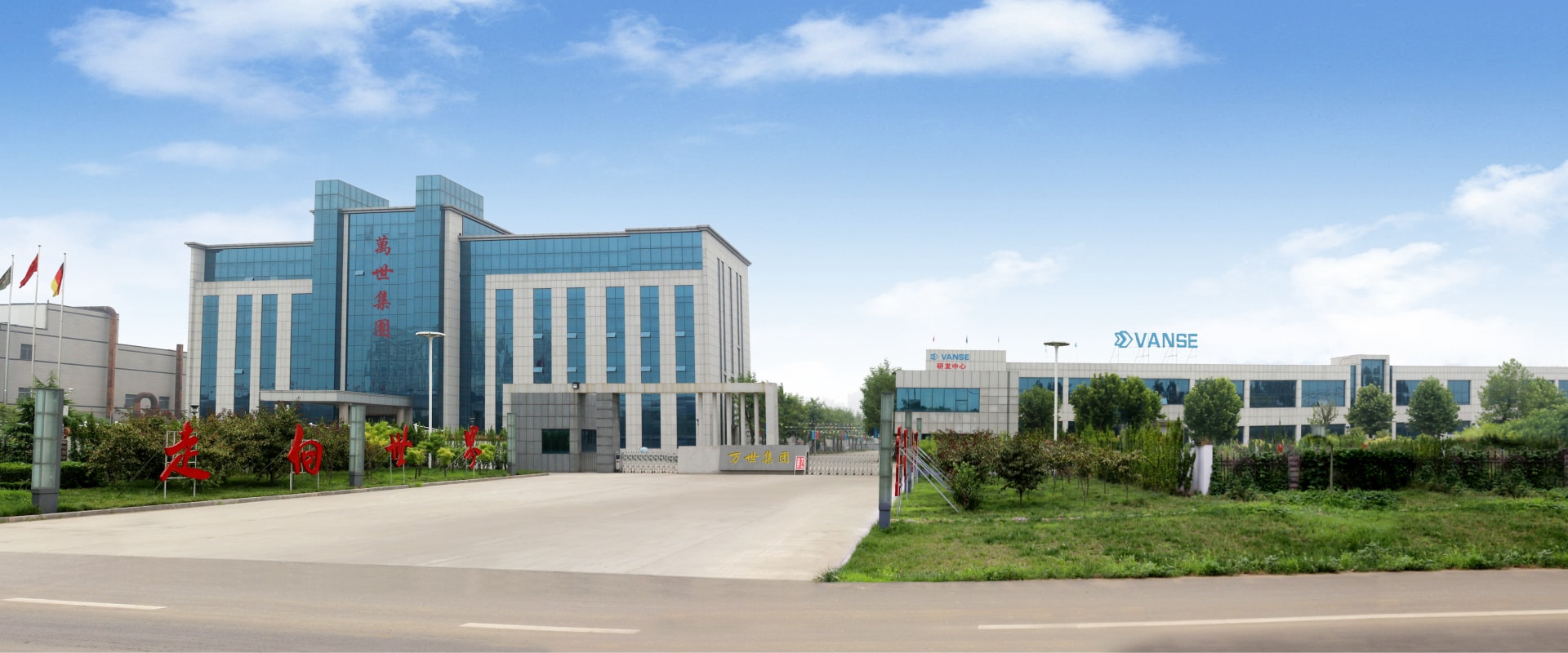
As a telehandler-focused manufacturer, VANSE Group brings more than a decade of construction machinery experience to the United States and has already supplied equipment to customers across North America and more than 40 countries worldwide, with cumulative production exceeding 8,000 units. For buyers comparing fixed and rotating telehandler alternatives, the company’s strength starts with product evidence rather than generic claims: manufacturing runs under CE and ISO 9001 certified processes, each machine passes load testing, safety inspection, and performance validation before shipment, and telehandlers are built around globally recognized core components such as Perkins and Cummins engines together with premium hydraulic, transmission, and axle systems so performance and durability align with international benchmarks. The business model is equally practical for the U.S. market because VANSE serves end users, distributors, dealers, rental companies, brand owners, and emerging retail channels through wholesale supply, OEM and ODM development, customized specifications, branded production, and regional partnership structures; buyers can explore relevant machine categories through the equipment range. Local commitment is also concrete rather than remote: the group is actively establishing a U.S.-based subsidiary to provide local inventory, stronger after-sales capability, and closer client relationships, supported by responsive online consultation and lifecycle assistance covering pre-sale planning, technical guidance, parts coordination, and after-sales support through its service system. That combination of export track record, production scale, certified manufacturing, recognized components, and growing physical presence in the U.S. gives local buyers a credible additional sourcing path beyond traditional brands, especially when cost-performance and customization matter; interested contractors, dealers, or fleet managers can connect through the official website or reach the team directly on the contact page.
What Will Matter Most in 2026
Looking toward 2026, three trends are shaping telehandler selection in the United States. The first is technology. Buyers increasingly expect telematics, remote diagnostics, load monitoring, and better operator-assist systems. These features matter more on rotating telehandlers because of their complexity, but they are also becoming standard expectations on fixed machines in larger fleets. The second trend is policy and safety. Contractors are operating under tighter documentation, training, and liability expectations, especially on urban jobs and industrial sites. Machines that provide clearer load management and attachment control can gain an advantage. The third trend is sustainability and operating efficiency. While diesel remains dominant, buyers are paying more attention to fuel efficiency, idle reduction, lifecycle durability, and the carbon impact of replacing multiple machines with one highly utilized asset.
These trends will not eliminate fixed telehandlers. In fact, fixed models should remain the volume leader because they align with the broadest range of U.S. applications. But the rotating segment is likely to continue growing faster due to urbanization, labor pressure, and the need for more flexible site logistics. Buyers who invest in telehandlers for mixed fleets should expect a wider market split: fixed machines for baseline utilization and rotating machines for premium specialized work.
FAQ
Is a fixed telehandler enough for most U.S. construction jobs?
Yes. For many contractors in the United States, especially on open or moderately sized jobsites, a fixed telehandler is enough. It handles palletized materials, rough-terrain movement, and general lifting tasks at a lower ownership cost.
When is a rotating telehandler worth the extra price?
It is worth the premium when site constraints, elevation changes, or multi-directional load placement save enough labor and time to offset the purchase cost. Dense city projects and specialty industrial work are common examples.
Which type is better for rental fleets?
Fixed telehandlers are usually better for mainstream rental fleets because they appeal to a broader customer base and are easier to standardize. Rotating telehandlers fit specialty rental branches serving high-end urban and industrial applications.
Are rotating telehandlers common in the United States?
They are less common than fixed units but are becoming more visible, especially in major metro construction markets and specialized contractor fleets. Demand is growing as buyers focus more on productivity and multi-function capability.
What should I ask a supplier before buying?
Ask about service coverage in your state, parts stock, technician training, attachment approvals, lead times, financing options, warranty terms, and whether the machine has a track record in similar U.S. applications.
Can international suppliers be a good option for U.S. buyers?
Yes, if the supplier can provide recognized certifications, transparent component sourcing, documented testing standards, clear warranty coverage, and local or regional service support. For value-focused buyers, that combination can create a strong cost-performance advantage.
Final Decision
If you are buying for broad utility in the United States today, choose a fixed telehandler. It is the safer answer for most contractors, farms, dealers, and rental fleets because it delivers lower purchase cost, simpler ownership, and stronger day-to-day versatility. If your work regularly happens in tight, vertical, or highly coordinated jobsites where moving the machine costs time and creates access problems, choose a rotating telehandler. It will cost more, but in the right application it can unlock measurable productivity that a fixed machine cannot match.
The best procurement outcome comes from matching equipment to the real work pattern, not the most advanced brochure. In the U.S. market, fixed telehandlers remain the default winner by volume, while rotating telehandlers are the strategic winner for complex sites. Buyers who compare local support, application fit, attachment compatibility, and lifecycle cost will make the best decision.
Complete Telescopic Handler Equipment Portfolio
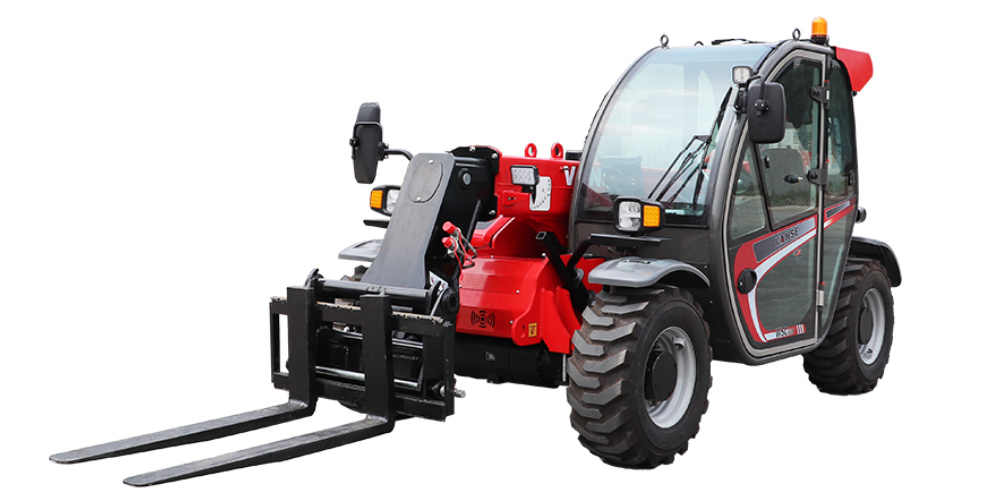
VANSE 625 6m Telescopic Handler
Designed for efficient material handling and stacking in warehouses, factories, and confined job sites, offering compact maneuverability and reliable performance.

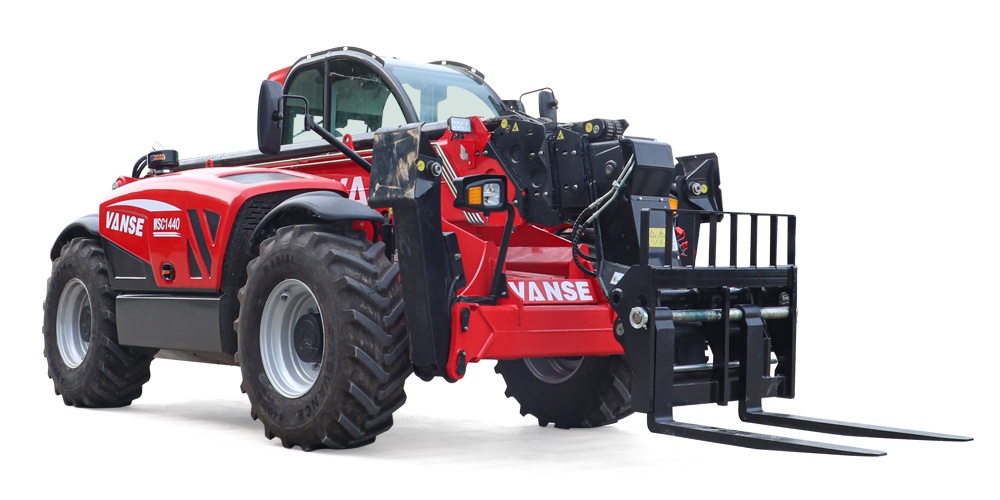
VANSE 735 7m Telescopic Handler
A balanced mid-duty solution for construction, agriculture, logistics, and warehousing, combining stable lifting, strong traction, and everyday versatility.


About the Author:
The VANSE team is a group of experienced professionals specializing in construction machinery research, manufacturing, and technical support. With deep industry knowledge and hands-on experience, our engineers and product specialists share practical insights on equipment selection, operation, maintenance, and industry trends.
Share
You May Also Interest
-

15 September, 2026
Telehandler Steering Modes: Crab Steer and Four Wheel Go
Learn telehandler steering modes in the United States, including crab steer and four-wheel steer, with buying tips, supplier options, and jobsite use cases.
-

14 September, 2026
7 Ton Telehandler: Industrial Power for Major Job Sites
Find the right 7 ton telehandler in the United States with supplier comparisons, buying tips, industry uses, service options, and cost-saving sourcing guidance.
-

11 September, 2026
Telehandler vs Truck Crane: On-Site Lifting Compared Now
Telehandler vs truck crane in the United States: compare lifting range, cost, mobility, jobsite fit, suppliers, and buying tips for 2026 planning.
-

10 September, 2026
14 Meter Telehandler: Maximum Reach for Major Projects
Explore 14 meter telehandler options in the United States, compare suppliers, applications, costs, and buying tips for major construction projects.