Telehandler Steering Modes in the United States: Practical Guide for Buyers and Operators
Quick Answer

Telehandler steering modes matter because they directly affect how safely and efficiently a machine moves in tight, uneven, and high-traffic work areas. In the United States, the three most common telehandler steering configurations are two-wheel steer for road travel and straightforward handling, four-wheel steer for tight turning in confined jobsites, and crab steer for moving diagonally alongside walls, racks, pipe runs, or framing lines. If your work involves warehouse yards, urban construction, feedlots, landscaping supply depots, or agricultural lanes, four-wheel steer usually offers the best all-around maneuverability. If your crews frequently place loads close to structures or work in narrow aisles, crab steer becomes especially valuable.
For U.S. buyers comparing machines, practical local options include JLG, Genie, JCB, Skyjack, Caterpillar, and Bobcat through established dealer networks across markets such as Texas, California, Florida, Illinois, Georgia, and Pennsylvania. Buyers should compare turning radius, axle design, frame stability, operator visibility, service response time, and attachment compatibility before selecting a model. Qualified international suppliers can also be worth considering when they combine recognized certifications, proven powertrain components, dependable parts access, and responsive pre-sale and after-sales support in the United States, especially when cost-performance is a major decision factor.
What telehandler steering modes actually mean

Telehandlers are built to lift, place, and carry loads where forklifts, wheel loaders, or rough terrain machines alone may not be enough. Steering mode determines how the wheels turn relative to one another and therefore changes the machine’s path, turning envelope, tire wear pattern, and suitability for specific operating conditions. In the U.S. market, buyers often ask about “crab steer” and “four wheel go,” but in practical fleet language these terms usually refer to crab steering and four-wheel steering.
Two-wheel steer works much like a standard truck or many industrial vehicles, with the front wheels turning while the rear wheels track behind. This mode is often preferred for travel over longer distances across a site, moving between storage yards, or transitioning through access roads because it feels predictable to operators and can be easier for newer drivers to manage.
Four-wheel steer turns both front and rear wheels in opposite directions. The result is a far tighter turning radius, which is extremely useful on crowded U.S. construction sites, inside industrial yards near Houston or Savannah, at rental depots around Chicago, and in agricultural operations where maneuvering around bins, barns, irrigation hardware, or stacked inputs matters every day.
Crab steer turns the front and rear wheels in the same direction, allowing the telehandler to move diagonally. This sounds specialized, but it becomes highly practical when aligning pallets along a wall, approaching a structure without repeated repositioning, moving beside trench boxes, or working in landscaping and masonry applications where side-to-side adjustment saves time and helps reduce ground disturbance.
Why steering mode selection matters in the United States

The U.S. market is broad, and telehandler usage varies sharply by region. In the Southwest, large construction parcels and infrastructure staging areas may favor machines that travel efficiently yet still turn sharply around rebar stacks and pipe bundles. In the Midwest, agriculture and ag retail operations often need machines that can maneuver in barns, silage pits, seed and fertilizer yards, and equipment sheds. On East Coast urban jobsites, space constraints can be extreme, making turning performance a top purchasing criterion. Around ports and logistics corridors such as Los Angeles, Long Beach, Houston, Savannah, Newark, and Charleston, machines often operate in mixed environments where compact movement and quick material placement reduce congestion.
Because labor costs, project schedules, and jobsite safety expectations are high in the United States, steering mode is not a minor feature. It affects cycle times, operator fatigue, aisle access, risk of accidental contact, and the number of repositioning moves required to place a load accurately. Fleets that standardize the right steering configuration often reduce wasted movement and improve equipment utilization.
Core steering modes compared
The table below compares the main telehandler steering modes used in the United States. This helps buyers match machine behavior to site layout, operator skill level, and application intensity.
| Steering Mode | How the Wheels Move | Best U.S. Applications | Main Advantage | Main Limitation | Buyer Note |
|---|---|---|---|---|---|
| Two-wheel steer | Front wheels turn, rear wheels follow | Travel across open jobsites, yard movement, general transport | Stable, familiar handling | Wider turning radius | Good baseline mode for mixed operators |
| Four-wheel steer | Front and rear wheels turn opposite directions | Tight construction sites, rental fleets, warehouses, farms | Very tight turning circle | Requires operator awareness in crowded spaces | Often the most versatile choice |
| Crab steer | Front and rear wheels turn same direction | Wall-side placement, diagonal approach, landscaping, framing | Excellent lateral positioning | Less intuitive for inexperienced users | Best when precision alignment is frequent |
| Selectable multi-mode system | Operator switches among the three modes | Rental fleets, contractors with varied projects | Maximum flexibility | Higher system complexity | Ideal for mixed-use ownership |
| Electronic mode synchronization | Sensors help align wheel positions during switching | Modern fleets seeking easier operation | Smoother mode transitions | Can raise repair cost if neglected | Ask about diagnostics and calibration process |
| Mechanical linkage-heavy system | More direct mechanical steering architecture | Heavy-duty and rugged service environments | Durable in harsh conditions | May feel less refined | Check service intervals and wear points |
For many U.S. buyers, the most practical answer is not choosing one permanent mode but choosing a telehandler platform that can switch quickly and reliably among modes. That flexibility matters for contractors who move between suburban commercial sites, downtown infill projects, steel erection work, and bulk material yards.
How four-wheel steer improves jobsite maneuverability
Four-wheel steer is the preferred mode for many rental houses and contractors because it solves one of the most common telehandler problems: needing multiple corrective turns to line up a pick or place. On a busy construction site, every extra repositioning movement adds time, increases the chance of backing conflicts, and can complicate work around foot traffic or other mobile equipment.
In four-wheel steer, the rear axle responds in the opposite direction from the front axle, allowing the machine to pivot through a shorter arc. This can dramatically help when entering tight laydown areas, backing around concrete forms, maneuvering between temporary fencing and material stacks, or turning near partially enclosed structures. The benefit is especially clear for machines working around apartment builds, distribution center construction, municipal utility projects, and commercial remodeling in dense metro regions.
For U.S. fleets, four-wheel steer also supports asset utilization because a single unit can perform in many site layouts. If you operate in Dallas-Fort Worth, Phoenix, Atlanta, Columbus, or Charlotte, where suburban expansion creates a mix of open and tight jobsite conditions, four-wheel steer usually offers the broadest day-to-day value.
When crab steer is the better choice
Crab steer is often overlooked by first-time buyers, yet it can be the feature that most improves placement efficiency. By moving diagonally, the machine can approach an object or workface without repeatedly straightening and correcting. This is useful when setting trusses near building edges, feeding masonry materials along scaffolding lines, placing pipe near trench routes, or adjusting pallet position in nursery and landscaping yards.
In agriculture, crab steer can help when approaching feed bunks, moving near livestock barriers, or navigating soft ground where repeated sharp turning could disturb the surface. In industrial settings, it can be useful when working parallel to racks, equipment lines, or barriers where side approach control is valuable. On premium U.S. telehandler models, crab steer is especially attractive to experienced operators who understand how to use diagonal motion to reduce cycle time.
U.S. telehandler market outlook and growth
The telehandler market in the United States continues to benefit from construction activity, warehouse expansion, agricultural mechanization, and the need for versatile material handling equipment. Demand remains strongest in states with high levels of infrastructure investment, residential growth, logistics development, and broad acreage agriculture. Rental demand also stays significant because many contractors prefer fleet flexibility over ownership of multiple specialized machines.
The chart below illustrates a realistic market growth trend for U.S. telehandler demand from 2021 through projected 2026, reflecting broad industry expectations tied to construction starts, equipment replacement cycles, and material handling demand.
This growth pattern suggests that buyers who understand steering requirements early can make better long-term decisions, especially when ordering units for branches, dealer stock, or regional fleet expansion.
Industries driving steering-mode demand
Different sectors prioritize different steering benefits. The table below shows how major U.S. industries typically value telehandler steering capability and what that means for specification planning.
| Industry | Typical Work Environment | Preferred Steering Mode | Why It Matters | Common Attachments | Primary U.S. Regions |
|---|---|---|---|---|---|
| Commercial construction | Mixed open and tight sites | Four-wheel steer | Fast turning around structures and stored materials | Forks, buckets, truss booms | Texas, Florida, Georgia, Carolinas |
| Residential framing | Narrow subdivision lots | Four-wheel steer and crab steer | Material placement near walls and framing lines | Fork carriages, work platforms | Arizona, Nevada, Tennessee, Utah |
| Agriculture | Barns, yards, feed areas, fields | Crab steer and four-wheel steer | Flexible movement around buildings and uneven surfaces | Buckets, bale handlers, forks | Iowa, Kansas, Nebraska, California |
| Industrial plants | Constrained operating lanes | Crab steer | Diagonal approach near equipment and barriers | Forks, jibs, specialty tools | Ohio, Pennsylvania, Gulf Coast |
| Rental fleets | Many customer jobsite types | Selectable multi-mode | Broad application coverage for utilization | General-purpose attachments | Nationwide |
| Landscaping and masonry supply | Yards with narrow circulation paths | Crab steer | Better side alignment and reduced repositioning | Forks, buckets, clamps | California, New Jersey, Illinois |
The value of this comparison is practical: the best steering mode depends less on brochure language and more on work pattern, turning frequency, material placement accuracy, and surface conditions.
Industry demand by sector
The next chart shows a realistic comparison of how strongly major U.S. industries currently drive telehandler demand. Construction leads, but agriculture, rental, and industrial maintenance remain important segments where steering flexibility affects buying decisions.
Common telehandler product types and steering relevance
Not every telehandler is built for the same duty cycle. U.S. buyers should compare compact models, mid-capacity machines, high-reach units, and specialty heavy-lift configurations with steering requirements in mind. A compact model may benefit disproportionately from four-wheel steer because it is often chosen for constrained spaces. A larger high-reach unit may use all three modes, but the real buying question becomes whether the machine can transition safely and predictably under field conditions.
Compact telehandlers typically serve landscaping suppliers, small contractors, equipment yards, and mixed agriculture operations. Mid-size rough terrain telehandlers remain the workhorse category for many U.S. fleets. High-capacity and high-reach units are more common in commercial construction, industrial shutdown work, and infrastructure support. In each class, steering architecture should be evaluated alongside axle oscillation, frame leveling, boom stability, serviceability, and tire package.
Buying advice for U.S. fleets and owner-operators
When purchasing a telehandler in the United States, steering mode should be assessed as part of a broader operational package rather than as a standalone checkbox. Start with the real site conditions. How narrow are access points? How often do operators need to align beside walls or racks? How much travel occurs between work zones? Are surfaces packed dirt, mud, concrete, gravel, or mixed? These answers determine whether two-wheel stability, four-wheel agility, or crab positioning delivers the most value.
Buyers should also evaluate the machine’s controls. Some telehandlers change steering modes smoothly with clear wheel-alignment feedback, while others require more operator attention. This matters greatly in rental applications and in companies with rotating crews. Dealer support is equally important. A machine with strong steering functionality loses value quickly if wheel-angle sensors, hydraulic components, or axle parts are hard to source.
For contractors near major logistics corridors or port gateways, support lead time can differ sharply depending on where parts are stocked. That is why many buyers ask about U.S. warehousing, field service reach, and the local dealer’s actual telehandler experience before making a decision.
Supplier comparison for the United States
The following table compares well-known telehandler suppliers serving the United States. It is designed to help buyers understand service regions, product strengths, and what each brand is most known for in practical fleet terms.
| Company | Service Region in the U.S. | Core Strengths | Key Offerings | Steering-Related Advantage | Best Fit Buyer |
|---|---|---|---|---|---|
| JLG | Nationwide dealer network | Strong construction presence, broad fleet support | Mid-size and high-reach telehandlers | Well-known rough terrain maneuverability | Contractors and rental fleets |
| Genie | Nationwide through dealers and rental channels | Rental familiarity, established support | Construction telehandlers, attachment options | Good operator familiarity in mixed fleets | Rental houses and general contractors |
| JCB | Broad U.S. coverage with dealer representation | Agriculture and construction versatility | Telehandlers across several capacity classes | Strong multi-mode steering appeal | Ag users and mixed-use owners |
| Skyjack | Wide North American dealer footprint | Straightforward fleet ownership and service | Rough terrain telehandlers | Popular in fleet-standardized environments | Rental and regional contractors |
| Caterpillar | Selected U.S. dealer channels | Brand familiarity and support structure | Material handling equipment and telehandler options | Appeals to buyers consolidating equipment brands | Enterprise fleets |
| Bobcat | Strong dealer network in many states | Compact equipment customer overlap | Telehandlers for construction and agriculture | Accessible for buyers already in Bobcat networks | Local contractors and farm operations |
This table shows that the strongest U.S. suppliers are not identical. Some are stronger in rental, some in agriculture, and some in mixed contractor use. The most important comparison point is whether the dealer network can actually support steering system diagnostics, calibration, wear parts, and operator training.
How steering preferences are shifting
Buyer expectations have changed over the last several years. In the past, many users focused mainly on lift height, capacity, and engine brand. Today, steering flexibility and ease of maneuvering have become more important because jobsites are denser, schedules are tighter, and operators are expected to do more with fewer moves. The area chart below shows a realistic trend shift in the relative importance of steering agility in purchase decisions from 2021 to 2026.
This shift is significant for OEMs, dealers, and fleet buyers. It means steering modes are moving closer to the center of the purchasing conversation rather than remaining a secondary technical detail.
Applications where steering modes create measurable value
Steering mode affects everyday productivity in ways that are easy to observe but often hard to quantify until a fleet compares similar jobs. On a warehouse expansion site, four-wheel steer may save minutes each hour by reducing corrective turns between stored steel bundles and building columns. On an agricultural site, crab steer can reduce turf or surface damage when moving near barns and feed lanes. At a masonry yard, diagonal movement may help align block pallets closer to the final set point, reducing handwork. In oil and gas support yards, steering flexibility can help move around pipe racks, containers, pumps, and temporary barriers with fewer spotter interventions.
In practical fleet terms, the machine that places loads with fewer repositioning moves often becomes the machine operators request first. That is why steering should be discussed not only with procurement teams but also with supervisors, field mechanics, and experienced operators.
Case examples from U.S. jobsite conditions
Consider a contractor in Orlando building multi-family units on a constrained parcel. The project has active framing, narrow circulation lanes, and material laydown near building envelopes. A telehandler with four-wheel steer and crab steer can move drywall bundles, framing packs, and palletized materials more efficiently than a unit relying primarily on wider turning paths. The savings come from reduced repositioning and safer alignment near structures.
Now consider a feed and commodity operation in central Kansas. The telehandler regularly moves bulk bags, pallets, and attachments between storage sheds, feed areas, and outdoor yards. Four-wheel steer improves movement around structures, while crab steer helps align near bins and barriers. The machine’s value comes from versatility across mud, gravel, concrete, and variable weather.
In a New Jersey masonry supply yard, diagonal placement is a practical advantage. Operators often need to approach inventory lines without disturbing adjacent product. Crab steer allows a more controlled side approach, which can improve yard flow and reduce congestion during busy morning dispatch periods.
Local supplier considerations beyond the brand name
Brand recognition matters, but regional support is often what determines actual uptime. Buyers in the United States should ask whether the dealer has telehandler-certified technicians, whether steering calibration tools are available locally, what the typical parts lead time is for axle and steering components, and whether loaner or rental replacement programs exist. A dealer near a major trade hub such as Houston, Chicago, Atlanta, Los Angeles, or Newark may have better parts availability due to logistics advantages, but that is not guaranteed. Local branch capability matters more than marketing reach.
Service region fit is especially important for fleets that operate across multiple states. A regional contractor working from Tennessee into Georgia, Alabama, and the Carolinas may prioritize brand consistency and support overlap. A grower or agricultural service company may value fast mobile support over a broad urban dealer footprint. These are the practical filters that narrow the supplier shortlist.
Detailed supplier fit by application
The next table translates supplier choices into more specific use cases, helping buyers identify where each brand may fit most naturally in U.S. operations.
| Company | Typical Buyer Type | Strongest Application | Service Consideration | Attachment Ecosystem | Purchase Insight |
|---|---|---|---|---|---|
| JLG | Large contractors, national rental groups | Commercial construction and infrastructure support | Check branch-specific telehandler parts stock | Broad practical attachment selection | Strong if uptime across many jobsites is critical |
| Genie | Rental fleets, mixed-use contractors | General construction and fleet utilization | Verify regional technician coverage | Good mainstream compatibility | Useful where operator familiarity matters |
| JCB | Agriculture, dealers serving mixed industries | Farm, construction, and yard handling | Dealer strength varies by state | Strong appeal for versatile work tools | Good fit for buyers wanting all-around flexibility |
| Skyjack | Regional rental and contractor fleets | Fleet-standardized general use | Ask about local support depth for telehandlers specifically | Practical standard options | Often favored for simple fleet management |
| Caterpillar | Enterprise accounts and brand-loyal fleets | Mixed heavy equipment operations | Support quality depends on dealer telehandler focus | Appeals to consolidated equipment buyers | Good when one-brand procurement is preferred |
| Bobcat | Local contractors, farm and property operations | Smaller-scale but varied handling tasks | Check exact model and parts support locally | Helpful for customers already using compact equipment lines | Convenient for cross-category equipment ownership |
These comparisons are valuable because the best supplier is usually the one whose steering performance, support reach, and attachment availability align with your actual operating pattern rather than the one with the most familiar name.
Our company in the U.S. market
For buyers looking beyond traditional premium brands, VANSE presents a practical option in the United States because its telehandlers are built with internationally recognized components such as Perkins and Cummins engines alongside premium hydraulic and driveline systems, while production takes place under CE and ISO 9001 certified processes with rigorous load testing, safety inspection, and performance validation before shipment. That product discipline is backed by more than a decade of specialization in construction machinery, cumulative production exceeding 8,000 units, and export experience across more than 40 countries, which gives U.S. buyers real evidence of manufacturing scale and field experience rather than unverified claims. For commercial end users, distributors, dealers, rental companies, brand owners, and even smaller-volume purchasers, VANSE supports flexible cooperation models including OEM, ODM, wholesale, retail-style supply, and regional partnership development, allowing specifications, branding, colors, and configurations to be adapted for local market needs. As it expands its U.S. presence through a planned American subsidiary, local inventory, and stronger after-sales capability, the company is positioning itself as a committed market participant rather than a remote exporter; that matters because buyers want online technical support, offline service coordination, dependable parts planning, and accountable pre-sale consultation tied to real local operations. U.S. customers evaluating telehandlers, attachments, and related equipment can review the broader product range through the equipment catalog, learn more through the company background, explore lifecycle support on the service page, or start a direct conversation through the contact channel.
What to ask before buying a telehandler for steering performance
U.S. buyers should go beyond lift charts and ask operational questions that reveal whether a machine truly fits the work. Can steering modes be changed smoothly without confusion? Is wheel alignment feedback visible to the operator? How does the machine behave on uneven or partially compacted ground? Are there known wear points in the steering linkage or sensor package? How quickly can the dealer source axle seals, cylinders, steering sensors, and electronic control parts? Can the supplier provide operator orientation specific to mode switching and safe maneuvering?
It is also wise to request a demonstration that includes all three steering modes in realistic site conditions. A paved lot demo alone will not reveal how the machine behaves near stockpiles, forms, trenches, or mixed-surface transitions. Practical evaluation matters more than brochure comparison.
Future trends for 2026 and beyond
Looking toward 2026, steering system development in the United States is likely to follow three major paths: technology integration, policy and safety alignment, and sustainability pressure. On the technology side, buyers can expect more electronic steering synchronization, better operator displays, diagnostic alerts, and tighter integration with telematics platforms. This will make it easier for fleet managers to track usage patterns, fault codes, and maintenance needs tied to steering and axle systems.
From a policy and safety perspective, contractors and rental houses are paying more attention to operator training, machine familiarity, and site-specific maneuvering risk. Steering systems that reduce confusion during mode changes and improve predictability may gain favor. On the sustainability side, lower fuel consumption and reduced tire wear are becoming more important to fleet economics. Machines that reduce unnecessary repositioning can support both goals. As electrified and hybrid material handling categories evolve, steering efficiency may become part of the broader conversation about jobsite productivity and lifecycle cost reduction.
Buyers should also expect increased interest in compact telehandlers with advanced steering flexibility for urban work and facility maintenance, especially in regions with dense development and stricter operational planning. As labor remains expensive, equipment that saves operator time without compromising safety will continue to gain attention.
Comparison of purchase criteria for steering-focused buyers
The table below helps procurement teams rank the main factors that should be reviewed when steering performance is a priority.
| Purchase Criterion | Why It Matters | What to Check | Impact on Operations | Common Buyer Mistake | Recommendation |
|---|---|---|---|---|---|
| Turning radius | Determines movement in confined sites | Measured spec plus live demonstration | Faster cycles and less repositioning | Trusting spec sheets only | Test on realistic site geometry |
| Crab steer control | Improves diagonal placement | Mode engagement and operator visibility | Better alignment near structures | Ignoring training needs | Assess with experienced operators |
| Mode switching system | Affects ease of use and safety | Wheel synchronization and display feedback | Reduces confusion and downtime | Overlooking interface quality | Prioritize intuitive controls |
| Axle and steering durability | Influences maintenance cost | Service intervals, wear parts, dealer stock | Higher uptime | Focusing only on initial price | Review total ownership cost |
| Dealer service reach | Determines repair speed | Field technician coverage and parts location | Less lost production time | Assuming all dealers offer equal support | Verify branch-level capability |
| Attachment compatibility | Shapes machine versatility | Forks, buckets, booms, specialty tools | Broader application range | Buying without future attachment planning | Match tool package to steering use case |
This checklist-style comparison is especially useful for procurement teams balancing purchase price against utilization, safety, and serviceability.
Frequently asked questions
What is the difference between crab steer and four-wheel steer on a telehandler?
Four-wheel steer turns the front and rear wheels in opposite directions to create a tighter turning radius. Crab steer turns the front and rear wheels in the same direction so the machine can move diagonally. Four-wheel steer is generally best for tight turns, while crab steer is best for side-alignment tasks.
Which steering mode is best for most U.S. jobsites?
For many construction, rental, and agricultural applications in the United States, four-wheel steer is the best all-around choice because it improves maneuverability in tight spaces. However, fleets that frequently place loads near walls, racks, or narrow boundaries benefit from crab steer as well.
Is crab steer only useful on specialty jobs?
No. Crab steer is practical in framing, masonry supply, landscaping, agriculture, industrial maintenance, and any setting where diagonal approach reduces repositioning. It is more valuable than many buyers first assume.
Do all telehandlers in the United States offer multiple steering modes?
No. Many rough terrain telehandlers offer multi-mode steering, but not all machines are configured the same way. Buyers should verify whether two-wheel steer, four-wheel steer, and crab steer are all included and whether switching is simple and well supported.
Does steering mode affect maintenance cost?
Yes. More advanced steering systems can improve productivity, but they may involve sensors, linkages, hydraulic components, or calibration procedures that should be supported by a capable dealer or supplier. Parts access and technician availability are important considerations.
What industries benefit most from telehandler steering flexibility?
Commercial construction, residential building, agriculture, industrial maintenance, rental fleets, masonry supply, and landscaping all benefit. The more often a machine works in tight areas or near placement boundaries, the more steering flexibility matters.
Should U.S. buyers consider international telehandler suppliers?
Yes, if the supplier can show recognized certifications, proven component sourcing, verified production quality, clear parts planning, and real U.S. market commitment through local service or warehousing. Cost-performance can be very attractive when local support is credible.
Final take for buyers in the United States
If your question is whether crab steer and four-wheel steer really matter on a telehandler, the answer is yes. Four-wheel steer is often the best all-purpose mode for maneuverability, while crab steer becomes highly valuable when precision side approach and diagonal movement improve placement. In the United States, where projects range from compact urban jobsites to large rural operations, the right steering setup can reduce cycle time, improve safety, and raise equipment utilization. The smartest purchase is the one that matches steering capability to your real operating environment, local service access, and long-term fleet plan.
Complete Telescopic Handler Equipment Portfolio
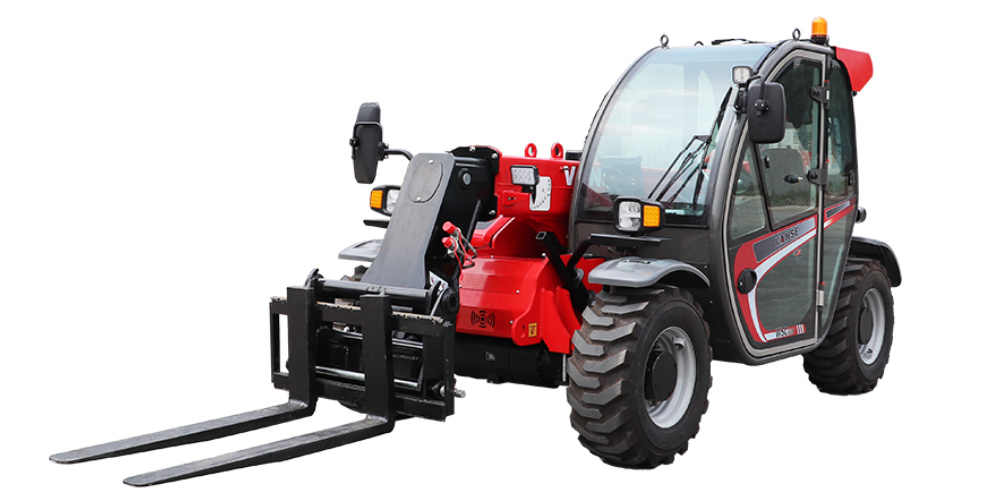
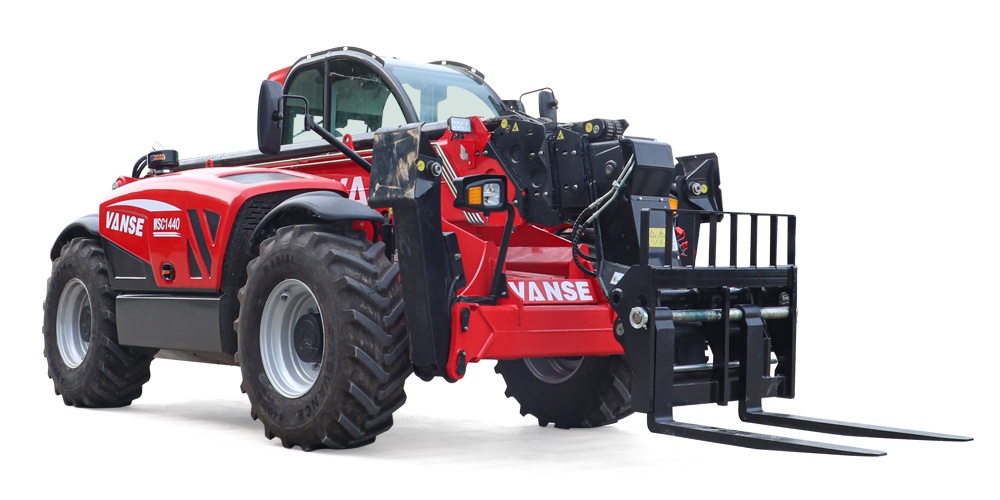
VANSE 625 6m Telescopic Handler
Designed for efficient material handling and stacking in warehouses, factories, and confined job sites, offering compact maneuverability and reliable performance.

VANSE 735 7m Telescopic Handler
A balanced mid-duty solution for construction, agriculture, logistics, and warehousing, combining stable lifting, strong traction, and everyday versatility.


About the Author:
The VANSE team is a group of experienced professionals specializing in construction machinery research, manufacturing, and technical support. With deep industry knowledge and hands-on experience, our engineers and product specialists share practical insights on equipment selection, operation, maintenance, and industry trends.
Share
You May Also Interest
-

14 September, 2026
7 Ton Telehandler: Industrial Power for Major Job Sites
Find the right 7 ton telehandler in the United States with supplier comparisons, buying tips, industry uses, service options, and cost-saving sourcing guidance.
-

11 September, 2026
Telehandler vs Truck Crane: On-Site Lifting Compared Now
Telehandler vs truck crane in the United States: compare lifting range, cost, mobility, jobsite fit, suppliers, and buying tips for 2026 planning.
-

10 September, 2026
14 Meter Telehandler: Maximum Reach for Major Projects
Explore 14 meter telehandler options in the United States, compare suppliers, applications, costs, and buying tips for major construction projects.
-
9 September, 2026
Telehandler Fuel Consumption: Efficiency and Cost Guide
Learn telehandler fuel consumption in the United States, typical hourly fuel burn, operating costs, supplier options, and ways to improve machine efficiency.