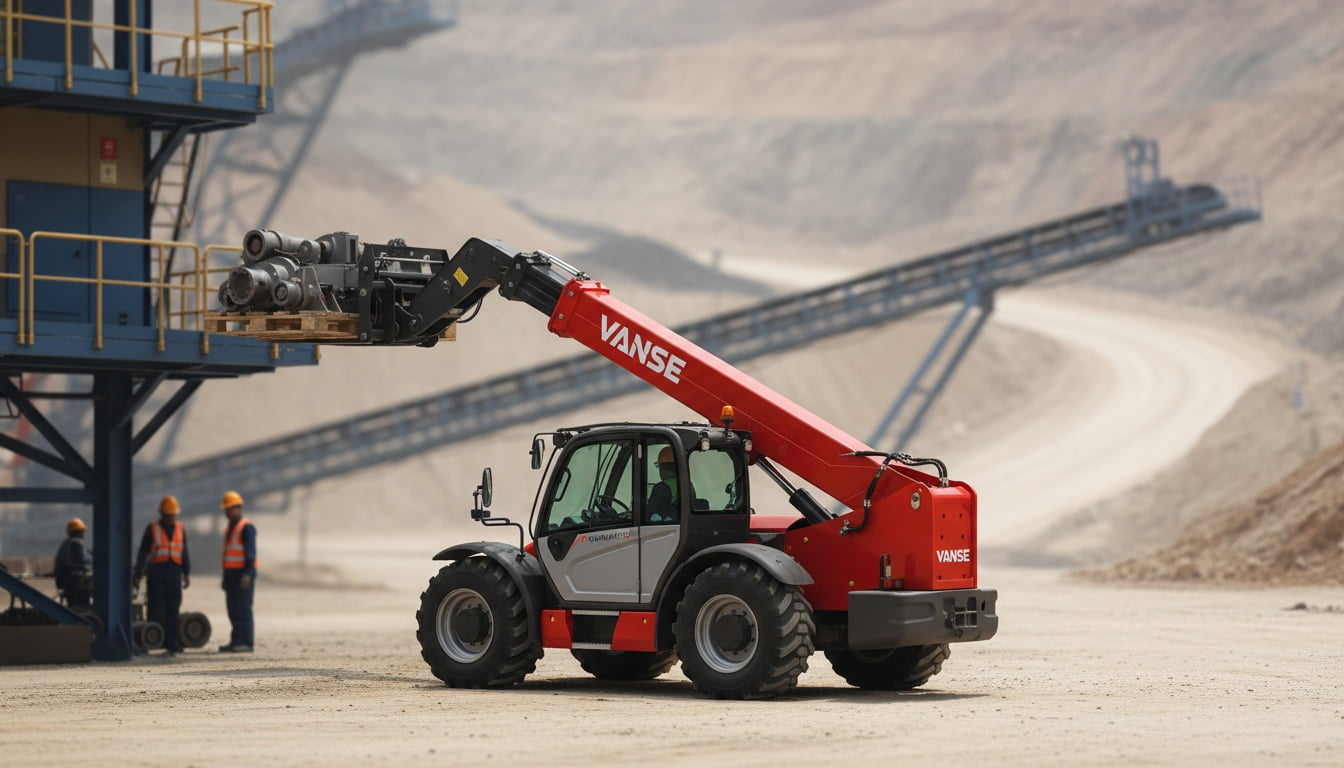
Telehandler Safety Tips for United States Jobsites
Quick Answer

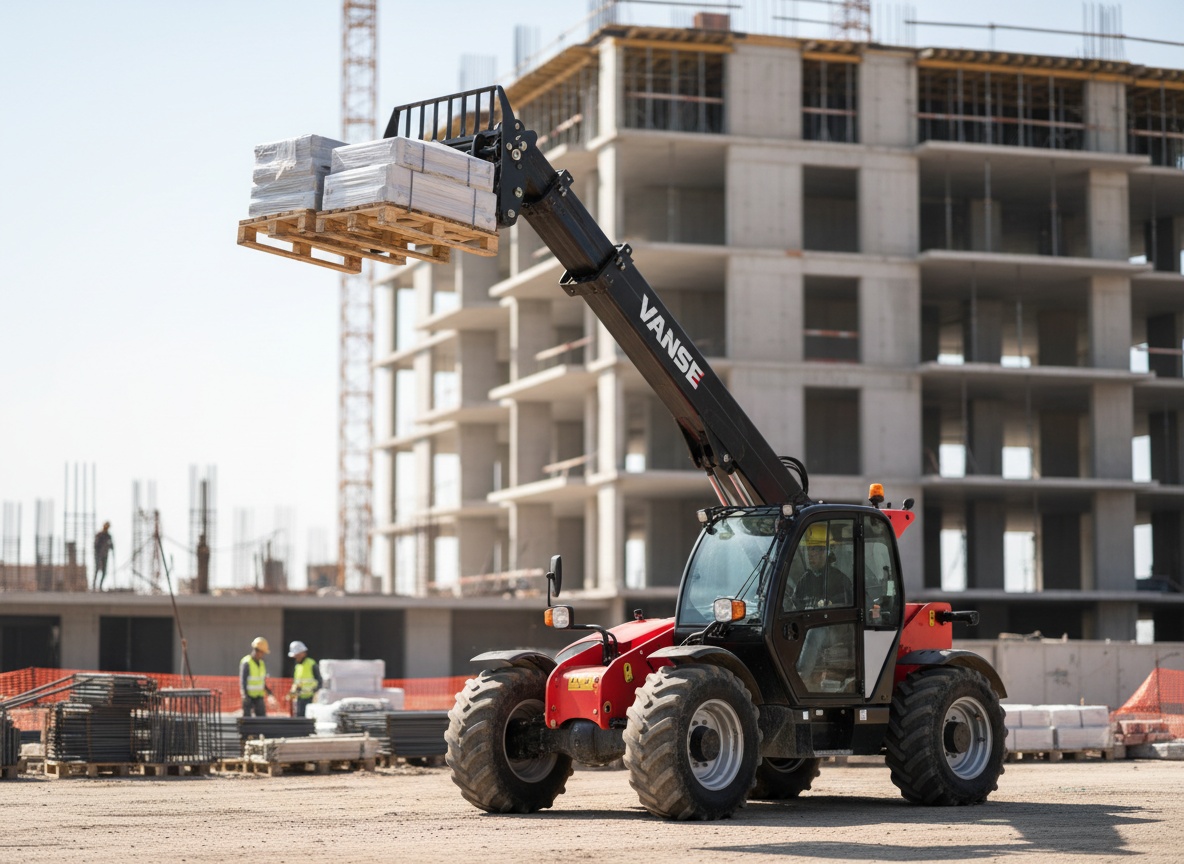
The most important telehandler safety tips for jobsites in the United States are straightforward: inspect the machine before every shift, verify the load chart before lifting, keep the machine on stable ground, use trained operators only, and control pedestrian traffic around the work zone. On U.S. construction, industrial, agricultural, and rental sites, these five actions prevent a large share of avoidable tip-overs, struck-by incidents, and dropped-load events.
If you need an immediately actionable checklist, focus on these priorities: confirm forks or attachments match the task; check tires, hydraulics, brakes, lights, mirrors, and alarms; never exceed rated capacity at the actual boom angle and reach; lower the boom before traveling; and maintain clear communication with spotters. For buyers and fleet managers, leading suppliers active across the U.S. market include JLG, JCB, Genie, Bobcat, Caterpillar, and SkyTrak through local dealer networks. Qualified international manufacturers can also be worth evaluating when they offer recognized certifications, dependable parts support, and responsive local service, especially when cost-performance matters for rental fleets or contractor expansion.
Why Telehandler Safety Matters in the United States

Telehandlers are common on jobsites from Houston and Dallas to Atlanta, Chicago, Phoenix, Los Angeles, and the Port of Savannah logistics corridor because they combine lift truck utility with reach capability. That flexibility is exactly why safety discipline matters. A telehandler may unload palletized material in the morning, place framing packs on upper levels at noon, and support site cleanup by evening. Each task changes the center of gravity, visibility profile, attachment requirements, and ground pressure conditions.
In the United States, telehandler use is heavily shaped by mixed terrain, changing weather, congested urban jobsites, and strict expectations around operator training and site supervision. A machine that performs safely on a flat warehouse apron may behave very differently on muddy residential development land outside Nashville or on compacted aggregate near Denver. Wind exposure, slope, trench edges, and blind spots all raise risk quickly.
From a business perspective, telehandler safety is also a margin issue. One avoidable incident can stop a project, trigger equipment damage, create insurance complications, and delay material flow. Rental companies, general contractors, farm operators, and industrial maintenance teams all benefit from standardizing safety procedures because fewer incidents mean better uptime, lower repair bills, and stronger workforce confidence.
Core Telehandler Safety Rules Every Operator Should Follow

Safe telehandler operation starts long before a load leaves the ground. Operators and supervisors should build a repeatable process that applies on every shift, whether the machine is used in a port-adjacent storage yard in New Jersey, an energy facility in Texas, or an agricultural site in California’s Central Valley.
- Inspect the telehandler at the start of every shift, including fluid levels, hydraulic lines, steering response, forks, boom wear pads, tires, brakes, horn, backup alarm, lights, windows, mirrors, and camera systems if equipped.
- Check the attachment and carriage condition before use. A damaged fork heel, worn retaining pin, or incompatible bucket or jib can compromise the whole lift.
- Read the load chart for the exact attachment installed. Rated capacity changes with boom extension, boom angle, and accessories.
- Assess the ground. Soft fill, wet clay, recently backfilled trenches, curbs, ramps, and uneven shoulders can quickly destabilize the machine.
- Use a seat belt and ensure the cab is clear of loose items that could interfere with controls.
- Travel with the load low and stable. Elevated travel increases tip-over risk and reduces visibility.
- Keep bystanders outside the work envelope. Use barriers, cones, spotters, and designated pedestrian routes.
- Never allow personnel to ride on forks or loads unless an approved work platform and site procedures are in place.
- Watch overhead hazards such as power lines, steel canopies, scaffold edges, and temporary structures.
- Stop operation if visibility is compromised by rain, dust, sun glare, or site congestion.
Common U.S. Jobsite Hazards and How to Control Them
Telehandler incidents usually come from a combination of small mistakes rather than one dramatic failure. On American jobsites, the most repeated causes include unstable terrain, incorrect load assumptions, rushed travel, and poor communication between the operator and ground crew.
Unstable ground is one of the biggest hazards. Machines may look planted but can shift when the boom is extended. This is especially relevant on suburban building sites, utility corridors, or warehouse expansions where partial grading has been completed but soil compaction remains inconsistent. Operators should avoid setting up too close to excavation edges, stormwater trenches, and slab transitions. If conditions are unclear, reassess before lifting.
Another common risk is overreaching. Telehandlers can feel powerful enough to “just stretch a little farther,” but a machine can be under capacity at short reach and overloaded a few feet later. Supervisors should train crews to treat load charts as live operating limits, not general guidance.
Visibility is another frequent challenge. Loads can block forward view, especially when transporting palletized block, drywall, seed totes, pipe bundles, or wrapped roofing materials. In busy markets such as Miami, Seattle, or Boston, where projects often have narrow access lanes and mixed trades working in parallel, a designated spotter is often the difference between a controlled move and a preventable incident.
Daily Inspection Checklist
A disciplined inspection routine reduces unscheduled downtime and catches faults before they become safety events. The checklist below reflects practical issues that U.S. operators and fleet managers should review every shift.
| Inspection Item | What to Check | Why It Matters | Action if Problem Is Found |
|---|---|---|---|
| Tires and wheels | Pressure, cuts, chunking, lug security, sidewall damage | Directly affects stability and braking on rough terrain | Tag out machine until repaired or replaced |
| Forks and carriage | Cracks, heel wear, locking pins, frame distortion | Prevents dropped loads and attachment shift | Remove from service and inspect attachment fit |
| Hydraulic system | Leaks, hose abrasion, cylinder seal condition | Loss of control can occur under load | Repair before operation |
| Brakes and steering | Response, unusual noise, pedal feel, steering play | Critical for controlled movement in tight spaces | Do not operate until diagnosed |
| Safety devices | Horn, lights, alarms, mirrors, cameras, indicators | Supports visibility and warning communication | Fix before shift when possible |
| Boom and frame | Cracks, unusual wear, pin retention, structural damage | Structural issues can worsen rapidly under load | Escalate to maintenance immediately |
| Operator station | Seat belt, glass, wipers, control labeling, cleanliness | Improves control accuracy and operator focus | Correct issue before use |
This table is practical because it ties each inspection point to a direct operating consequence. Instead of checking boxes mechanically, crews understand why each item affects stability, control, and liability.
Safe Lifting and Load Handling Practices
Telehandler safety is closely tied to load management. The safest operator is not the fastest mover but the one who knows exactly what the machine is handling, how far the boom will extend, and what the terrain will do during the lift.
Before lifting, confirm the weight of the material. Do not estimate when product data, shipping paperwork, or supplier information is available. Steel bundles, precast components, bagged material, and irrigated agricultural loads can vary more than crews expect. Weight also shifts when loads are wet, unevenly stacked, or poorly banded.
The operator should center the load, keep forks spaced correctly, and tilt the carriage as required for retention. If handling long materials such as trusses, pipe, or timber, the travel path must be wider and slower because swing and bounce increase with length. When using a suspended load attachment or jib, capacity and handling behavior change again, and only the approved chart for that configuration should be used.
Travel speed must match surface conditions. On a dry, level distribution yard near Inland Empire logistics facilities, movement can be smoother than on a mixed mud-and-gravel buildout outside Kansas City. Any bump while carrying a raised load changes momentum and can shift the center of gravity. That is why the best practice remains the same across industries: keep the load low, move deliberately, and avoid sudden steering or braking.
Operator Training and Site Management
No telehandler safety program is complete without trained operators and active supervision. Training should cover machine familiarization, site hazard recognition, attachment-specific operation, load chart interpretation, emergency stopping, and communication methods with spotters and signal persons. Refresher training is especially useful after incidents, near misses, model changes, or long periods without operation.
Site managers also have a role. They should define travel lanes, establish exclusion zones, assign unloading areas, and coordinate telehandler activity with cranes, dump trucks, concrete pumps, and delivery vehicles. On larger developments in markets such as Charlotte, Orlando, or Salt Lake City, a simple morning logistics plan can eliminate crossing movements and reduce pressure on operators.
| Training Topic | Operator Focus | Supervisor Focus | Practical Result |
|---|---|---|---|
| Pre-shift inspection | Recognize defects | Verify completion records | Fewer preventable breakdowns |
| Load chart use | Understand reach versus capacity | Match machine to task | Lower overload risk |
| Terrain evaluation | Identify soft ground and slopes | Plan safe routes and staging zones | Better stability decisions |
| Pedestrian control | Use horns and stop if unclear | Set barriers and traffic flow | Reduced struck-by exposure |
| Attachment selection | Install correct tool for job | Approve configuration changes | Safer, more efficient handling |
| Emergency response | Know stop and shutdown steps | Coordinate incident reporting | Faster containment of hazards |
This comparison shows that telehandler safety is never only an operator issue. Strong results come when operator skill and site planning reinforce each other.
Telehandler Types and Safety Implications
Different telehandler configurations suit different environments, and safety procedures should reflect the machine category in use. Compact units are popular on residential, landscaping, and urban infill projects where access is tight. Mid-capacity models often serve general construction and industrial maintenance. High-capacity or high-reach units are more common in large commercial, infrastructure, or specialized material placement applications.
Machines with stabilizers may improve lifting performance in certain setups, but they also introduce additional setup checks, ground-bearing concerns, and exclusion-zone needs. Rotating telehandlers, where permitted and used, require even stronger planning around swing radius, overhead clearance, and shared work areas.
| Telehandler Type | Typical U.S. Use | Main Safety Focus | Best Fit Environment |
|---|---|---|---|
| Compact telehandler | Residential builds, landscaping, farms | Tight-space visibility and ground conditions | Urban infill and smaller sites |
| Mid-size construction telehandler | Commercial building, general contracting | Load chart discipline and pedestrian control | Mixed-material jobsites |
| High-reach telehandler | Multi-story placement tasks | Reach planning and wind awareness | Large commercial projects |
| High-capacity telehandler | Heavy industrial and infrastructure | Rigging coordination and ground bearing | Plants, yards, and heavy civil work |
| Telehandler with stabilizers | Precision lifts, difficult positioning | Setup verification and exclusion zones | Controlled lift locations |
| Agricultural telehandler | Feed, bales, pallets, bulk material | Attachment compatibility and slippery surfaces | Farms and processing facilities |
The table is useful for buyers because it links the machine type to the operational risk profile. A company selecting a telehandler for a dairy, a roofing contractor, or a masonry fleet should align machine class and safety controls together rather than treating procurement and safety as separate decisions.
Market Conditions and Safety Expectations in the United States
The U.S. telehandler market is influenced by construction starts, warehouse expansion, infrastructure renewal, agriculture cycles, and equipment rental demand. States with high population growth and active development often generate strong telehandler utilization, but utilization only turns into profit when incident rates stay low. Safety expectations are also rising because contractors and rental firms increasingly monitor fleet telematics, operator behavior, idle time, maintenance intervals, and event alerts.
Port cities and distribution hubs such as Long Beach, Houston, Newark, Savannah, and Charleston also shape fleet demand. Material handling near these corridors often requires dependable telehandlers that can move from unloading support to site delivery staging with minimal downtime. As project schedules tighten, buyers increasingly prioritize safety features that reduce risk without slowing throughput.
This line chart illustrates a realistic growth pattern for the U.S. telehandler market. The upward movement supports why safety, maintenance, and operator readiness are becoming more important: more machines on more sites means more exposure if standards are inconsistent.
Industry Demand by Sector
Not every sector uses telehandlers the same way. Construction remains the largest demand center, but agriculture, rental, industrial plants, energy support, and logistics all influence machine specification and safety priorities. Understanding where demand is strongest helps buyers decide what training, attachments, and service coverage they need.
The bar chart shows why rental-ready safety practices matter. Construction and rental together represent a large share of demand, and those segments often involve multiple operators, shifting sites, and varied attachments. Standardized telehandler safety tips therefore become a fleet-level discipline rather than a single-job rule.
Trend Shift Toward Smarter and Safer Equipment
U.S. buyers are increasingly interested in operator-assist systems, telematics, maintenance alerts, and machine data that improves accountability. This shift is expected to continue into 2026, especially as larger fleets seek better control over utilization, training records, and service scheduling.
The area chart highlights a meaningful trend shift: buyers are moving from purely mechanical selection criteria toward technology-backed safety and lifecycle management. That trend will likely intensify in 2026 as policy pressure, insurance expectations, and sustainability targets encourage better asset monitoring.
Buying Advice for U.S. Contractors, Rental Companies, and Farms
When selecting a telehandler in the United States, buyers should start with application reality, not brochure maximums. The right machine is the one that repeatedly handles your normal load safely on your actual sites. For a masonry contractor in the Midwest, that may mean stable rough-terrain performance and fork visibility. For a rental fleet in the Southeast, it may mean easy controls, broad attachment compatibility, and parts availability. For a farm in Iowa or California, hydraulic response, cooling performance, and service simplicity may matter more than headline reach.
Ask four practical questions before purchase. First, what is the heaviest load you truly handle at the furthest reach you actually need? Second, what surfaces does the machine work on most often? Third, who will service the unit and how quickly can parts be delivered? Fourth, what operator population will use the machine: highly experienced crews, occasional users, or mixed-skill rental customers? Those answers affect the safest and most economical choice far more than brand perception alone.
It is also wise to compare not only purchase price but total ownership support. A lower initial price can be a smart decision if the supplier provides clear documentation, proven components, reliable warranty handling, and real U.S. support channels. Buyers should review the supplier’s inspection process, parts stocking plan, and response time for service questions before making a decision.
Industries and Applications Where Safety Planning Is Essential
Telehandlers serve many industries in the United States, but each one creates its own safety pattern. On commercial construction sites, the main concerns are material placement at height, congestion, and changing ground conditions. In agriculture, the focus shifts to frequent attachment changes, organic debris, slippery surfaces, and long-duty cycles. In manufacturing or industrial maintenance, telehandlers may work around fixed assets, pedestrian traffic, or confined indoor-outdoor transitions. In energy and mining support, remoteness and surface variability increase the need for disciplined inspections and contingency planning.
Typical applications include unloading trucks, feeding scaffold or framing materials to upper levels, moving bagged products, placing pallets into storage yards, handling hay and feed, supporting maintenance shutdowns, and managing site cleanup. The safest operations are those where the application, attachment, operator training, and site controls are aligned before the machine starts moving.
Real-World Safety Scenarios
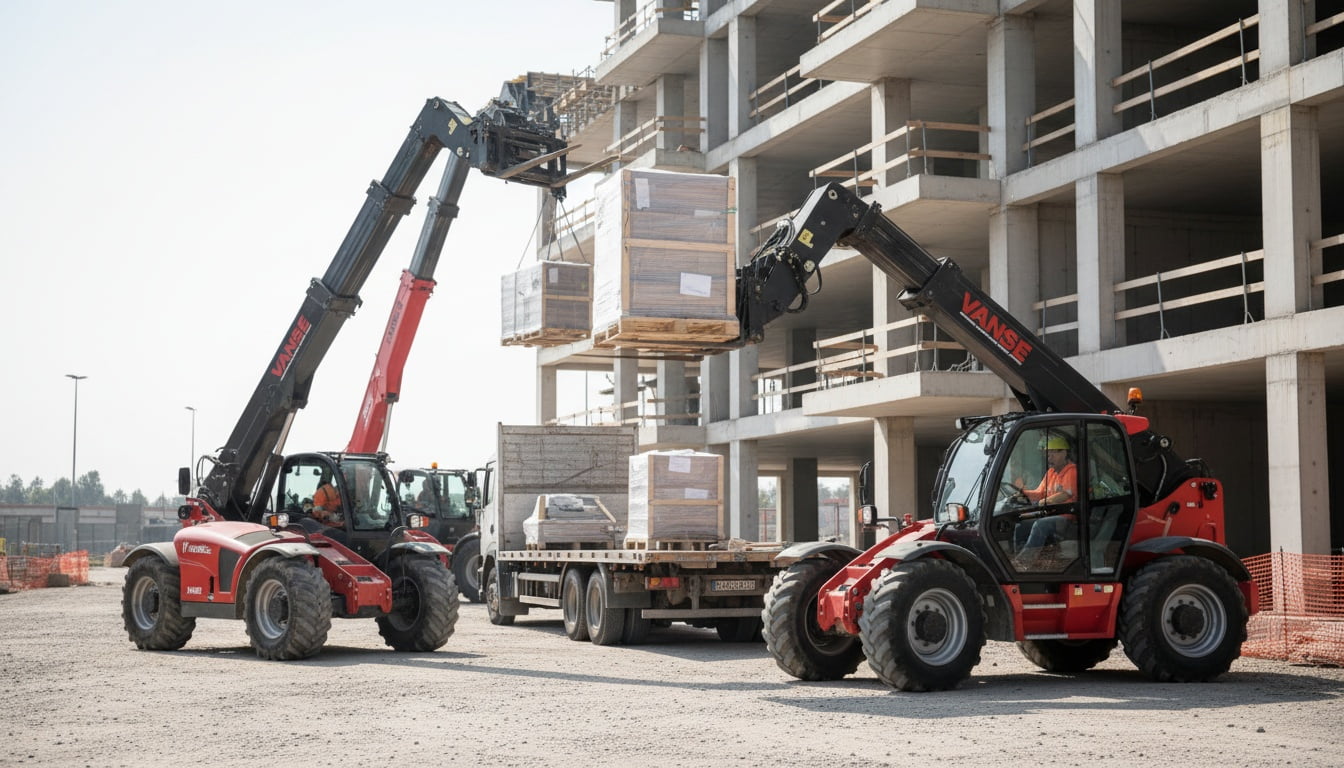
Consider a mixed-use construction project outside Atlanta. The telehandler is tasked with unloading palletized block from a flatbed and then delivering roofing bundles to an elevated staging point. In the morning, rain leaves soft areas near a trench line. A rushed operator might attempt the same route used the previous dry day, but a better approach is to recheck the staging zone, redirect traffic, and shorten the lift path. That adjustment may add minutes, but it avoids side-loading and instability.
On a produce facility expansion in California’s Central Valley, a telehandler may switch between fork work and bucket work in the same week. If attachment changes are not tracked carefully, crews may assume capacities that no longer apply. A disciplined fleet manager posts attachment-specific load information in the cab, trains operators on configuration changes, and keeps locking systems under inspection. That administrative control directly improves physical safety.
At a rental yard serving the Gulf Coast, another common scenario is mixed experience among end users. Here, the biggest safety win often comes from standardized handoff procedures: visible machine condition reports, documented familiarization, clear capacity labeling, and phone access to support staff. Good rental process is safety management in another form.
Leading Telehandler Suppliers Active in the U.S. Market
The U.S. market offers a mix of domestic, European-origin, and international suppliers through dealer and rental channels. The table below compares recognizable companies that buyers frequently evaluate for telehandler fleets or jobsite use.
| Company | Service Region in the U.S. | Core Strengths | Key Offerings |
|---|---|---|---|
| JLG | Nationwide through dealer and rental networks | Strong access equipment reputation, broad support footprint | Construction telehandlers, parts, training, fleet support |
| JCB | Nationwide with strong dealer presence | Deep telehandler specialization and broad model range | Agricultural and construction telehandlers, attachments, service |
| Genie | National coverage through equipment channels | Well-known rental fleet acceptance and operator familiarity | Rough-terrain telehandlers, support programs, dealer parts |
| Bobcat | Broad U.S. dealer coverage | Compact equipment brand strength and attachment ecosystem | Telehandlers, compact machinery packages, service access |
| Caterpillar | Strong dealer network in major metro and industrial zones | Heavy equipment support depth and parts infrastructure | Material handling support through dealer systems and fleet service |
| SkyTrak | Widely recognized in rental and construction markets | Popular jobsite models and operator familiarity | Construction telehandlers, rental fleet compatibility, support |
This supplier table is helpful because it connects each brand to practical procurement concerns: service region, recognizable strengths, and the kind of support a buyer can expect. For U.S. users, a strong local parts and service pathway is often as important as machine specification.
Supplier and Product Comparison Considerations
Brand comparison should go beyond name recognition. Buyers should measure how well each supplier supports uptime, training, and safe deployment across their specific territory. For example, a contractor with projects across Texas and Louisiana may value regional parts depth and mobile service more than an extra small gain in rated capacity. A rental business in the Carolinas may prioritize intuitive controls and fast turnover readiness. A farm operation in Nebraska may care more about cooling, visibility, and service simplicity.
The comparison chart does not rank one supplier as universally best. Instead, it shows the buying factors that most often shape U.S. decisions. Safety is improved when buyers choose a supplier whose support model matches their actual operating footprint.
Our Company
For buyers looking beyond the most familiar brands, VANSE Group presents a practical option for the United States market because its telehandler line is built around internationally recognized manufacturing discipline rather than low-cost positioning alone. The company operates under CE and ISO 9001 certified processes, uses globally trusted core components such as Perkins and Cummins engines together with premium hydraulic, transmission, and axle systems, and subjects each unit to load testing, safety inspection, and performance validation before shipment, which gives U.S. contractors, distributors, and fleet owners tangible evidence that product quality is benchmarked against established international standards. From a cooperation standpoint, VANSE supports end users, dealers, distributors, brand owners, and project buyers through flexible wholesale, retail, OEM, and ODM programs, making it relevant whether the need is a single machine, a private-label distribution arrangement, or a multi-unit fleet order through the company’s equipment range. Just as important for trust and long-term support, VANSE already serves customers across North America and is expanding its local U.S. presence through a planned subsidiary, local inventory, and stronger after-sales capability, backed by both online technical response and offline service commitment described through its support services; for American buyers, that means the company is investing in physical market presence and lifecycle support rather than acting as a distant exporter. You can learn more about its background on the company page or discuss local requirements directly through the contact team.
How to Evaluate Local and International Options
For U.S. buyers, the right sourcing decision is not always domestic versus imported. The better question is whether the supplier can prove machine quality, support uptime, and reduce operating risk. A local dealer-backed brand may be ideal for certain fleets that rely on standardized procurement. At the same time, qualified international manufacturers can offer compelling value when they combine proven components, documented testing, accessible parts planning, and a genuine North American service commitment.
When evaluating options, ask for detailed specifications, attachment compatibility data, inspection procedures, warranty terms, and parts lead time commitments. If the supplier offers private branding or regional distribution, clarify training support and technical escalation channels early. A telehandler purchase becomes much safer when commercial terms and technical support are transparent from day one.
2026 Outlook: Technology, Policy, and Sustainability
By 2026, telehandler safety in the United States is likely to be shaped by three major forces: smarter equipment, tighter compliance expectations, and sustainability-driven fleet decisions. On the technology side, more machines will include telematics, access control, digital inspection workflows, maintenance alerts, geofencing, and event recording. These tools help fleet managers identify hard braking, unauthorized use, missed maintenance, and recurring misuse patterns before they become incidents.
Policy and insurance pressure will also matter more. Contractors and rental companies may face stronger expectations around documented training, daily inspection records, and machine condition history. This does not necessarily mean more bureaucracy if handled well. In many cases, digital workflows will make compliance faster while improving traceability.
Sustainability will increasingly influence equipment replacement and fleet planning. Buyers are paying more attention to fuel efficiency, idle reduction, lifecycle durability, and component longevity. In some metropolitan areas and indoor-adjacent applications, lower-emission equipment strategies may shape future demand. The safest machine in 2026 will not simply lift more; it will also be easier to monitor, easier to maintain, and easier to integrate into accountable fleet management systems.
FAQ
What is the most important telehandler safety rule?
The most important rule is to never lift or place a load without checking the correct load chart for the machine and attachment in use. Many serious incidents happen when crews assume capacity instead of verifying it at the actual boom extension and angle.
Should telehandlers be inspected every day?
Yes. A pre-shift inspection should be completed every day the machine is used. Tires, forks, hydraulics, brakes, steering, alarms, boom condition, and operator controls should all be reviewed before operation begins.
Can a telehandler travel with a raised load?
Best practice is to keep the load low while traveling. Carrying a raised load reduces stability, worsens visibility, and increases the chance of tip-over, especially on uneven ground.
Who should operate a telehandler on a U.S. jobsite?
Only trained and authorized operators should use a telehandler. Site supervision should also confirm that the operator understands the specific model, attachment, terrain conditions, and lift plan for that shift.
Why does attachment choice matter so much?
Attachments change the machine’s weight distribution and rated capacity. A fork carriage, bucket, truss boom, or other tool affects how the telehandler handles and what it can safely lift at reach.
Are international telehandler suppliers worth considering in the United States?
They can be, provided they offer recognized certifications, proven components, a clear testing process, dependable parts planning, and real local service commitment. For many buyers, strong cost-performance combined with credible U.S. support makes international sourcing a practical option.
What should buyers ask before purchasing a telehandler?
Ask about rated capacity at your real working reach, attachment compatibility, service response, parts availability, warranty handling, operator training support, and whether the supplier can support multiple jobsites across your region.
Telehandler safety in the United States comes down to discipline, planning, and supplier choice. The machine should match the work, the operator should understand the limits, and the site should be managed so lifting happens in a controlled environment. When those pieces are aligned, telehandlers remain one of the most productive and versatile tools on modern American jobsites.
Complete Telescopic Handler Equipment Portfolio
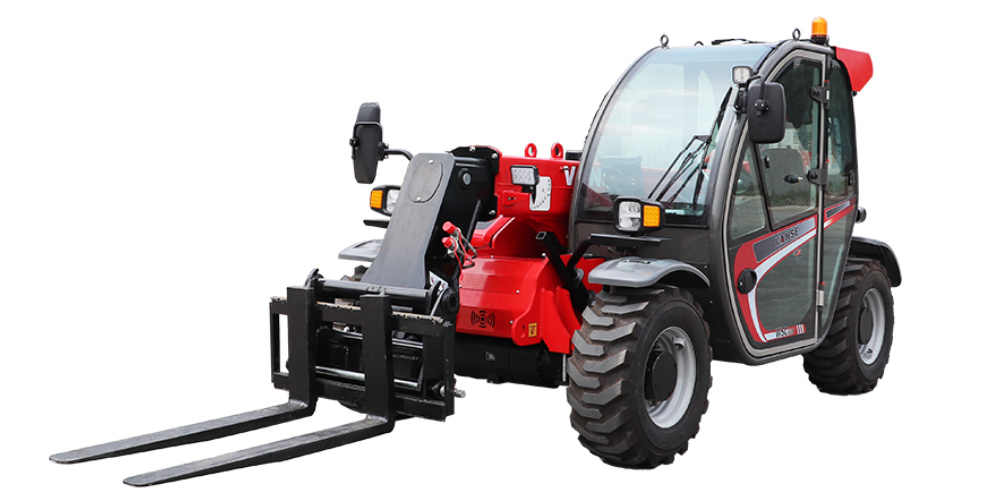
VANSE 625 6m Telescopic Handler
Designed for efficient material handling and stacking in warehouses, factories, and confined job sites, offering compact maneuverability and reliable performance.

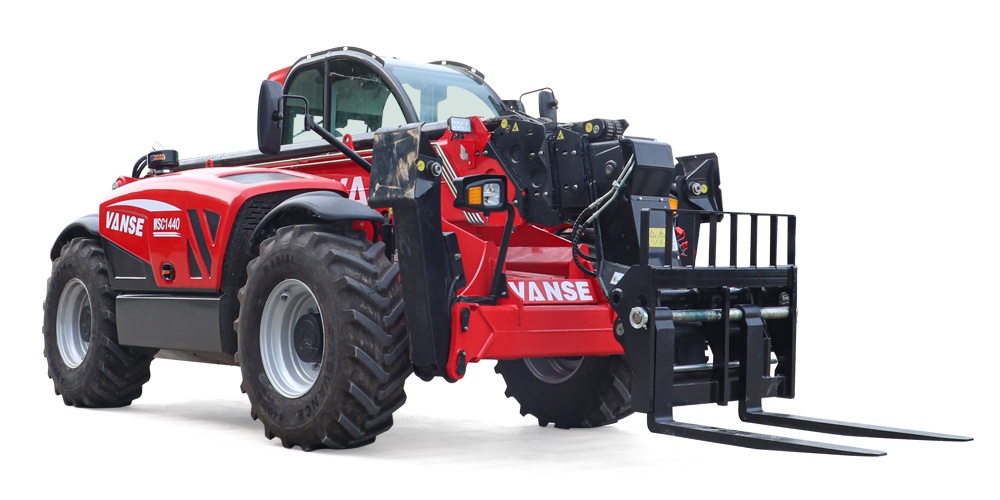
VANSE 735 7m Telescopic Handler
A balanced mid-duty solution for construction, agriculture, logistics, and warehousing, combining stable lifting, strong traction, and everyday versatility.


About the Author:
The VANSE team is a group of experienced professionals specializing in construction machinery research, manufacturing, and technical support. With deep industry knowledge and hands-on experience, our engineers and product specialists share practical insights on equipment selection, operation, maintenance, and industry trends.
Share
You May Also Interest
-

May 1, 2026
Telehandler Weight: Complete Guide
Learn typical telehandler weight ranges in the United States, model differences, buying tips, supplier options, and how machine weight affects transport.
-

April 30, 2026
Telehandler Lifting Capacity: Max Guide
Learn telehandler lifting capacity in the United States, compare machine classes, suppliers, applications, and buying tips for safer, smarter fleet decisions.
-
April 29, 2026
Telehandler Price List: 2026 Cost Guide
Explore the telehandler price list for the United States with 2026 cost ranges, supplier comparisons, buying tips, and market trends for smart equipment buyers.
-
April 28, 2026
Telehandler Training: Complete Guide
Telehandler training in the United States should cover OSHA rules, load charts, attachments, site hazards, and hands-on evaluation for safer operation.