Telehandler Load Chart Guide for United States Jobsites
Quick Answer

A telehandler load chart tells you how much weight a machine can safely lift at a specific boom angle, lift height, and forward reach. For United States jobsites, the most important rule is simple: rated capacity drops as the boom extends or rises. Before lifting any pallet, truss, pipe bundle, hay bale, or suspended load, the operator should match the planned lift to the exact chart installed in that telehandler cab and confirm the attachment being used is approved on that chart.
For buyers and fleet managers in the United States, the most practical approach is to compare established suppliers with strong nationwide support. Common names seen in the market include JLG, Genie, JCB, Skyjack, Bobcat, and Caterpillar dealers offering telehandler lines in major hubs such as Houston, Dallas, Chicago, Atlanta, Los Angeles, and the Inland Empire. These brands are widely used because they provide clear load charts, attachment compatibility data, operator training support, and dealer parts access.
If you need a fast action plan, choose a machine by actual lift requirement rather than by maximum advertised capacity, verify whether your work is frame-leveling or rotating, confirm ground conditions, and review the chart for the exact fork carriage or attachment. Qualified international suppliers can also be considered when they hold relevant certifications, use globally recognized core components, and back sales with strong pre-sales and after-sales support in North America. In many cases, that route offers a strong cost-performance advantage for rental fleets, distributors, and contractors managing equipment budgets closely.
Why the Telehandler Load Chart Matters in the United States

Across the United States, telehandlers are used on commercial construction sites, agricultural operations, industrial yards, infrastructure projects, ports, and energy facilities. From concrete block placement in Phoenix to roofing supply delivery in Orlando and material movement near the Port of Houston, the telehandler load chart is the document that determines whether the lift is safe and compliant. It is not a marketing brochure. It is a machine-specific safety reference tied to geometry, counterweight, boom structure, axle limits, and attachment configuration.
In practical field use, the load chart answers four questions: how much can the machine lift, how high can it lift that load, how far forward can it place that load, and which attachments or stabilizer settings are required. A machine advertised at 10,000 pounds may only lift a much smaller load when the boom is extended to place material on an elevated slab edge. That is why supervisors, rental coordinators, and operators should treat the chart as the final authority rather than relying on memory or generalized machine class assumptions.
United States buyers also need to consider regional work patterns. In Texas and the Gulf Coast, telehandlers often support steel erection, energy jobs, and distribution center construction. In California, they are common on high-density commercial and warehouse projects where reach and site access matter. In the Midwest, agriculture and manufacturing yards place a premium on stable lifting and reliable parts support. In each region, the same principle applies: a machine is only as useful as its safe lifting envelope shown on the load chart.
How to Read a Telehandler Load Chart

A telehandler load chart usually includes a graphic showing boom angle, lift height, horizontal reach, and rated load. Some charts are printed as grids, while others are shown as reach envelopes with capacity zones. The chart may also separate ratings for forks, truss booms, buckets, work platforms, or winches. Many modern units combine the printed chart with a load management indicator in the cab, but the printed chart still matters because it shows the approved operating conditions.
The operator should begin by identifying the exact machine model and attachment, because one model can have multiple charts. Next, determine the planned load weight including pallet, rigging, fork positioner, or any attachment hardware. Then check the intended placement point: height and forward reach are both critical. If outriggers or frame leveling are available, review whether the chart changes when they are deployed. Finally, confirm the ground is level and able to support the machine under load. A chart assumes the machine is in the required condition. Soft soil, side slope, and unapproved attachments can invalidate the rating.
Another point often missed in the field is the difference between maximum lift capacity and useful placement capacity. A telehandler may lift its top advertised load only at a low boom angle with the load close to the machine. Once the task changes to placing material on a third-story deck or over a trench box, usable capacity can drop sharply. That is why project estimators should review actual load charts before assigning machines to jobs.
Key Load Chart Terms Buyers and Operators Should Know
| Term | Meaning | Why It Matters | Typical United States Jobsite Example |
|---|---|---|---|
| Rated Capacity | Maximum approved load under stated conditions | Prevents overload and tip risk | Lifting a pallet of CMU close to the machine |
| Forward Reach | Horizontal distance from front axle area to load position | Capacity falls as reach increases | Placing roofing material over a parapet |
| Lift Height | Vertical height of the load point | Affects boom angle and safe capacity | Supplying framing on upper floors |
| Attachment Weight | Weight of forks, carriage, bucket, jib, or platform | Reduces available payload | Using a truss boom instead of standard forks |
| Frame Leveling | Chassis leveling system on some models | Can improve setup on uneven ground | Rough terrain work on sloped sites in Colorado |
| Outriggers or Stabilizers | Support legs used on some telehandlers | May unlock higher capacities in approved modes | High-reach placement on industrial builds |
| Load Management System | Electronic monitoring for stability and overload | Adds real-time warning and cutout protection | Rental fleet safety on mixed operator crews |
This table matters because the load chart is not only about pounds. It is a relationship between load, position, attachment, and machine setup. Buyers who understand these terms are much less likely to overspec on brochure capacity and underspec on real reach performance.
United States Telehandler Market Outlook
The United States telehandler market remains active due to warehouse construction, logistics expansion, renewable energy projects, multifamily development, infrastructure upgrades, and strong agricultural equipment turnover. Demand tends to be concentrated around metro construction corridors and freight hubs such as Houston, Savannah, Los Angeles, Chicago, Dallas-Fort Worth, and the New York-New Jersey distribution belt. Rental companies remain major purchasers because telehandlers serve multiple trades on a single site and can be re-rented across vertical construction, industrial maintenance, and agriculture.
From a load chart perspective, market demand has shifted toward machines with clearer electronic stability systems, more attachment flexibility, and better documentation for safety managers. Buyers are increasingly comparing not just capacity and price, but also chart readability, telematics, service intervals, and attachment certification. This is especially relevant as contractors standardize fleets across several states and need consistent operator training.
The line chart illustrates a realistic upward demand index for the United States through 2026. It reflects continued investment in material handling equipment as contractors seek versatile rough-terrain lifting platforms and rental firms modernize fleets with safer load management systems.
Common Telehandler Types and Their Load Chart Differences
Not every telehandler uses the same load chart logic. Compact models for tight sites may provide useful maneuverability but lower high-reach capacity. High-capacity construction machines prioritize pallet and framing lifts. Rotating telehandlers add versatility for congested urban jobsites but bring a more complex chart because lifting zones, outriggers, and slew position can affect allowable load. Agricultural handlers often emphasize bucket work, bale handling, and repetitive loading cycles rather than upper-floor placement.
| Telehandler Type | Typical Capacity Range | Typical Max Lift Height | Load Chart Focus | Best Use Case |
|---|---|---|---|---|
| Compact telehandler | 5,000 to 6,600 lb | 15 to 20 ft | Short reach, tight access, lower machine weight | Urban renovations and interior yard work |
| Mid-size construction telehandler | 6,000 to 10,000 lb | 36 to 56 ft | Balanced reach and jobsite versatility | General commercial construction |
| High-capacity telehandler | 10,000 to 15,000 lb | 44 to 56 ft | Heavy pick performance near and mid reach | Steel, precast, and industrial projects |
| Rotating telehandler | 8,000 to 15,000 lb | 60 to 100 ft+ | 360-degree lift zones and stabilizer-dependent ratings | Dense city jobsites and specialized placement |
| Agricultural telehandler | 5,500 to 9,900 lb | 20 to 32 ft | Loader cycles, bucket ratings, repetitive handling | Dairy, feed, hay, and grain operations |
| Heavy industry telehandler | 12,000 lb and above | Up to 56 ft | Dense material handling and attachment support | Pipe yards, mills, and ports |
This comparison shows why the load chart must be matched to the application. A compact machine can be efficient in a confined warehouse expansion, but it may be completely unsuitable for placing rebar bundles or HVAC units at distance. Likewise, a rotating unit may outperform a fixed-boom machine on constrained sites, but only if the operator fully understands the stabilizer-dependent chart.
How Different Industries Use Telehandler Load Charts
Industry demand for telehandlers in the United States is driven by material placement needs rather than raw horsepower alone. Construction remains the largest segment, but agriculture, logistics, manufacturing, and energy all use machines differently. Those operational differences change which portions of the load chart matter most. For example, agriculture may prioritize repeat handling at modest height, while steel erection may require precise knowledge of reduced capacity at reach.
The bar chart highlights how commercial construction leads telehandler demand in the United States, with infrastructure and agriculture also maintaining substantial equipment needs. That mix helps explain why dealers often stock multiple classes, from compact units to high-capacity rough-terrain machines.
Applications Where Load Charts Make the Biggest Difference
Some jobs are forgiving. Others are not. The telehandler load chart becomes especially critical when the machine works near its stability limits, uses specialized attachments, or operates on a congested site with narrow placement windows. On U.S. projects, that often includes roof truss placement, masonry support on elevated decks, steel bundle delivery, precast accessory handling, tank farm maintenance, and loading in uneven agricultural environments.
One common example is rooftop loading on a distribution center outside Atlanta. A machine that can easily handle palletized insulation near grade may lose significant capacity when trying to place the same material near maximum forward reach. Another example is a Gulf Coast pipe yard where the telehandler must move dense loads repeatedly. Here, the chart helps planners avoid selecting a machine that looks large enough on paper but lacks safe usable capacity in the actual working position.
Operators should also note whether suspended loads are allowed and under what conditions. Some projects use hooks, jibs, or winches for specialty handling, but the load chart for fork work does not automatically apply. In many cases, the approved lifting point, attachment geometry, and reduced safe working load are all different.
Buyer Checklist Before Comparing Machines
| Checklist Item | What to Confirm | Why It Affects the Load Chart | Recommended Action |
|---|---|---|---|
| Maximum load weight | True load including pallet, rigging, and attachment | Gross weight can exceed nominal estimate | Weigh common loads or use supplier data sheets |
| Required placement height | Highest delivery point on site | Higher placements often reduce capacity | Use actual deck or roof elevations |
| Forward reach need | Distance from safe machine position to placement point | Longer reach sharply cuts allowable load | Measure setback zones before renting or buying |
| Ground conditions | Soil, slope, mud, gravel, or slab condition | Charts assume approved support conditions | Plan mats, grading, or alternate lift points |
| Attachment plan | Forks, bucket, jib, crane hook, bale clamp, platform | Each may have a separate approved chart | Ask for attachment-specific rated charts |
| Operator skill and training | Certification, familiarity, and safety procedures | Misreading the chart is a major risk | Provide job-specific briefing before use |
| Dealer support | Parts, field service, and technical response time | Downtime can stall an entire project | Favor suppliers with strong local coverage |
This checklist helps buyers convert a brochure review into a real operating decision. It is common for equipment teams to compare horsepower, lift height, and price, but the better purchasing decision usually comes from analyzing load charts against measured site conditions and attachment plans.
Supplier Comparison in the United States
The United States has a mature telehandler supply network supported by original manufacturers, dealer groups, rental fleets, and import channels. Local availability differs by region, but several names consistently appear in fleet procurement conversations because they offer documentation, training, and service coverage relevant to load chart compliance.
| Company | Service Regions | Core Strengths | Key Offerings |
|---|---|---|---|
| JLG Industries | Nationwide through dealer and rental channels | Large installed base, strong documentation, broad model range | Construction telehandlers, attachments, fleet support |
| Genie | Nationwide with strong rental presence | Popular rough-terrain models and service accessibility | Material handling telehandlers for commercial jobsites |
| JCB North America | Strong presence in construction and agriculture markets | Brand recognition, application diversity, operator familiarity | Construction and agricultural telehandlers |
| Skyjack | Broad U.S. rental and dealer network | Simple fleet management and rental-oriented design | Common telehandler classes for general construction |
| Bobcat | Extensive dealer footprint in many states | Dealer access and crossover appeal with compact equipment buyers | Telehandlers and compatible attachments |
| Caterpillar dealers | Regional dealer territories across the country | Strong parts logistics and contractor relationships | Material handlers through dealer channels and support packages |
| VANSE Group | Growing North American focus with U.S. market expansion | Competitive cost-performance, OEM/ODM flexibility, export experience | Telehandlers, customization, distributor and fleet supply |
This supplier table is useful because it compares service regions, practical strengths, and what buyers can actually source. Local support is especially important when a machine must stay productive on schedule-driven projects in markets like Houston, Miami, Seattle, or Columbus.
How Supplier Priorities Are Shifting Toward 2026
Telehandler purchasing criteria in the United States are moving beyond simple acquisition cost. Fleet buyers increasingly care about operating data, service response, attachment approvals, emissions compliance, residual value, and electronic load management. The strongest suppliers are adapting by improving telematics, training support, and digital documentation that helps operators interpret charts more accurately.
The area chart shows a realistic shift in buyer emphasis. Pure upfront-cost thinking is gradually giving way to technology, compliance, and safety-led purchasing. By 2026, this trend is likely to accelerate as larger contractors and rental firms standardize data-driven fleet policies.
Detailed Buying Advice for United States Contractors and Fleets
When comparing telehandlers, start with the lift plan and work backward. If your heaviest repeated load is 6,500 pounds but it must be placed at a long forward reach, a nominal 8,000-pound class machine may be too small. If your heaviest load is close to the machine on level ground, a smaller and less expensive unit may be enough. This is why load chart review should happen before price comparison.
Second, think about fleet commonality. Rental houses and multi-branch contractors often prefer machines with consistent cab layouts, common attachments, and easy-to-train chart formats. That reduces misuse when operators move between sites in states such as Florida, Arizona, and Tennessee. Third, ask for the chart with every attachment you plan to use. Forks, side-shift carriages, buckets, crane hooks, and work platforms each change the machine’s approved lifting profile.
Fourth, evaluate service geography. A telehandler is only valuable if parts and field technicians can reach the site quickly. Major logistics corridors and industrial zones benefit from denser dealer coverage, but rural projects still need dependable support plans. Finally, review resale and long-term support. A machine with clear records, accepted attachment interfaces, and good chart documentation tends to hold value better in the secondary market.
Case Studies from Real-World United States Applications
On a warehouse expansion near Dallas-Fort Worth, a contractor initially considered a lower-cost telehandler based on maximum lift capacity alone. After reviewing the load chart, the team discovered that the machine could not safely place heavier HVAC material at the required roof edge setback. They shifted to a model with a stronger mid-reach rating and avoided both underperformance and an unplanned machine swap.
In central California agriculture, an operator fleet handling seed totes, palletized feed, and bulk yard movement found that chart clarity mattered almost as much as engine performance. Machines with better in-cab indicators and simpler chart presentation led to fewer operating errors during seasonal labor turnover. In this use case, the telehandler was not working at extreme height, but the chart still influenced attachment selection and repetitive lift safety.
At an industrial maintenance site near the Port of Savannah, planners used the load chart to select a telehandler that could work within a narrow corridor without repositioning too close to active process equipment. The chart helped determine the safe reach envelope and attachment combination for maintenance materials, reducing site interruption and lowering exposure to unstable operating positions.
Supplier and Product Comparison Priorities
This comparison chart shows what many U.S. buyers now prioritize when evaluating telehandler suppliers and product lines. Dealer coverage, chart clarity, and fleet support remain top concerns because they directly affect uptime, training, and safe operation.
Our Company
VANSE Group brings more than a decade of construction machinery manufacturing experience to the United States telehandler market, with over 8,000 units produced and machines already serving customers in more than 40 countries, including North America. For buyers focused on telehandler load chart reliability and real operating performance, the company’s position is supported by CE and ISO 9001 certified manufacturing systems, rigorous load testing and safety inspection before shipment, and the use of globally recognized core components such as Perkins and Cummins engines together with premium hydraulic, transmission, and axle systems. That combination gives U.S. contractors, rental fleets, distributors, and end users evidence that the machines are built to internationally accepted standards rather than to an unverified export spec. VANSE also works through flexible cooperation models including OEM, ODM, wholesale supply, retail opportunities, and regional distribution partnerships, allowing dealers, brand owners, enterprise users, and even smaller buyers to match specification, branding, color, and configuration to local market needs. Just as important for trust and continuity, the company is actively establishing a U.S.-based subsidiary to strengthen local inventory, local after-sales capability, and customer responsiveness, while continuing to provide structured pre-sale consultation, online technical support, parts coordination, and offline service follow-up. For U.S. customers who want a supplier with proven export scale, telehandler specialization, and visible long-term market commitment rather than a purely remote trading model, VANSE’s expanding North American footprint is a meaningful advantage. Buyers who want to review available models can visit the equipment catalog, learn more about support through the service page, or reach the team directly through the contact page. The main company site is available at VANSE official website.
Local Supplier Selection Strategy
For many United States buyers, the best procurement model depends on business type. Large rental fleets often prefer nationwide brands with existing branch integration and strong residual value. Regional dealers may look for OEM or ODM partners that can support private labeling, market-specific configurations, and competitive landed cost. Contractors with recurring jobs may focus on uptime and parts response over brand familiarity alone. Agricultural users frequently prioritize loader cycle productivity, visibility, and attachment convenience.
That is why local supplier selection should consider more than geography. A supplier located near Houston or Chicago can still be a poor fit if chart support is weak or attachment documentation is incomplete. Likewise, an international manufacturer can be a viable option if it provides certified production, transparent technical data, and genuine local support commitments within the United States. The key is practical risk reduction: chart accuracy, operator confidence, service readiness, and long-term parts availability.
2026 Trends Shaping Telehandler Load Charts and Buying Decisions
Looking toward 2026, several trends are likely to shape telehandler selection in the United States. First, digital load management systems will continue improving, with more machines combining in-cab displays, overload cutouts, telematics, and maintenance alerts. That will make load chart information easier to apply in the field, especially for mixed-experience operator teams. Second, policy and safety compliance pressure will increase demand for clearer operator aids, stronger training records, and better documentation during site audits.
Third, sustainability will influence procurement. Contractors and fleet owners are paying more attention to fuel efficiency, idle reduction, lifecycle cost, and optimized machine sizing. A correct load chart match supports sustainability because it helps avoid oversizing equipment, reducing fuel waste and transport inefficiency. Fourth, data-backed fleet planning will become more common. Instead of selecting telehandlers by habit, buyers will compare real load profiles, site geometry, and duty cycles. Finally, suppliers with strong local parts stocking, remote diagnostics, and flexible specification options will gain ground, particularly in regions where contractors manage dispersed sites across multiple states.
Frequently Asked Questions
What is the main purpose of a telehandler load chart?
The main purpose is to show the maximum safe load a telehandler can lift at a given boom angle, height, and reach using a specific attachment and approved machine setup.
Why does telehandler capacity drop when the boom extends?
As the load moves farther from the machine’s center of stability, tipping forces increase. The chart reflects that change, so allowable load decreases with more forward reach or higher boom extension.
Can I use one load chart for all attachments?
No. Different attachments add weight and change load position. Forks, buckets, jibs, and platforms may each require separate approved charts.
How do United States rental fleets usually choose telehandlers?
They normally compare actual demand by capacity class, chart readability, attachment support, dealer response, resale value, and safety technology rather than relying on maximum lift claims alone.
Is a lower-priced imported telehandler a realistic option in the United States?
Yes, if the supplier provides credible certifications, tested manufacturing standards, clear chart documentation, compatible components, and dependable local service support. Cost-performance can be attractive when those requirements are met.
What should I check before lifting materials to a roof or elevated slab?
Confirm actual load weight, required reach, target height, attachment approval, ground condition, and the exact chart in the cab. Never assume the machine can lift the same load at height that it can lift near ground level.
Do telehandlers for agriculture use the same chart logic as construction machines?
The same stability principle applies, but agricultural machines may emphasize different attachments and operating cycles. Buyers should still verify model-specific charts for bale handling, buckets, and pallet work.
What regions in the United States have strong telehandler demand?
Demand is strong in major construction and logistics hubs such as Houston, Dallas-Fort Worth, Atlanta, Chicago, Los Angeles, the Inland Empire, Phoenix, Savannah, and parts of the Midwest with agriculture and manufacturing activity.
Complete Telescopic Handler Equipment Portfolio
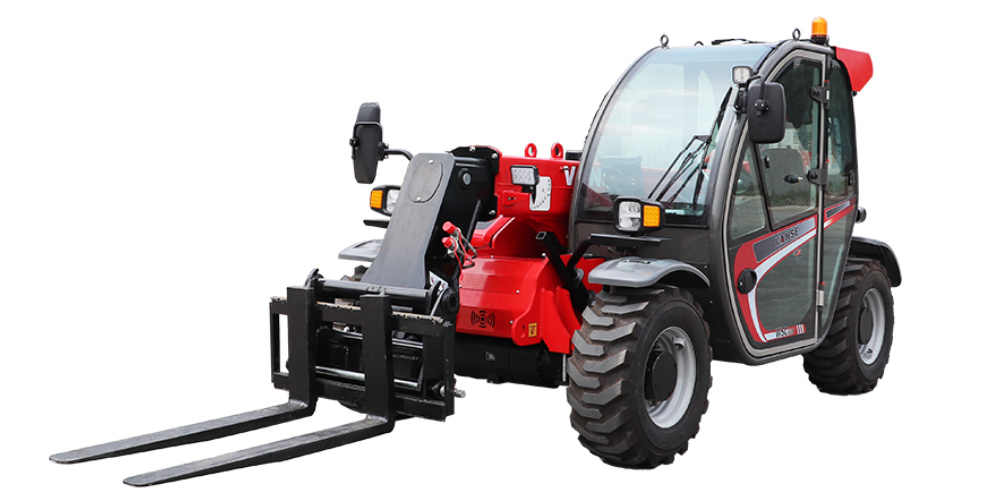
VANSE 625 6m Telescopic Handler
Designed for efficient material handling and stacking in warehouses, factories, and confined job sites, offering compact maneuverability and reliable performance.

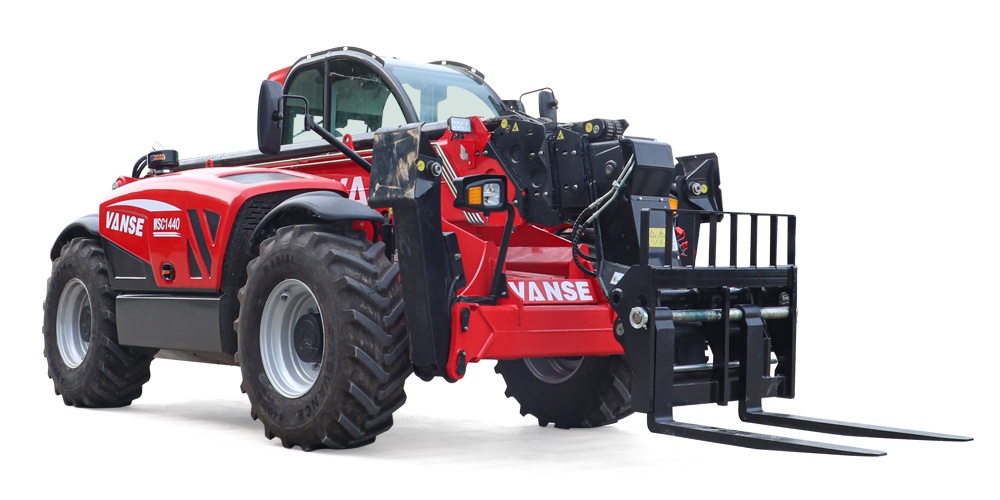
VANSE 735 7m Telescopic Handler
A balanced mid-duty solution for construction, agriculture, logistics, and warehousing, combining stable lifting, strong traction, and everyday versatility.


About the Author:
The VANSE team is a group of experienced professionals specializing in construction machinery research, manufacturing, and technical support. With deep industry knowledge and hands-on experience, our engineers and product specialists share practical insights on equipment selection, operation, maintenance, and industry trends.
Share

You May Also Interest
-

29 May, 2026
Telehandler vs Mast Forklift: Comparison
Telehandler vs mast forklift in the United States: compare reach, load, cost, safety, and jobsite fit to choose the right material handling machine.
-
28 May, 2026
Telehandler vs Backhoe: Comparison
Telehandler vs backhoe in the United States: compare reach, digging, lifting, costs, jobsite fit, suppliers, and buying tips for smarter equipment choices.
-
27 May, 2026
Telehandler vs Mini Crane: Comparison
Compare telehandler vs mini crane in the United States with costs, jobsite fit, supplier options, and 2026 buying trends for safer lifting decisions.
-

26 May, 2026
Electric Telehandler vs Diesel Telehandler
Compare electric telehandler vs diesel telehandler in the United States with costs, suppliers, use cases, and buying tips for construction and agriculture.