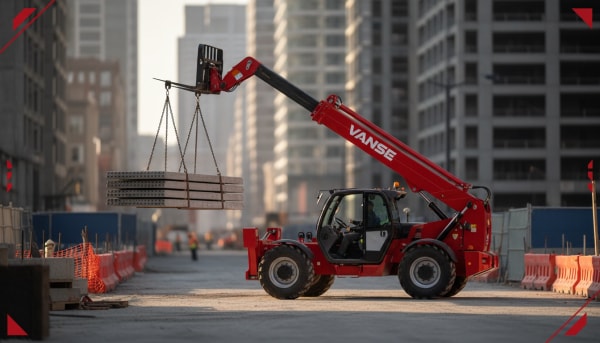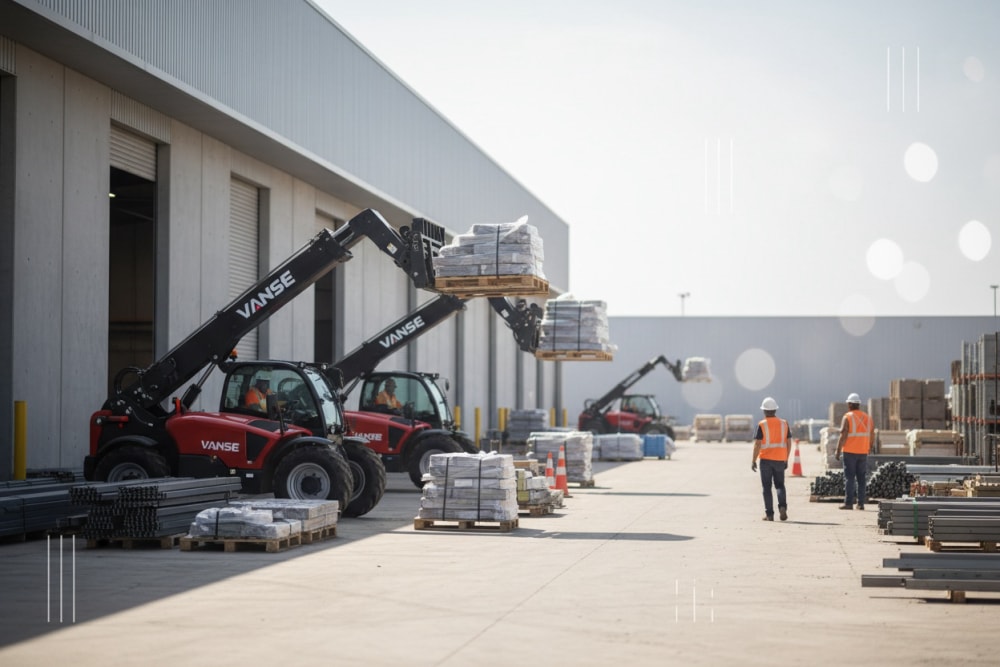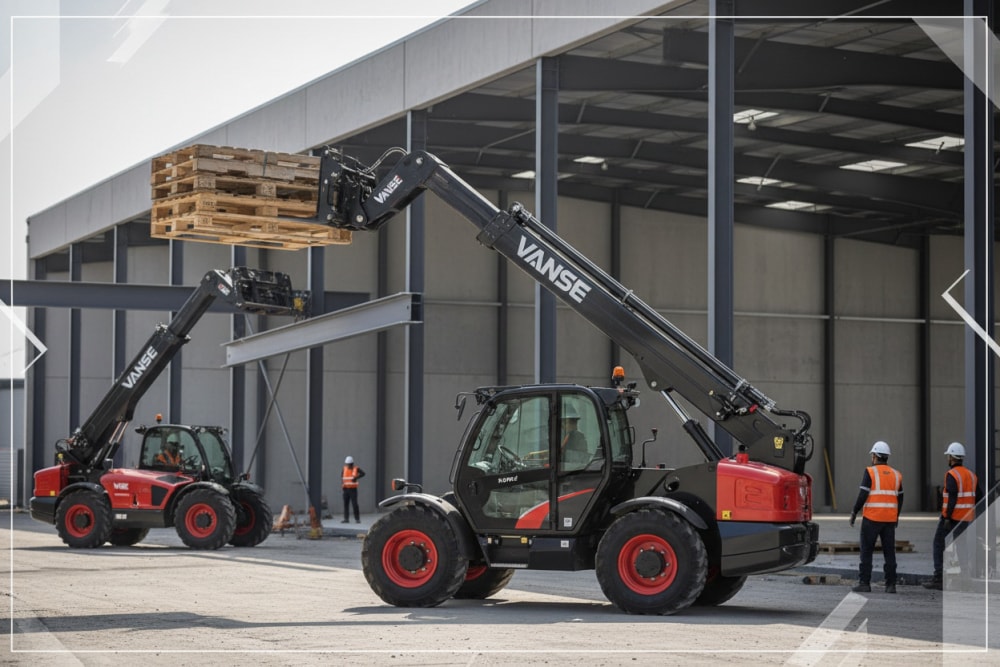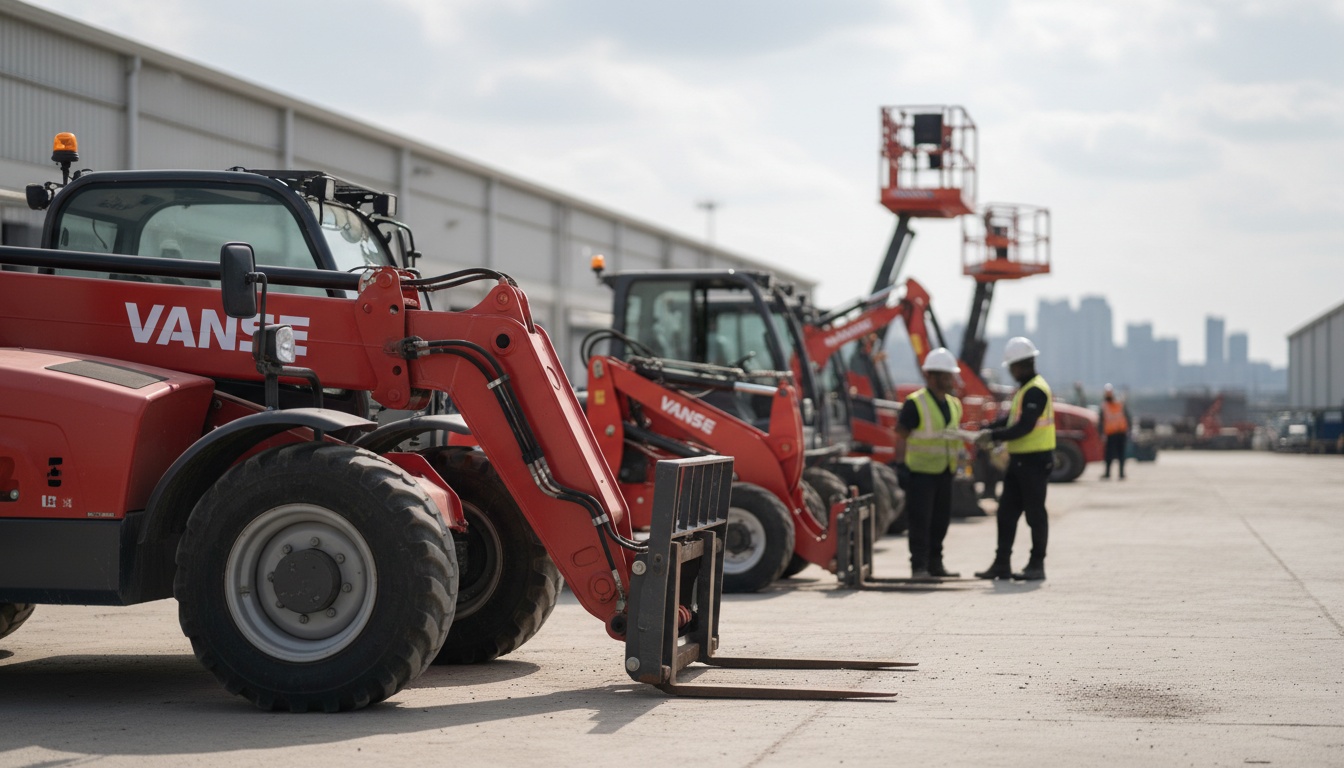
Best Telehandler for Warehouse Use in the United States
Quick Answer

If you need a telehandler for warehouse work in the United States, the best choice is usually a compact or low-profile model with strong visibility, precise hydraulics, non-marking tires, and attachment compatibility for pallets, bulk bags, and maintenance platforms. For buyers prioritizing nationwide support and resale value, JLG, Genie, JCB, SkyTrak, Bobcat, and Manitou are practical names to shortlist. In major logistics markets such as Chicago, Dallas, Atlanta, Los Angeles, Savannah, and New Jersey port corridors, these brands are commonly supported through dealer networks, rental fleets, and service centers.
For most indoor or mixed indoor-outdoor warehouse applications, the most suitable options are compact telehandlers in the roughly 5,000 to 8,000 lb lift-capacity class with lift heights matched to rack design rather than buying the tallest boom available. If your aisles are tight, prioritize turning radius, machine width, lowered height, and fork control smoothness over peak reach. If your operation handles long shifts, focus on operator ergonomics, parts availability, and maintenance access. Qualified international suppliers, including Chinese manufacturers with recognized certifications, proven component sourcing, and strong pre-sales and after-sales support, can also be worth considering because they often deliver strong cost-performance for fleet buyers and distributors.
- JLG: strong dealer and rental presence across the United States; good fit for logistics and general industrial fleets.
- Genie: reliable support network and easy access to rental-style units for warehouse overflow demand.
- JCB: compact telehandlers with good maneuverability for indoor and yard transitions.
- SkyTrak: familiar in North American fleets, especially where operators already know the platform.
- Bobcat: compact equipment distribution strength and practical attachment support.
- Manitou: good fit for mixed warehouse, agriculture, and industrial handling applications.
United States Warehouse Telehandler Market

The United States warehouse equipment market is being reshaped by e-commerce growth, regional fulfillment expansion, labor shortages, and the redesign of industrial buildings around higher throughput. While forklifts remain dominant for flat-floor pallet handling, telehandlers have expanded their role in warehouses that need extra reach, dock-to-rack flexibility, mezzanine support, maintenance access, outdoor loading yard work, and occasional construction-related tasks around distribution centers. In cities with high warehouse turnover such as Inland Empire, Houston, Columbus, Memphis, and Phoenix, operators often prefer a machine that can move from receiving bay to yard, from steel erection support to final racking support, without bringing in multiple specialized units.
Demand is also influenced by the geography of American supply chains. Facilities near the Port of Los Angeles, Port of Long Beach, Port of Savannah, Port of New York and New Jersey, and rail hubs in Chicago and Kansas City increasingly need handling equipment that supports fast inventory movement while dealing with seasonal surges. This is where warehouse telehandlers fill a niche. They are not the cheapest option for every job, but they become efficient where the site needs reach, elevation, attachment versatility, and cross-functional material movement.
Another important shift is the increase in hybrid operations. Many United States facilities include indoor storage, covered loading zones, outdoor staging yards, and adjacent light construction or maintenance work. In these settings, a telehandler provides more operational flexibility than a warehouse-only forklift. This is especially relevant for third-party logistics companies, building-material distributors, industrial manufacturers, machinery dealers, and food-processing facilities that need to unload trucks outside and place material inside on elevated storage.
Market Growth Outlook

The data below illustrates a realistic directional view of how the warehouse telehandler segment has been growing in the United States as more facilities demand versatile equipment.
Why Warehouses Use Telehandlers
Telehandlers are most useful in warehouses where standard forklifts face reach or flexibility limits. They can place loads at height, service overhead systems, support building maintenance, handle materials in unfinished or semi-finished facilities, and move oversized or irregular goods. For example, in a distribution center expansion in Texas, a compact telehandler may unload steel, move HVAC components, place pallets into overflow racking, and then help maintenance crews access lighting or duct systems. That range is difficult to achieve with a single conventional forklift.
Warehouse managers in the United States also increasingly evaluate equipment by total site productivity, not by unit purchase price alone. A telehandler may reduce the need for separate rough-terrain forklifts, mobile elevating platforms, and temporary cranes in some situations. That matters in labor-tight regions where operators need equipment that adapts to changing tasks without long downtime between job types.
Common Product Types for Warehouse Use
Not every telehandler is a good warehouse fit. Buyers should separate compact warehouse-capable machines from large construction telehandlers. Machine selection should reflect aisle width, floor load limits, rack height, typical pallet weight, dock conditions, and attachment use.
| Product Type | Typical Lift Capacity | Typical Lift Height | Best Warehouse Use | Main Strength | Main Limitation |
|---|---|---|---|---|---|
| Compact telehandler | 5,000-6,000 lb | 15-20 ft | Tight indoor areas, loading zones, maintenance support | Small footprint and maneuverability | Limited max reach for tall racks |
| Mid-size telehandler | 6,000-8,000 lb | 19-26 ft | Mixed warehouse and yard use | Balanced reach and capacity | May be too large for narrow aisles |
| High-reach telehandler | 8,000-10,000 lb | 30-44 ft | Overhead installation, tall structures, exterior staging | Extended reach and elevated placement | Often oversized for indoor use |
| Rotating telehandler | 8,000-13,000 lb | 55-80 ft | Specialized industrial projects and plant maintenance | 360-degree versatility | Higher cost and complexity |
| Electric compact telehandler | 4,000-5,500 lb | 14-18 ft | Low-emission indoor operations | Quiet operation and sustainability alignment | Charging infrastructure needed |
| Low-profile telehandler | 5,500-7,000 lb | 16-22 ft | Facilities with height restrictions | Fits under low canopies and door frames | Model availability can be limited |
This comparison shows that the best warehouse telehandler is usually not the largest machine. In many United States facilities, compact and mid-size units deliver the best combination of safety, floor compatibility, visibility, and cost control. Larger construction-spec machines can create aisle conflicts, floor wear, and unnecessary fuel burn.
Industry Demand by Segment
Warehouse telehandler demand is not evenly distributed. The strongest use cases come from industries that need both pallet handling and occasional elevated placement or exterior yard work.
Buying Advice for U.S. Warehouse Operators
When selecting a telehandler for warehouse operations in the United States, start with the site rather than the spec sheet. Measure the narrowest working zone, standard load dimensions, doorway heights, floor conditions, and actual rack heights. A machine with excessive reach may underperform because of visibility compromises, operating weight, or reduced indoor efficiency. If your facility uses standard pallet racks under 20 feet and occasional outdoor unloading, a compact or mid-size telehandler is often enough.
Fuel type matters. Diesel remains common for mixed indoor-outdoor work, but emissions policy, ventilation cost, and corporate sustainability targets are increasing interest in electric and low-emission alternatives. In California and parts of the Northeast, environmental considerations increasingly influence fleet planning. In food, beverage, and enclosed industrial spaces, buyers should also review ventilation, noise, and shift duration before selecting the powertrain.
Attachment strategy is another key factor. Warehouses rarely use a telehandler for one task only. Common attachments include pallet forks, buckets, jib booms, work platforms, and material clamps. If the machine will support maintenance crews, verify local compliance rules for personnel lifting attachments. If the unit will unload irregular freight from containers or flatbeds, ask for hydraulic response data and attachment changeover time.
Finally, evaluate dealer and parts coverage by actual service radius. A supplier can claim nationwide support, but what matters is whether technicians and parts are accessible in your metro area. Facilities in Atlanta, Reno, Louisville, and Jacksonville often rely on quick field service because downtime affects delivery commitments. Ask each supplier for response times, common stocked parts, and warranty labor procedures.
| Buying Factor | Why It Matters | Warehouse Impact | Questions to Ask | Best Fit Indicator | Risk if Ignored |
|---|---|---|---|---|---|
| Machine width and height | Determines access to aisles and doors | Prevents collisions and bottlenecks | Will it clear all openings and rack zones? | Safe movement with margin | Restricted operating area |
| Lift chart under forward reach | Capacity drops as boom extends | Affects elevated pallet placement | What is actual capacity at required reach? | Stable load handling at target height | Unsafe overloading |
| Tire type | Impacts floor marking and traction | Protects indoor surfaces | Are non-marking options available? | Suitable for mixed surfaces | Floor damage and reduced grip |
| Hydraulic smoothness | Improves precision in racking | Reduces product damage | Can we test fork leveling and inching? | Controlled placement | Load instability |
| Service footprint | Minimizes downtime | Keeps throughput stable | Where is the nearest technician and parts hub? | Fast field support | Long repair delays |
| Total cost of ownership | Includes fuel, service, parts, resale | Improves budgeting accuracy | What are annual service intervals and parts costs? | Predictable lifecycle cost | Budget overruns |
This table helps buyers move beyond catalog specifications. For warehouse equipment, practical fit is more important than maximum boom height or headline capacity. The right telehandler is the machine that matches the exact indoor workflow without adding unnecessary complexity.
Typical Industries and Applications
Warehouse telehandlers are widely used across several sectors in the United States. Third-party logistics companies use them for overflow inventory placement, dock support, and mixed indoor-outdoor freight handling. Building material distributors use them to move palletized cement, drywall bundles, doors, pipe, and packaged lumber. Food and beverage plants may use compact models in receiving zones or maintenance work where a standard forklift lacks reach. Manufacturers use them to move dies, parts, and oversized assemblies in plant expansions or retrofit projects.
Applications also vary by building age. In older warehouses with lower clear heights and tighter circulation areas, compact telehandlers are often used only in specific zones such as receiving, staging, and maintenance. In newer suburban logistics parks around Dallas-Fort Worth, central Pennsylvania, and the Inland Empire, operators may deploy telehandlers more broadly because facilities have larger aprons, wider service lanes, and integrated outdoor staging areas.
Application Trends in the United States
Warehouse telehandler use is shifting from occasional support equipment to a more planned role in integrated logistics operations. The area chart below shows a realistic trend in how mixed-use material handling has grown compared with single-purpose deployment.
Case Studies from U.S. Operations
Consider a building materials wholesaler near Houston serving commercial contractors. The facility unloads inbound flatbeds outdoors, stages products in a covered yard, and replenishes warehouse racks throughout the day. A mid-size telehandler allows the team to move bundles outdoors, place pallets on upper storage positions, and support maintenance without calling a separate access platform. The result is fewer machine changes during peak receiving windows.
Another example is a third-party logistics provider near Savannah handling import cargo tied to port activity. Seasonal surges require flexible equipment that can unload inconsistent freight formats and reorganize overflow storage quickly. A compact telehandler with forks and jib attachment allows fast adaptation to product mix changes. It does not replace every forklift, but it improves resilience during peak inbound congestion.
In the Midwest, a manufacturer in Columbus may use a telehandler in a warehouse modernization project. During rack installation and equipment relocation, the machine supports contractors and internal staff. Once the project ends, the same telehandler remains useful for periodic maintenance, outdoor loading, and handling oversized components. This is where telehandlers justify investment: they retain utility after the original project is complete.
Top Local and National Suppliers in the United States
Supplier selection should balance machine quality, financing, support radius, and realistic application fit. The companies below are relevant names for United States buyers evaluating telehandlers for warehouse use. Some sell directly, while others work through dealers or distribution partners.
| Company | Service Region | Core Strengths | Key Offerings | Warehouse Relevance | Buyer Notes |
|---|---|---|---|---|---|
| JLG Industries | Nationwide United States | Large support network, fleet familiarity, rental penetration | Compact and mid-size telehandlers, service support | Good for logistics and industrial buyers needing strong parts access | Check local dealer response times |
| Genie | Nationwide United States | Well-known access equipment background, rental channel visibility | Telehandlers for mixed industrial tasks | Useful where fleets already use Genie equipment | Compare indoor maneuverability model by model |
| JCB | Strong U.S. dealer coverage in multiple regions | Compact design expertise, brand recognition in handlers | Compact and agricultural-industrial telehandlers | Strong fit for tight spaces and mixed-use sites | Verify model availability in your state |
| SkyTrak | Broad North American presence | Familiar platform for contractors and rental fleets | Traditional telehandler range | Practical for warehouses with adjacent construction or yard work | Often favored by operators with construction background |
| Bobcat | Nationwide through equipment dealers | Compact equipment dealer network, attachment ecosystem | Compact telehandlers and material handling support | Good option for mixed warehouse and facility maintenance use | Evaluate local telehandler-specific parts stock |
| Manitou | United States national coverage through dealer channels | Material handling specialization, broad application range | Telehandlers for industrial and agricultural operations | Useful for mixed indoor-outdoor handling requirements | Good fit when versatility is the priority |
| MEC / regional distributors | Select U.S. metro regions | Regional responsiveness and tailored fleet support | Specialized compact equipment solutions | Can suit niche indoor industrial projects | Check service depth before large fleet purchases |
This supplier table is designed for practical comparison. The strongest candidates are not always the biggest global names; the best choice is often the company with the best local uptime support in your city or distribution corridor. Buyers in the United States should always compare machine fit together with field service capacity, lead time, and financing options.
Supplier and Product Comparison
The chart below provides a simple comparison of representative supplier strengths for warehouse buyers. These values are directional and help illustrate how different vendors may compare on support, compact suitability, and versatility.
Detailed Supplier Analysis
| Company | Typical Buyer Type | Service Advantages | Best Use Cases | Potential Trade-Off | Recommended Evaluation Focus |
|---|---|---|---|---|---|
| JLG Industries | 3PLs, rental fleets, industrial groups | Broad support, familiar technician base | Regional distribution centers and mixed-use sites | Popular models may have strong demand pressure | Lead time and service package structure |
| Genie | Rental-linked operations, warehouses with varied seasonal demand | Good fleet compatibility and support familiarity | Overflow handling and maintenance support | Some models are more construction-oriented | Indoor handling precision and dimensions |
| JCB | Buyers wanting compact versatility | Well-regarded telehandler specialization | Tight warehouse layouts and yard transitions | Dealer strength varies by region | Nearest parts hub and operator comfort |
| SkyTrak | Contractors, industrial sites, hybrid warehouse-project operations | Operator familiarity in North America | Warehouses with regular exterior loading work | Some buyers may find better indoor-specific alternatives | Turning radius and indoor suitability |
| Bobcat | SMEs, regional facilities, maintenance-heavy sites | Strong dealer base in compact equipment | General material handling and attachment use | Model range may be narrower in some areas | Telehandler-specific application support |
| Manitou | Industrial and diversified operators | Broad material handling expertise | Warehouses needing versatility across departments | Configuration complexity can require more planning | Attachment options and service training |
This second supplier table adds more decision depth. It helps buyers connect each company with common purchasing scenarios rather than comparing only brochures. In practice, warehouse buyers should request on-site demos with their actual pallet loads, rack geometry, and travel paths before committing.
Our Company
For buyers in the United States also evaluating globally sourced alternatives, VANSE Group offers a practical option built around telehandler specialization rather than a generic equipment catalog. Founded in 2013 and exporting to more than 40 countries, the company manufactures telehandlers under CE and ISO 9001 certified processes and validates each unit through load testing, safety inspection, and performance checks before shipment. Its product strength is grounded in the use of globally recognized engines such as Perkins and Cummins together with premium hydraulic, transmission, and axle systems, giving U.S. buyers concrete evidence of component reliability rather than vague quality claims. For cooperation, VANSE serves end users, distributors, dealers, brand owners, rental companies, and project buyers through flexible OEM, ODM, wholesale, retail, and regional partnership models, making it suitable for both direct fleet purchases and channel development. Local service assurance is also becoming more tangible in the American market: the group is establishing a U.S.-based subsidiary with local inventory, stocking plans, and after-sales capability, which supports a stronger long-term presence instead of operating only as a remote exporter. Combined with online technical support, factory pre-sale consultation, lifecycle service, and experience already serving North America, this creates a more credible path for U.S. customers seeking value, support continuity, and market-specific configurations. Buyers can review the broader equipment range, learn more about the company, explore available service support, or reach the team through the contact page.
How to Compare Domestic and International Options
United States buyers increasingly compare domestic dealer-supplied equipment with international sourcing strategies, especially for multi-unit purchases. Domestic brands often lead on local familiarity, established resale markets, and immediate dealer relationships. International suppliers may offer stronger acquisition cost, customization flexibility, and direct factory communication. The right approach depends on purchase volume, internal maintenance capability, financing expectations, and urgency.
For fleet managers, the best method is to score each candidate across five categories: application fit, service response, parts stocking, delivered cost, and buyer protection. A lower machine price is not enough if parts lead times are unclear. At the same time, a higher-priced local option may not be justified if a qualified international supplier now offers U.S.-based inventory and technical support. This is why buyers should request a complete support plan, not just a machine quotation.
| Evaluation Item | Domestic Dealer Brand | Qualified International Supplier | What U.S. Buyers Should Verify | Best for | Main Decision Trigger |
|---|---|---|---|---|---|
| Purchase price | Usually higher | Often more competitive | Delivered price with attachments and warranty | Cost-sensitive fleet buyers | Capital budget |
| Service familiarity | Often stronger immediately | Improving with local operations | Actual U.S. technician and parts coverage | High-uptime operations | Downtime risk tolerance |
| Customization | Limited by standard catalog | Often more flexible through OEM/ODM | Spec changes, branding, attachments | Dealers and private-label projects | Need for market-specific configuration |
| Lead time | Can be fast if stock exists | Depends on inventory and shipping model | In-stock units versus factory build schedule | Urgent replacement demand | Project timing |
| Resale market | Typically more established | Can vary by brand maturity | Residual values and secondary market depth | Short replacement cycles | Fleet turnover strategy |
| Channel cooperation | More fixed | Often open to regional partnership models | Dealer exclusivity and territory options | Distributors and importers | Business expansion goals |
This comparison is useful because warehouse buyers are no longer limited to one sourcing model. The best-value option may combine a globally competitive machine with strong U.S.-based support infrastructure.
Safety and Compliance Considerations
Warehouse telehandler use in the United States requires careful operator training, load-chart awareness, traffic planning, and attachment compliance. Telehandlers behave differently from forklifts, especially when loads are extended forward or lifted to height. Operators must understand capacity reduction at reach, the effect of uneven surfaces near loading zones, and the role of stabilizers where applicable.
Site managers should also define whether the telehandler will be used indoors, outdoors, or in mixed duty cycles. If personnel-lifting attachments are involved, buyers must verify compliance with applicable local and federal requirements and use only approved configurations. In busy fulfillment centers, route separation between pedestrians and mobile equipment is essential. Good visibility, cameras, mirrors, and work lighting are especially valuable in dock areas and evening shifts.
Future Trends for 2026
By 2026, warehouse telehandler purchasing in the United States is likely to be shaped by three major trends: technology integration, policy pressure, and sustainability expectations. On the technology side, telematics, remote diagnostics, and predictive maintenance will become standard evaluation criteria, especially for multi-site fleets. Buyers will want fault alerts, service reminders, geofencing, operator access control, and machine usage data that can tie into warehouse management or fleet systems.
Policy is another driver. State-level emissions rules, workplace safety enforcement, and building electrification strategies will influence equipment selection in California, New York, New Jersey, and other regulated markets. Electric or hybrid-compatible handling equipment will gain more attention, even if diesel remains important for outdoor loading yards and heavy-duty work. Corporate procurement teams are also adding ESG targets into equipment tenders, which means machine efficiency, noise profile, and lifecycle footprint will matter more.
Sustainability trends will not only affect powertrain choice but also service design. Rebuild programs, parts remanufacturing, and longer maintenance intervals will become stronger selling points. Suppliers that can combine lower operating cost with documented compliance and real local support will be well positioned. Buyers should therefore think beyond the current project and choose a platform that aligns with where regulation and customer expectations are headed.
FAQ
Is a telehandler better than a forklift for warehouse work?
Not always. A forklift is usually better for repetitive indoor pallet movement on smooth floors. A telehandler is better when your warehouse operation also needs forward reach, outdoor unloading, elevated placement, maintenance support, or handling of oversized materials.
What size telehandler is best for most United States warehouses?
For many warehouses, a compact to mid-size telehandler in the 5,000 to 8,000 lb class is the most practical range. The exact fit depends on aisle width, floor loading, rack height, and whether the machine will work outside as well.
Can telehandlers be used indoors safely?
Yes, if the machine is correctly selected for the environment. Buyers should consider ventilation, tire type, machine width, turning radius, visibility, and floor conditions. Electric or low-emission options may be preferable in enclosed or sustainability-focused facilities.
Which U.S. regions have the strongest support for warehouse telehandlers?
Support is generally strongest around major logistics and industrial hubs such as Chicago, Dallas-Fort Worth, Atlanta, Los Angeles, Houston, central Pennsylvania, Savannah, and the New York-New Jersey corridor, where dealer networks and rental fleets are more concentrated.
Are international telehandler suppliers a realistic option for U.S. buyers?
Yes, if they have credible certifications, strong component sourcing, documented export experience, and real plans for U.S. parts and after-sales support. Fleet buyers, distributors, and private-label partners often consider them for cost-performance and customization reasons.
What attachments are most useful for a warehouse telehandler?
Pallet forks are the standard choice, but many buyers also use buckets, jib booms, work platforms, and specialty clamps. The right attachment package depends on whether your site handles pallets, loose materials, maintenance access, or oversized industrial goods.
What should I ask a supplier before buying?
Ask for the true lift chart at your target height and reach, machine dimensions, indoor tire options, local technician coverage, parts stocking location, attachment compatibility, warranty terms, and a live demonstration with your actual loads.
Final Takeaway
The best telehandler for warehouse use in the United States is the one that matches your real aisle dimensions, load profile, indoor-outdoor balance, and service expectations. For many operators, established brands such as JLG, Genie, JCB, SkyTrak, Bobcat, and Manitou are the most straightforward starting point because of local support and market familiarity. At the same time, qualified international suppliers with verified certifications, premium components, and growing U.S. service infrastructure can be compelling alternatives for buyers focused on value, customization, and fleet expansion. In a market shaped by labor pressure, regional logistics growth, and 2026 sustainability trends, careful equipment selection now can improve warehouse productivity for years to come.
Complete Telescopic Handler Equipment Portfolio
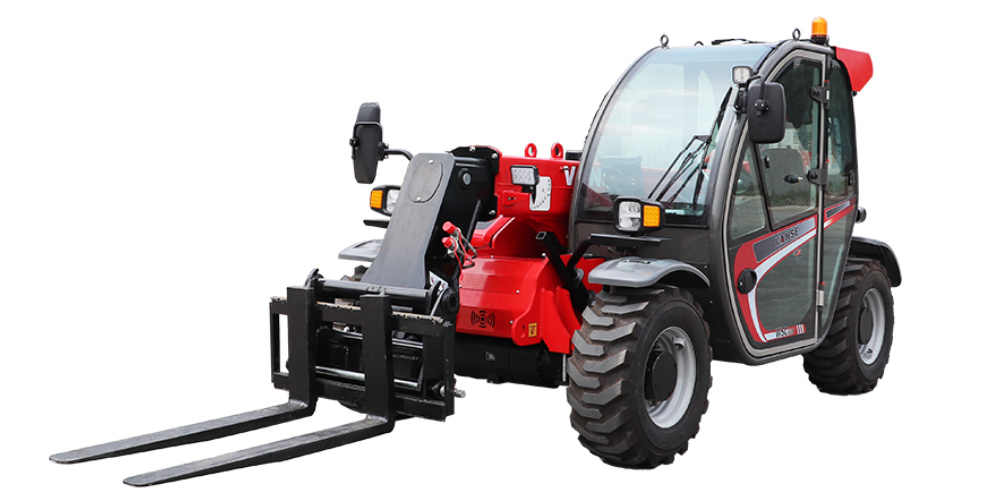
VANSE 625 6m Telescopic Handler
Designed for efficient material handling and stacking in warehouses, factories, and confined job sites, offering compact maneuverability and reliable performance.

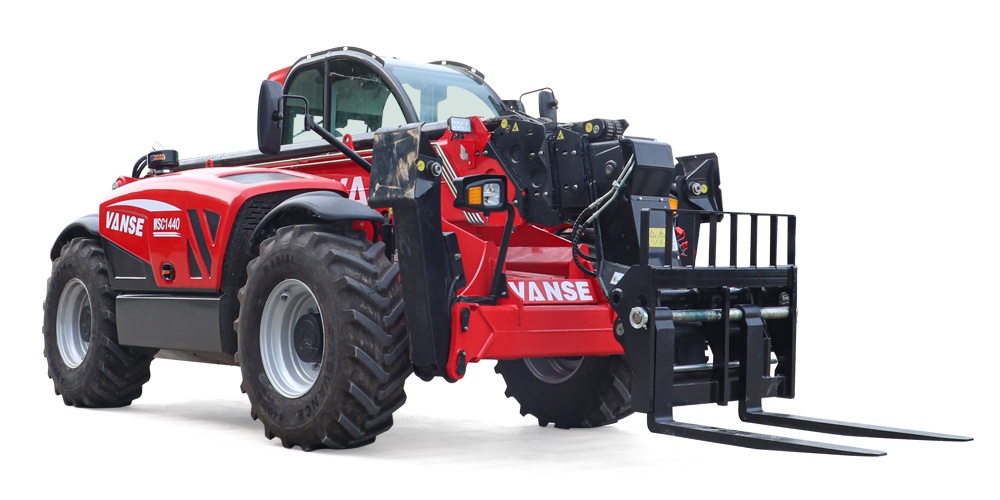
VANSE 735 7m Telescopic Handler
A balanced mid-duty solution for construction, agriculture, logistics, and warehousing, combining stable lifting, strong traction, and everyday versatility.


About the Author:
The VANSE team is a group of experienced professionals specializing in construction machinery research, manufacturing, and technical support. With deep industry knowledge and hands-on experience, our engineers and product specialists share practical insights on equipment selection, operation, maintenance, and industry trends.
Share
You May Also Interest
-

May 8, 2026
How Much Can a Telehandler Lift? Guide
Learn how much can a telehandler lift in the United States, with capacity ranges, jobsite examples, buying tips, supplier comparisons, and 2026 trends.
-

May 7, 2026
Telehandler OSHA Requirements: Guide
Learn telehandler OSHA requirements in the United States, including training, inspections, safe operation, jobsite compliance, and buying guidance.
-
May 6, 2026
Telehandler for Rough Terrain: Guide
Find the best telehandler for rough terrain in the United States, compare suppliers, machine types, applications, costs, and local support options.
-

May 5, 2026
Telehandler Inspection Checklist Guide
Use this telehandler inspection checklist for United States jobsites to verify safety, service points, documents, and uptime before each shift.