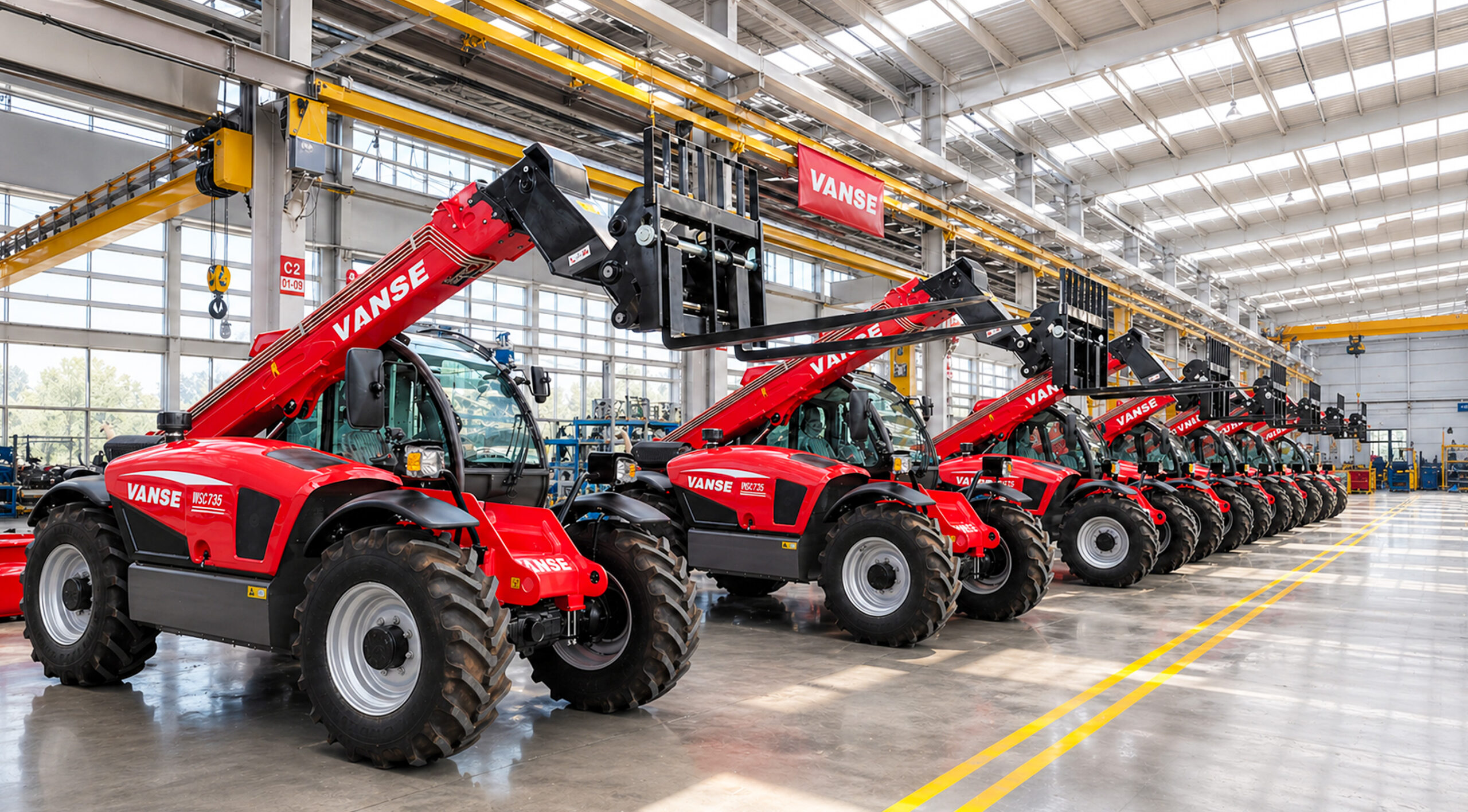
How High Can a Telehandler Reach in the United States?
Quick Answer

In the United States, a telehandler can typically reach from about 18 to 56 feet, while heavy-duty high-reach models can extend to roughly 70 feet or a little more in specialized applications. Compact construction and agricultural units often work in the 19 to 35 foot range, mainstream jobsite machines usually reach 42 to 55 feet, and large rotating or specialty telehandlers can exceed that when the lift plan, ground conditions, and attachment selection allow safe operation.
For most buyers in cities such as Houston, Dallas, Chicago, Atlanta, Los Angeles, and inland logistics corridors near major ports like Savannah, Long Beach, and Houston, the right answer is not simply the highest boom. It is the reach that matches load weight, site access, and local service support. Leading suppliers in the U.S. market include JLG, Genie, JCB, Bobcat, Caterpillar, and SkyTrak, while qualified international suppliers can also be worth considering when they provide recognized certifications, strong parts support, and responsive pre-sales and after-sales service. That is where value-focused manufacturers such as VANSE can become relevant for buyers comparing total cost of ownership rather than sticker price alone.
Direct Reach Ranges by Machine Class

When someone asks how high can a telehandler reach, the practical answer depends on machine class, rated load, boom geometry, and whether the published specification refers to maximum lift height, forward reach, or both. In the U.S. equipment market, telehandlers are commonly selected by jobsite needs rather than by headline height alone. Rental fleets in metropolitan construction hubs often stock 5,000 to 12,000 pound models with lift heights that cover the majority of framing, masonry, steel, roofing, agriculture, yard handling, and industrial maintenance work.
A compact telehandler used on tight residential or landscaping sites may only need to reach second-story roofline height. A commercial framing or masonry contractor working on a mid-rise project may need 42 to 55 feet. Port-adjacent warehousing, refinery maintenance, and energy-sector support can call for heavier capacities or rotating units with more complex work envelopes. That is why buyers in the United States usually compare lift height together with capacity at height, frame dimensions, stabilizer design, and local dealer response time.
| Machine Class | Typical Lift Height | Typical Capacity | Common U.S. Uses | Best Fit Locations | Buying Note |
|---|---|---|---|---|---|
| Compact telehandler | 18 to 25 ft | 2,500 to 5,500 lb | Residential builds, landscaping, barns | Suburban and tight urban sites | Good where maneuverability matters more than maximum reach |
| Mid-size jobsite telehandler | 26 to 36 ft | 5,000 to 8,000 lb | General construction, material staging | Regional rental fleets nationwide | Often the most versatile class for mixed work |
| High-reach standard telehandler | 42 to 55 ft | 8,000 to 12,000 lb | Masonry, steel, commercial builds | Major metro projects | Check derated capacity at full height carefully |
| Heavy-duty telehandler | 44 to 56 ft | 12,000 to 15,000 lb+ | Industrial yards, infrastructure, energy | Texas, Gulf Coast, Midwest industry | Ground pressure and transport planning are key |
| Rotating telehandler | 50 to 70 ft+ | 8,000 to 13,000 lb | Complex lifts, urban sites, maintenance | Dense cities and specialty contractors | Higher flexibility but higher acquisition cost |
| Specialty high-reach unit | 70 ft and above | Varies widely | Special projects and niche access work | Rental-specialty channels | Usually justified only for specific lift plans |
The table shows why the question of maximum reach should always be paired with capacity and task type. A telehandler may technically lift to a certain height, but the safe payload at that height is often lower than the nominal maximum capacity measured near ground level. For U.S. contractors, especially those working under strict site safety requirements, load charts matter more than brochure headlines.
United States Market Context

The telehandler market in the United States remains strong because the machine serves several sectors at once: commercial construction, agriculture, rental, warehousing, utilities, energy, and industrial maintenance. Unlike a dedicated forklift, a telehandler can move materials over obstacles, place pallets on elevated decks, support truss and steel placement, and handle uneven terrain. This flexibility keeps demand broad across states with different economic profiles.
Texas and Florida continue to generate demand through housing, warehouses, and infrastructure. California and the Northeast value compactness and emissions planning on dense urban sites. Midwest states such as Illinois, Indiana, and Ohio maintain demand through industrial and agricultural use. Port-led trade hubs like Long Beach, Savannah, Houston, and Newark also support telehandler demand where container-related warehousing, distribution, and industrial expansion remain active.
Rental fleets play an especially important role in the U.S. market because many contractors choose access to several reach classes instead of owning multiple machines. As interest rates, labor shortages, and project schedules shift, many buyers now compare outright purchase, rent-to-own, dealer demo units, and fleet refresh options. This affects how manufacturers position products, parts stocking, warranties, and financing support.
The line chart reflects a realistic upward trend in the U.S. telehandler market, driven by rental fleet replacement, nonresidential construction, logistics buildout, and broader use in agriculture and industrial yards. By 2026, market demand is expected to be shaped not just by reach and capacity, but also by emissions compliance, operator-assist technology, telematics, and service responsiveness.
What Determines How High a Telehandler Can Reach
Maximum lift height depends on more than boom length. Engineers design telehandlers around a balance of chassis size, counterweight, hydraulic capacity, axle load distribution, and stability envelope. In the United States, OSHA-oriented site safety expectations and rental fleet liability standards mean buyers pay increasing attention to real operating limits rather than theoretical numbers.
Several factors directly affect the practical lifting height of a telehandler:
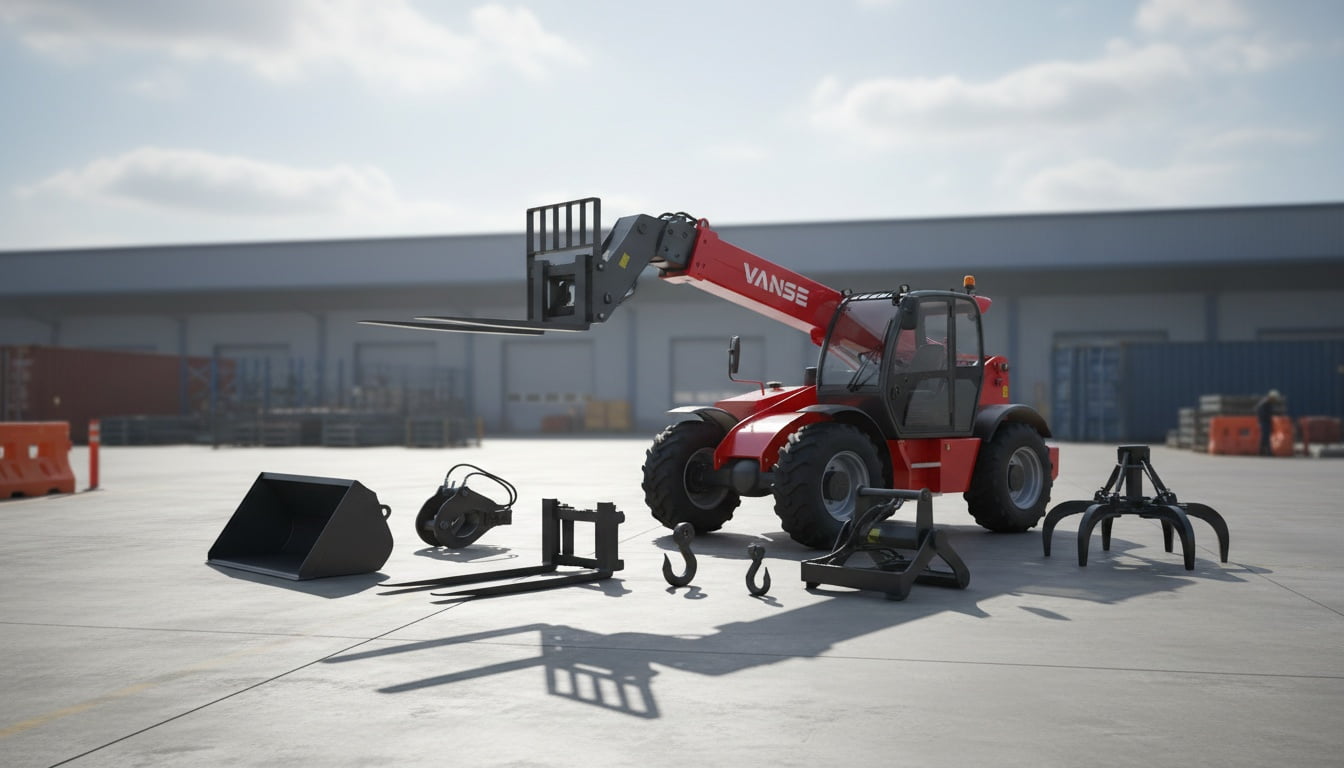
Boom design matters because some machines are optimized for vertical lift while others offer better forward reach for placing loads over obstacles. Attachment choice matters because forks, buckets, jibs, truss booms, and work platforms alter weight and load center. Tire selection, stabilizers, and frame leveling systems can improve operational flexibility, but they do not remove the need to follow the rated load chart. Ground condition is another major variable; soft soils, fill areas, and uneven pads can force operators to work well below theoretical maximums.
In short, if a buyer in the United States asks how high can a telehandler reach, the correct technical answer is: as high as the model’s lift geometry and load chart safely allow under actual site conditions with the chosen attachment and load.
Common Product Types and Reach Profiles
The U.S. market includes several telehandler categories, each with different reach expectations. Compact models are growing in popularity in urban infill, landscaping, and small farm operations. Standard fixed-boom models remain the backbone of rental fleets. Rotating telehandlers are gaining attention on complex urban projects where one machine can function like a crane substitute, access tool, and material handler. Heavy-duty industrial models serve refineries, ports, precast yards, and infrastructure jobs where lift capacity at moderate height is often more valuable than headline maximum reach.
| Type | Reach Range | Main Strength | Typical Attachments | Ideal Industries | Operational Trade-Off |
|---|---|---|---|---|---|
| Compact fixed boom | 18 to 25 ft | Tight access and transport ease | Forks, light bucket | Residential, landscaping, small farms | Lower height and lower capacity ceiling |
| Standard fixed boom | 26 to 36 ft | Balanced versatility | Forks, buckets, truss booms | Construction, rental, agriculture | May not cover high commercial steel placement |
| High-reach fixed boom | 42 to 55 ft | Commercial jobsite elevation | Forks, jibs, work platforms | Masonry, framing, industrial buildout | Heavier transport and more derating at height |
| Heavy-duty industrial | 44 to 56 ft | Higher load capacity | Forks, pipe handling tools | Energy, infrastructure, ports | Large footprint and higher acquisition cost |
| Rotating telehandler | 50 to 70 ft+ | 360-degree flexibility | Winches, baskets, forks | Urban construction, specialty lifting | Premium pricing and specialist training needs |
| Agriculture-focused telehandler | 20 to 33 ft | Fast cycle times and daily yard work | Forks, buckets, bale handlers | Dairy, feedlots, grain handling | Not always optimized for commercial building heights |
This product mix explains why buyers should first define whether they need maximum elevation, load placement over obstacles, or repeated material cycles at moderate height. The wrong machine can increase operating cost, reduce productivity, and create avoidable safety risks.
Industry Demand Across the United States
Demand varies significantly by sector. In construction-heavy metros, 42 to 55 foot machines are common because they support elevated material handling without immediately stepping into crane territory. In agriculture, lower reach but higher cycle efficiency often matters more. In energy and industrial zones such as the Gulf Coast, heavy-duty telehandlers are preferred because pipe, steel, and maintenance loads can be substantial even when maximum height is not extreme.
The bar chart highlights commercial construction as the strongest demand engine, but it also shows why the telehandler remains resilient during cyclical changes. When one sector slows, another often sustains fleet utilization. This cross-sector utility is one reason telehandlers remain attractive to rental companies, dealers, and contractors throughout the United States.
Applications by Industry
Telehandlers in the United States are used far beyond basic pallet lifting. On building projects, they place masonry units, drywall packs, framing bundles, and roof trusses. In agriculture, they feed livestock, stack hay, load seed and fertilizer, and maintain farm structures. In manufacturing and industrial facilities, they support shutdown maintenance, loading operations, and plant expansions. In infrastructure, they move formwork, rebar, and structural components. In disaster recovery or storm response, they clear debris and handle rapid material deployment.
The application determines the required reach, but so does the site layout. A project in downtown Chicago may need a rotating machine because space is constrained and repositioning is limited. A suburban distribution-center project in Dallas may use a conventional fixed-boom unit with higher lift capacity. A citrus operation in Florida may need weather-resistant daily-use equipment with strong parts support during harvest season. A refinery turnaround near Houston may prioritize uptime, safety systems, and quick field service.
| Industry | Typical Reach Need | Key Tasks | Preferred Machine Type | Why Reach Matters | Special Buying Focus |
|---|---|---|---|---|---|
| Commercial construction | 36 to 55 ft | Steel, masonry, pallet placement | Standard or high-reach fixed boom | Multi-story placement without crane for every move | Capacity at height and jobsite visibility |
| Residential construction | 18 to 36 ft | Trusses, drywall, lumber bundles | Compact or mid-size fixed boom | Second-story and roofline access | Tight turning radius and transport ease |
| Agriculture | 20 to 33 ft | Bales, feed, grain, yard cleanup | Agriculture-focused telehandler | Stacking and loading in barns and yards | Cycle speed and attachment compatibility |
| Warehousing and logistics | 20 to 42 ft | Outdoor loading, staging, expansion work | Mid-size fixed boom | Material handling over docks and obstacles | Reliability and operator simplicity |
| Energy and petrochemical | 36 to 56 ft | Pipe, maintenance, turnaround support | Heavy-duty telehandler | Handling dense loads in constrained zones | Service response and uptime planning |
| Infrastructure and utilities | 36 to 56 ft | Formwork, components, roadside work | High-reach or heavy-duty model | Access over barriers and uneven ground | Stability, tires, and jobsite adaptability |
The table makes clear that “how high can a telehandler reach” is best answered in context. The right lift height depends on the materials, the route to placement, and the rhythm of the job. A machine with slightly less maximum height but better cycle efficiency and stronger dealer support may outperform a taller model in real project economics.
Buying Advice for U.S. Buyers
For buyers in the United States, the smartest purchase process starts with the load chart and the jobsite, not the brochure cover. First, define the highest actual placement point and the heaviest load expected at that point. Second, verify whether the machine needs to place materials forward over an obstacle rather than only lift vertically. Third, account for transport dimensions, trailer compatibility, and whether the machine must pass through gates, barns, or urban site access points.
Dealer support is equally important. Parts availability in states where the machine will work, technician dispatch time, and operator training can all affect the ownership experience more than a small difference in purchase price. Buyers should also compare fuel efficiency, hydraulic response, attachment availability, telematics, and resale liquidity. Rental-origin buyers may prioritize universal fleet familiarity, while owner-operators may place greater value on customized specifications and lower total acquisition cost.
In trade hubs such as Houston and Savannah, imported equipment can offer significant value if it arrives with reliable parts pathways, strong documentation, and clear service commitments. That is why buyers increasingly review whether an international manufacturer has regional warehousing, local contacts, and evidence of long-term market investment instead of operating only as an offshore exporter.
Supplier Comparison in the United States
The U.S. market includes long-established domestic and global brands with broad dealer networks. Each brings a different mix of reach classes, attachment ecosystem, rental acceptance, and service coverage. The right choice depends on whether the buyer values rental interchangeability, agricultural specialization, premium rotating solutions, or cost-effective fleet expansion.
| Company | Service Region | Core Strengths | Key Offerings | Typical Reach Coverage | Best Fit Buyer |
|---|---|---|---|---|---|
| JLG | Nationwide U.S. | Strong rental presence and broad support | Construction telehandlers, high-capacity units | 26 to 55 ft+ | General contractors and rental fleets |
| Genie | Nationwide U.S. | Widely recognized fleet compatibility | Fixed-boom telehandlers for jobsite use | 24 to 56 ft | Rental-oriented buyers |
| JCB | Broad U.S. dealer network | Construction and agriculture crossover | Telehandlers with varied capacity classes | 17 to 55 ft | Mixed-use owners and farms |
| Bobcat | Nationwide U.S. | Compact and versatile equipment ecosystem | Compact and standard telehandlers | 18 to 39 ft+ | Smaller contractors and acreage owners |
| Caterpillar | Large U.S. support footprint | Dealer strength and industrial trust | Construction-focused telehandlers | 34 to 56 ft | Enterprise contractors and industrial users |
| SkyTrak | Strong U.S. market presence | Recognition in construction and rental channels | Jobsite telehandlers | 30 to 60 ft class | Construction fleets seeking familiar specs |
| Manitou | U.S. dealer coverage in key states | Agriculture depth and rotating options | Fixed and rotating telehandlers | 20 to 80 ft class | Specialized buyers and farms |
| VANSE | Growing North American focus | Cost-performance value and flexible customization | Telehandlers with OEM/ODM support | Mainstream construction and material handling classes | Distributors, dealers, fleet buyers, value-focused end users |
This comparison is helpful because it shows the decision is not simply domestic versus imported. It is about the fit between machine specification, service model, and the buyer’s commercial reality. Larger U.S. contractors may prioritize immediate dealer density, while distributors, regional fleets, and cost-sensitive buyers may evaluate emerging suppliers that can provide equivalent core systems, local support commitments, and better procurement economics.
The comparison chart reflects a pattern seen in the United States: established brands usually lead in rental familiarity and broad dealer penetration, while qualified international suppliers often compete strongly on customization and cost efficiency. For many buyers, especially distributors and private fleets, that trade-off deserves serious evaluation.
Detailed Look at Local and Regional Supplier Choices
In the United States, supplier selection often follows service geography. Contractors around the Midwest may favor brands with dense dealer branches near manufacturing and logistics corridors. Buyers in the Southeast frequently assess service access near Atlanta, Charlotte, Savannah, and Jacksonville because machine uptime affects fast-moving warehouse and construction schedules. Gulf Coast users often focus on response time for industrial maintenance and shutdown support. Western states may value emissions readiness, compact dimensions, and dealer logistics across large territories.
That is why a practical sourcing strategy includes more than brand recognition. Ask every supplier where parts are stocked, what field response times are standard, whether operator training is available, and how quickly common hydraulic, axle, and boom wear components can be supplied. For imported machines, ask whether there is a U.S. inventory program, local technical support, and documented experience in North America. These questions are often more important than a single spec difference in boom height.
Our Company
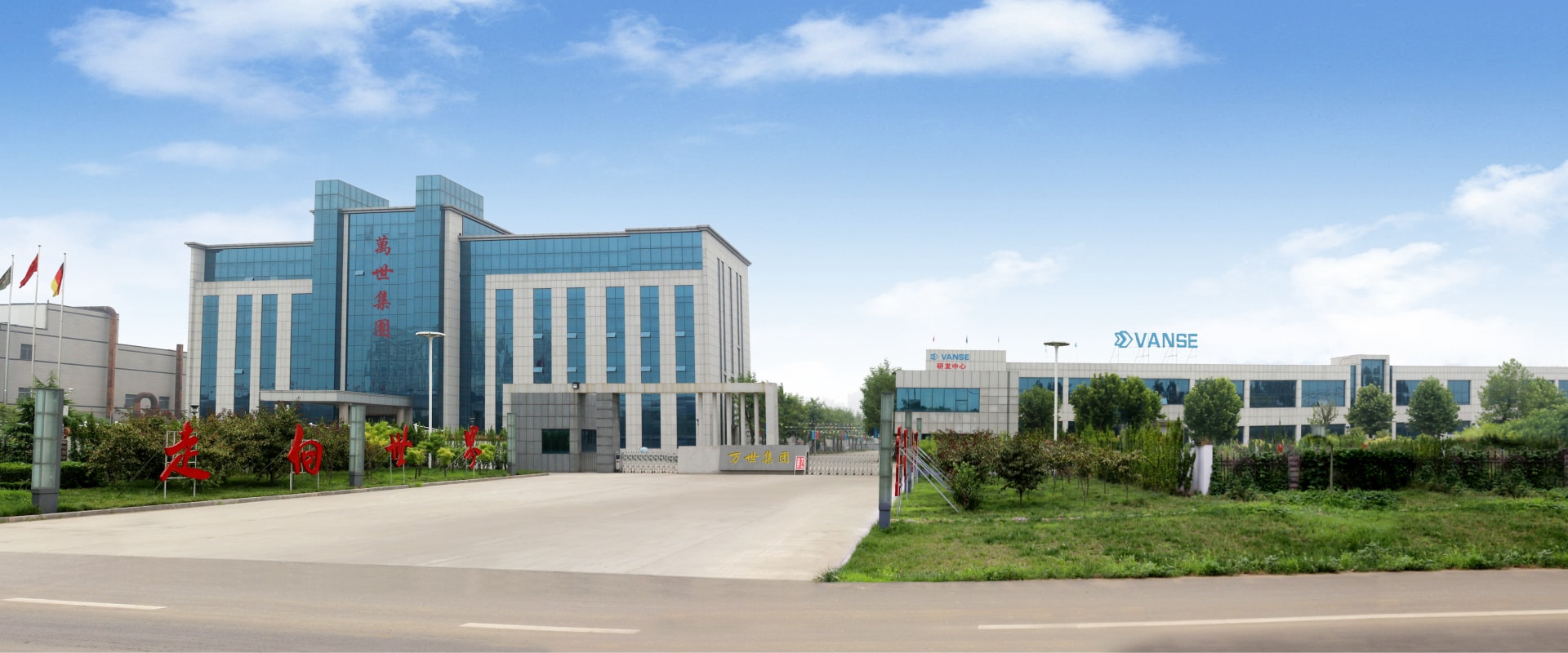
For buyers evaluating alternatives in the United States, VANSE Group brings relevant evidence rather than generic claims. Founded in 2013 and producing more than 8,000 machines, the company focuses on construction machinery with telehandlers as its flagship line, and it manufactures under CE and ISO 9001 certified processes with comprehensive load testing, safety inspection, and performance validation before shipment. Its telehandlers are built around globally recognized core components, including engines from brands such as Perkins and Cummins together with premium hydraulic systems, transmissions, and axles, which gives U.S. buyers a clearer benchmark for reliability, maintainability, and parts logic. VANSE serves end users, distributors, dealers, fleet buyers, brand owners, and emerging retail channels through wholesale, OEM, ODM, and regional partnership models, making it suitable for private-label programs as well as direct equipment procurement. Just as important for the U.S. market, the company is establishing a U.S.-based subsidiary with local inventory and stronger after-sales capability to support North American customers through both online and offline pre-sales consultation, technical assistance, maintenance support, and longer-term parts assurance. That local commitment matters because it shows VANSE is building a real operating presence in this region rather than functioning only as a remote exporter. Buyers comparing options can explore its equipment range through the equipment catalog, review support resources on the service page, or start a commercial discussion through the contact page.
Case Studies and Real-World Scenarios
A roofing materials distributor in the Dallas-Fort Worth area may assume it needs the tallest telehandler available, but a 42-foot unit with strong capacity at working height can often outperform a taller machine that is heavier, costlier to transport, and less efficient in daily yard movement. In this case, actual rack height, truck unloading sequence, and attachment use define the best purchase.
A masonry contractor in Atlanta working on a mid-rise project may genuinely require a 55-foot class machine because pallet placement to upper floor edges is frequent, and site congestion makes crane support inefficient for every material move. Here, reach is directly tied to productivity and subcontract schedule control.
A dairy operation in Wisconsin might value a 25 to 30 foot agriculture telehandler with fast hydraulic cycles and cab comfort rather than maximum boom height, because daily feed handling, barn cleaning, and bale stacking are repetitive tasks where operator fatigue and uptime matter more than headline reach.
An industrial maintenance provider near the Port of Houston may choose a heavy-duty unit with strong service backing even if the maximum lift height is moderate, because dense pipe loads, turnaround timelines, and compliance-driven site access make reliability and support more important than extra boom length.
These examples show why the best answer to how high can a telehandler reach is always linked to how the machine will earn money, save labor, or reduce delays in a specific U.S. operating context.
Trend Shift Toward 2026
Looking toward 2026, the U.S. telehandler market is expected to shift in several directions at once. First, there is stronger interest in telematics, camera systems, load management aids, and operator-assist features that reduce training pressure and improve fleet visibility. Second, buyers are paying more attention to fuel efficiency and the long-term role of lower-emission or electrified compact equipment for urban jobsites and indoor-adjacent applications. Third, procurement is becoming more strategic: distributors and rental companies want suppliers that can support regional warehousing, private labeling, and faster replenishment.
The area chart illustrates a realistic trend shift: more buyers in the United States are moving beyond simple reach and capacity comparisons. By 2026, technology integration, policy compliance, sustainability expectations, and lifecycle service will shape buying decisions just as much as boom height.
Policy, Technology, and Sustainability Outlook for 2026
Policy and regulation will continue to influence equipment selection in the United States. State and local requirements related to emissions, jobsite safety, and reporting may favor fleets with newer engines, telematics, and documented maintenance history. In cities with stricter environmental expectations, compact lower-emission machinery will gain relevance, especially for municipal work, institutional builds, and indoor-outdoor transition zones.
Technology trends include better load monitoring, remote diagnostics, fleet utilization analytics, and digital service records. These tools matter because labor constraints remain a real issue in U.S. construction and industrial sectors. If operators are harder to recruit, machines must become easier to use, easier to monitor, and less prone to misuse.
Sustainability is also becoming practical rather than purely promotional. Buyers now ask how a machine affects fuel burn, idle time, maintenance cycles, and parts waste over several years. For fleet owners, a telehandler that balances reliable core components, easier service access, and strong parts continuity can support both cost control and sustainability goals.
How to Match Reach with Safe Performance
One of the most common mistakes in telehandler procurement is choosing based on maximum lift height alone. Buyers should instead evaluate safe performance at the real working point. If a machine needs to place a pallet of block on an elevated deck with some forward extension, the relevant measure is not just how high the boom can go, but what load it can safely carry at that height and forward reach. Load charts, axle stability, and attachment weight all matter.
Another important point is site preparation. Even the best high-reach telehandler cannot safely perform if the surface is unstable, sloped, or obstructed. On many U.S. jobsites, planners now integrate telehandler pathing, laydown zones, and lift sequencing much earlier. This is one reason contractors increasingly involve equipment suppliers or dealer representatives before final procurement.
How Buyers in Different U.S. Regions Prioritize Reach
Regional conditions influence telehandler selection. In the Northeast, tighter urban projects and renovation work may favor compactness, rotating capability, and precision placement. In the Southeast, warehouse and residential growth supports versatile fixed-boom machines in the 26 to 55 foot range. In the Midwest, agriculture and industrial work sustain demand for practical models with reliable daily operating performance. In Texas and the Gulf Coast, larger industrial and infrastructure projects often justify heavy-duty machines with strong field service support. On the West Coast, environmental compliance and logistics complexity can make technology-ready, efficient models especially attractive.
These differences matter when comparing suppliers because service footprints are rarely identical. A strong dealer in one region may be weak in another. Therefore, U.S. buyers should ask not only which brand is best, but which support structure is best in their actual operating territory.
FAQ
What is the average reach of a telehandler in the United States?
The average telehandler used in the United States often falls in the 26 to 55 foot range, depending on whether it serves general construction, rental fleets, agriculture, or industrial work. Many common jobsite models are around the mid-30s to mid-50s in lift height.
Can a telehandler reach 70 feet?
Yes, specialized high-reach and rotating telehandlers can reach about 70 feet or more, but they are not the standard choice for most U.S. jobsites. They are usually selected for complex access, urban constraints, or specialty lifting tasks.
Is maximum reach the same as safe working height?
No. Maximum reach is a published specification, while safe working height depends on load weight, attachment type, boom angle, forward extension, ground condition, and the machine’s load chart. The safe payload at maximum height is usually much lower than the nominal maximum capacity.
Which telehandler reach is best for construction?
For many U.S. construction applications, 42 to 55 foot machines are a practical sweet spot because they support multi-story material placement while remaining widely available through dealers and rental channels. However, smaller residential projects may only need 18 to 36 feet.
Are telehandlers better than forklifts for outdoor sites?
On uneven ground and changing jobsites, telehandlers are usually more versatile than forklifts because they combine reach, rough-terrain capability, and attachment flexibility. Forklifts remain effective for flat surfaces and repetitive yard or warehouse movements.
Should U.S. buyers consider international telehandler suppliers?
Yes, if the supplier can demonstrate recognized certifications, proven component brands, documented production quality, local or regional support planning, and responsive after-sales service. Cost-performance can be attractive when those support requirements are clearly met.
How do I choose the right telehandler for my business?
Start with the heaviest load and highest placement point you actually need, then confirm capacity at that working height, not just at ground level. After that, compare service access, attachment support, parts availability, transport logistics, and total cost of ownership.
What matters most in 2026 telehandler buying decisions?
In 2026, buyers in the United States are likely to weigh reach and capacity together with telematics, operator-assist systems, emissions considerations, service speed, and long-term lifecycle efficiency. The market is moving toward smarter and better-supported equipment rather than simply taller machines.
Complete Telescopic Handler Equipment Portfolio
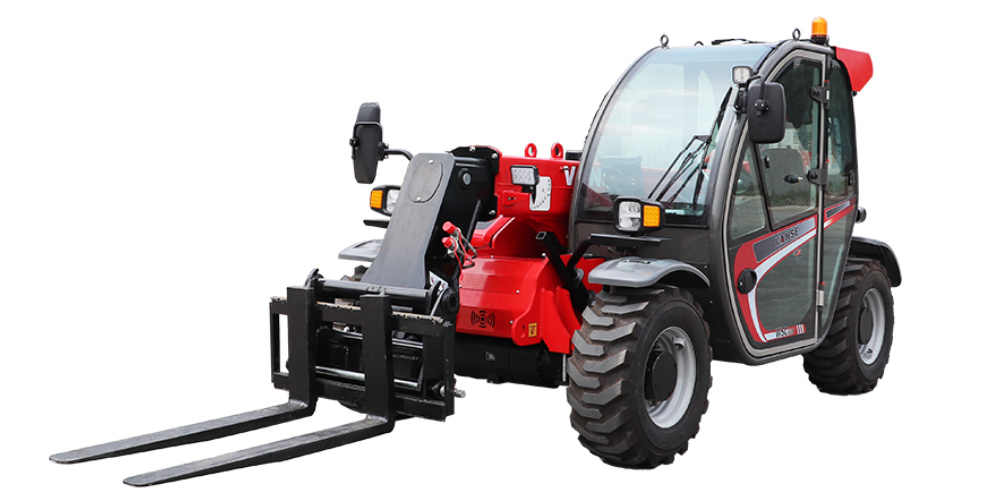
VANSE 625 6m Telescopic Handler
Designed for efficient material handling and stacking in warehouses, factories, and confined job sites, offering compact maneuverability and reliable performance.

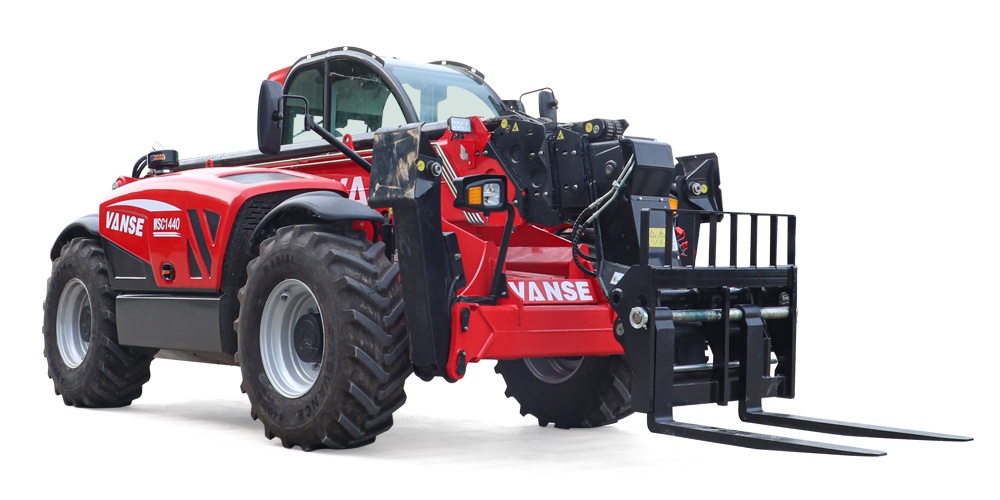
VANSE 735 7m Telescopic Handler
A balanced mid-duty solution for construction, agriculture, logistics, and warehousing, combining stable lifting, strong traction, and everyday versatility.


About the Author:
The VANSE team is a group of experienced professionals specializing in construction machinery research, manufacturing, and technical support. With deep industry knowledge and hands-on experience, our engineers and product specialists share practical insights on equipment selection, operation, maintenance, and industry trends.
Share
You May Also Interest
-

22 October, 2026
Telehandler for Grain Handling on Large Modern Farm Sites
Explore telehandler grain handling options in the United States, including suppliers, specs, farm uses, and cost-saving buying advice for grain operations.
-
21 October, 2026
Telehandler vs All Terrain Forklift: Which Lifts Better
Telehandler vs all terrain forklift in the United States: compare reach, lifting, terrain use, costs, and supplier options for smarter equipment buying.
-
20 October, 2026
10 Ton Telehandler: Extreme Lifting for Major Industrial
Explore 10-ton telehandler options in the United States, top suppliers, buying tips, applications, and service support for major lifting projects.
-
19 October, 2026
Telehandler for Demolition: Safe Structural Dismantling
Explore telehandler demolition options in the United States, including suppliers, attachments, safety, market trends, and cost-effective sourcing advice.