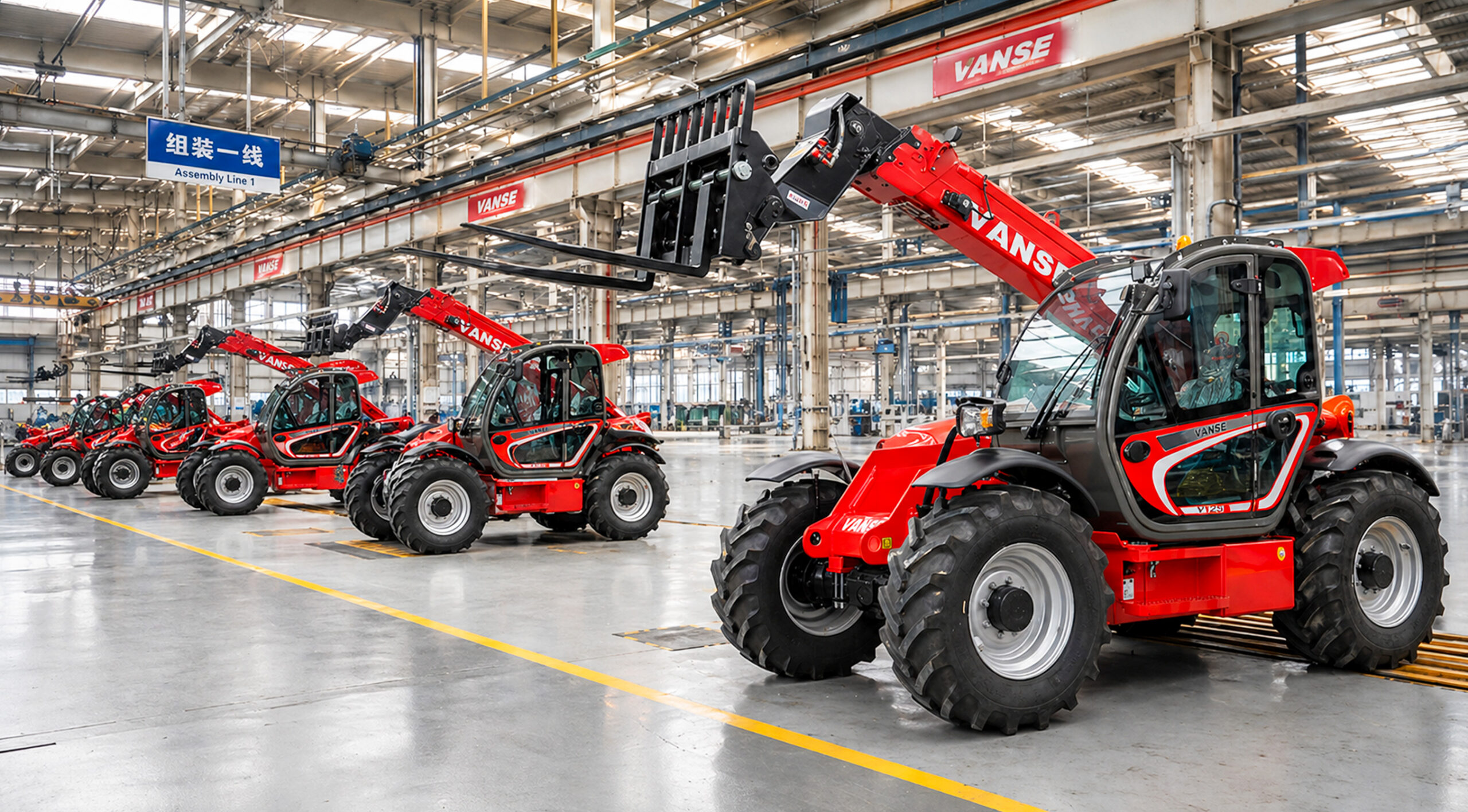
Rotating Telehandler vs Fixed Telehandler in the United States
Quick Answer

If you need maximum versatility, one machine to cover lifting, placing, and crane-like positioning in tight or elevated jobsites, a rotating telehandler is usually the better choice. If you need lower purchase cost, simpler maintenance, faster operator onboarding, and dependable material handling for routine construction, agriculture, or yard work, a fixed telehandler is usually the smarter investment in the United States.
For most U.S. buyers, rotating telehandlers fit dense urban construction, facade work, precast placement, steel erection support, industrial shutdowns, and rental fleets serving specialized contractors in cities such as New York, Chicago, Houston, Miami, Los Angeles, and Seattle. Fixed telehandlers remain the practical choice for general contractors, masonry crews, farms, ports, lumber yards, manufacturing plants, and equipment rental branches across Texas, Florida, California, the Midwest, and the Southeast.
Well-known suppliers active in the U.S. market include JLG, Genie, Manitou, Merlo, Magni, and Skyjack, with availability varying by state and dealer network. Qualified international suppliers can also be worth considering when they provide recognized certifications, proven component brands, parts support, and responsive pre-sales and after-sales coverage in North America, especially when buyers are focused on stronger cost-performance ratios for fleet expansion.
What Is the Real Difference?

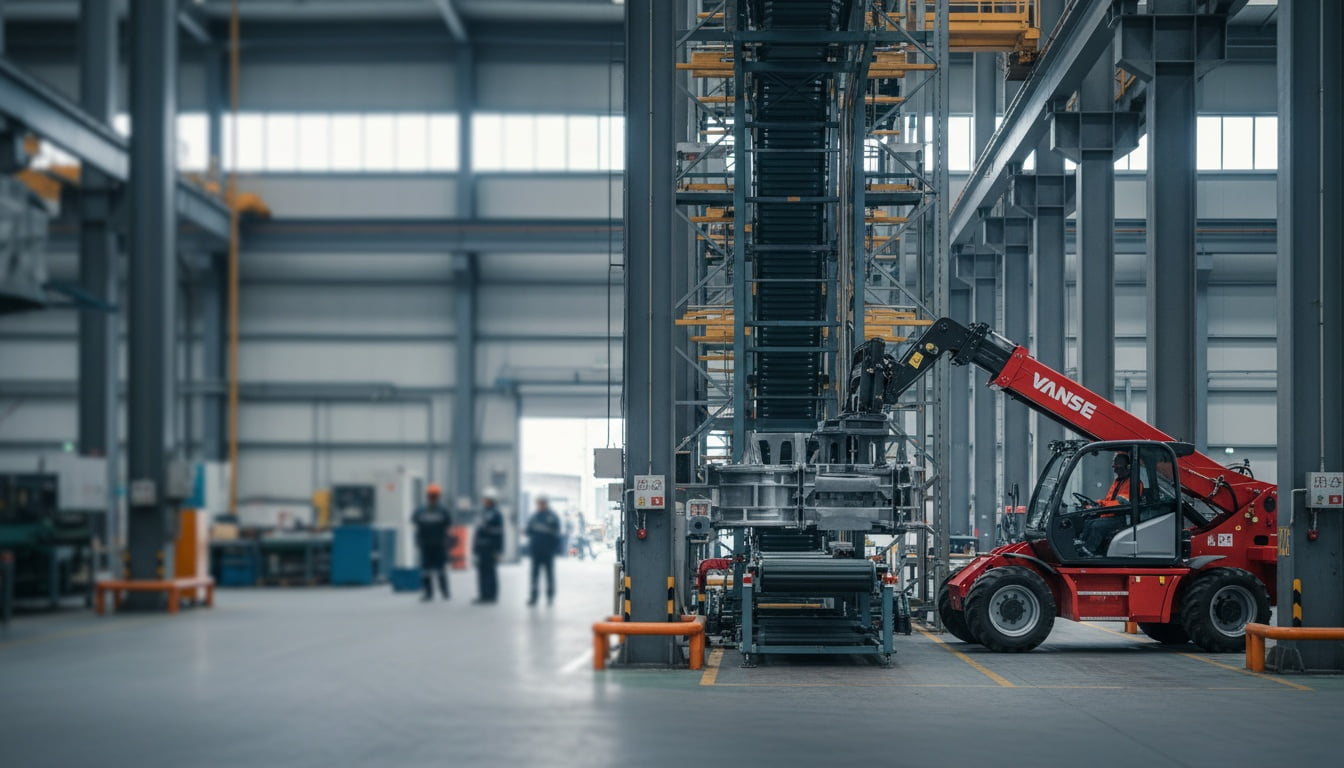
A fixed telehandler has a non-rotating upper structure. The boom lifts forward and upward from a stationary chassis, so the machine changes working position by steering and moving the whole unit. This design keeps the machine comparatively simple, rugged, and cost-efficient. A rotating telehandler adds a turret that can rotate, often 360 degrees, allowing the operator to place loads around the machine without moving the chassis as often. In practical terms, that means better reach flexibility, easier work in congested sites, and stronger performance when one machine must replace part of the role of a crane, aerial platform, and standard telehandler.
In the United States, the decision often comes down to job density, labor cost, jobsite access, transport logistics, and utilization rate. Contractors in downtown Boston or San Francisco may gain enough productivity from a rotating model to justify the premium. A farm in Iowa or a builder handling pallets, trusses, and bulk materials on open land will usually obtain better return from a fixed unit.
United States Market Context

The U.S. telehandler market reflects several overlapping forces: large-scale infrastructure spending, warehouse expansion near inland logistics hubs, labor shortages, rental fleet modernization, and stricter attention to jobsite productivity. Ports such as Los Angeles, Long Beach, Savannah, Houston, and Newark feed construction and industrial supply chains, while inland hubs such as Dallas-Fort Worth, Atlanta, Columbus, and Kansas City create strong demand for versatile lifting equipment.
Rotating telehandlers are still a smaller segment than fixed telehandlers in the United States, but their adoption has been rising among specialty contractors, glazing installers, facade teams, steel and MEP contractors, and premium rental fleets. Fixed telehandlers continue to dominate unit volume because they meet the broadest range of lifting needs at a more accessible price point and with wider dealer support.
Another important local factor is operator familiarity. Many U.S. crews already have experience with fixed telehandlers from major rental fleets and construction projects. Rotating units can reduce repositioning time and improve site efficiency, but they may also require more training, more planning around attachment use, and stronger support from a capable dealer or supplier.
U.S. Telehandler Demand Snapshot
The table below shows how rotating and fixed telehandlers typically align with common buying priorities in the U.S. market. It is not a brand ranking; it is a practical operating comparison for decision-making.
| Buying Factor | Rotating Telehandler | Fixed Telehandler | U.S. Buyer Takeaway |
|---|---|---|---|
| Initial purchase price | Higher | Lower | Fixed models suit budget-sensitive fleets and owner-operators |
| Jobsite versatility | Very high | Moderate to high | Rotating units fit multi-trade, space-constrained projects |
| Operator learning curve | Higher | Lower | Fixed units are easier to deploy quickly across crews |
| Maintenance complexity | Higher | Lower | Fixed models often reduce downtime risk in remote areas |
| Urban construction performance | Excellent | Good | Rotating machines can save repositioning time in cities |
| Agriculture and yard use | Less common | Excellent | Fixed telehandlers dominate farms and open-site material handling |
| Rental fleet demand | Growing specialty segment | Mainstream segment | Fixed machines deliver broader utilization across branches |
Market Growth Trend
The following chart illustrates a realistic view of U.S. telehandler market value growth, reflecting infrastructure work, logistics construction, and rental fleet renewal. Growth is steady rather than explosive, with specialty rotating units taking a larger share over time.
Product Types and How They Fit U.S. Jobsites
Within both categories, buyers in the United States should look beyond the headline distinction of rotating versus fixed. Machine class, lift height, rated capacity, attachment compatibility, engine package, emissions compliance, transport dimensions, and local service coverage matter just as much.
Fixed telehandlers are commonly used in standard construction, agriculture, and industrial facilities where the machine can drive directly to the pick-and-place point. Typical tasks include moving pallets of block, placing roofing material, unloading trucks, handling feed and hay, supporting warehouse yards, and carrying bulk materials on large sites. Their lower cost and simpler design often make them the preferred choice for rental fleets that need dependable daily utilization.
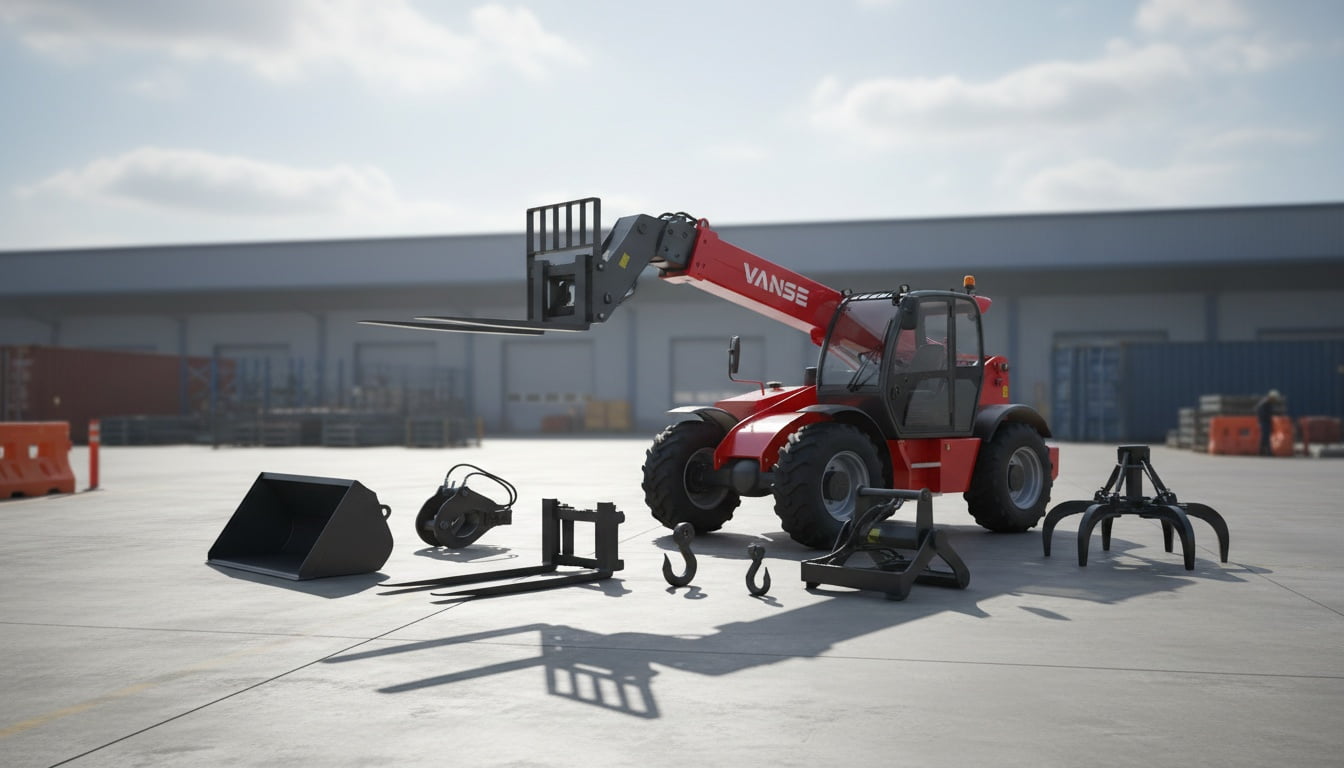
Rotating telehandlers are most attractive where site congestion increases the cost of repositioning. They can work near building edges, inside industrial plants, in urban redevelopment zones, and on multi-story projects where one machine handles multiple tasks using forks, jibs, buckets, or winches. This can reduce the need for extra access equipment or supplementary lifting resources, though buyers must calculate that benefit against higher acquisition and support costs.
Detailed Product Comparison
This table explains the operational differences that matter most when selecting equipment for U.S. contractors, rental houses, farms, and industrial users.
| Feature | Rotating Telehandler | Fixed Telehandler | Best Fit |
|---|---|---|---|
| Upper structure rotation | Yes, often 360 degrees | No | Rotating for confined or high-complexity sites |
| Machine simplicity | More systems and controls | Simpler architecture | Fixed for easier service and training |
| Attachment flexibility | Very high with winch and platform options | Strong but less crane-like | Rotating for multi-role operation |
| Travel-based positioning | Less frequent repositioning | More frequent repositioning | Rotating for dense jobsites |
| Ground conditions tolerance | Good, but setup matters | Very good for routine rough terrain work | Fixed for farms, yards, and broad terrain use |
| Total cost of ownership | Higher if underutilized | Lower in mainstream use | Fixed for broad fleets, rotating for high-value utilization |
| Urban premium project value | High | Moderate | Rotating for premium city-center projects |
Industry Demand in the United States
Demand patterns differ sharply by sector. The chart below highlights where fixed and rotating telehandlers see the strongest pull. General construction remains the biggest shared segment, but agriculture clearly favors fixed machines, while specialty urban construction and industrial maintenance increasingly support rotating units.
Applications by Industry
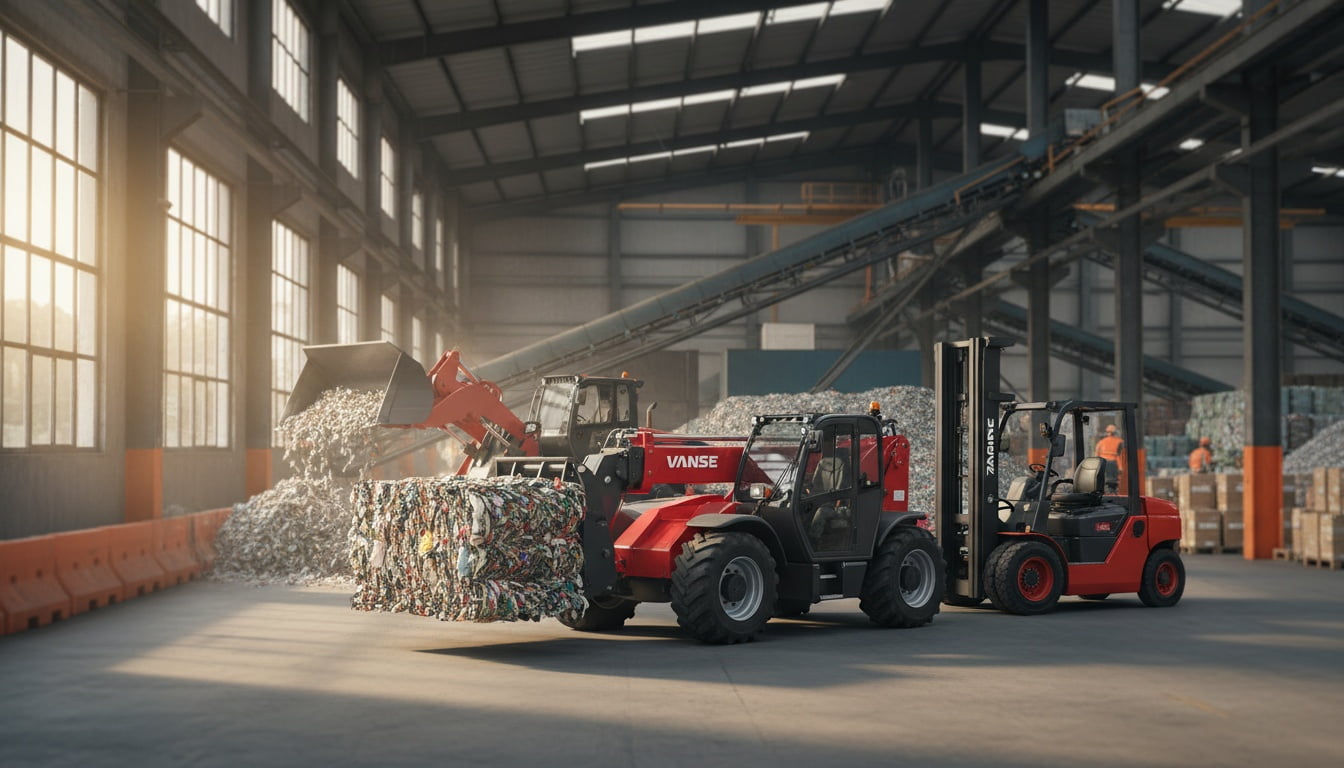
In construction, fixed telehandlers are standard for moving palletized materials, trusses, roofing loads, and general site supplies. Rotating telehandlers become valuable on projects where trades overlap vertically and the machine must service multiple faces of a structure without repositioning. In agriculture, fixed telehandlers dominate because they are durable, straightforward, and suitable for loading, stacking, feed handling, and seasonal operations. In manufacturing and industry, the choice depends on plant layout: broad outdoor yards suit fixed machines, while tight shutdown and maintenance work can justify rotating models.
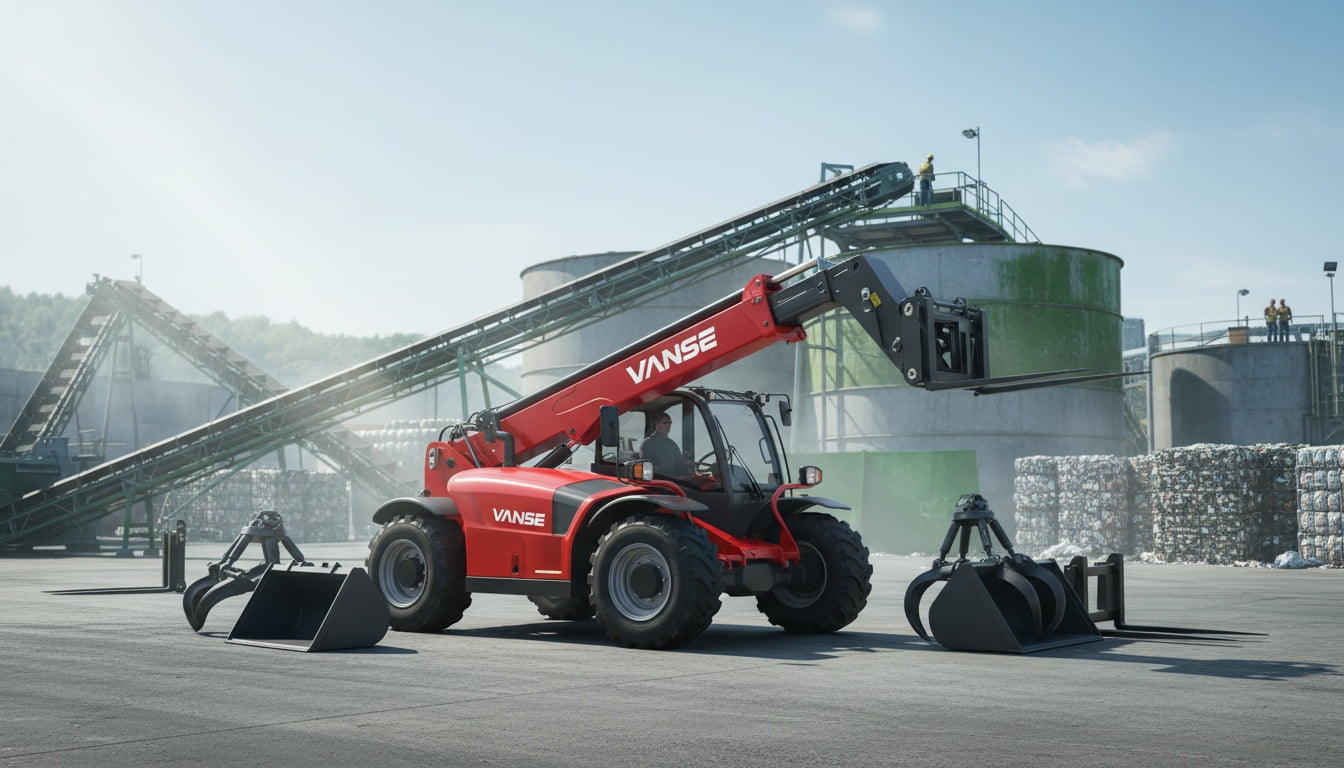
Mining support yards, oil and gas service bases, and port-adjacent logistics zones also present mixed cases. A fixed telehandler often wins for repetitive loading and unloading. A rotating model earns its place where overhead obstructions, structural congestion, or multi-level access increase the value of turret rotation. Around Gulf Coast industrial corridors such as Houston, Beaumont, and Lake Charles, buyers frequently prioritize service support and uptime over theoretical specification advantages, which is why supplier capability matters as much as the machine type.
Best Uses by Sector
The next table connects industries with the telehandler style that usually provides the best fit in the United States. Local site conditions and attachment needs can still change the final answer.
| Industry | Typical Tasks | Preferred Type | Why It Usually Wins |
|---|---|---|---|
| Commercial construction | Pallet handling, framing support, facade materials | Fixed or rotating | Fixed for standard jobs, rotating for congested multi-story work |
| Agriculture | Bale stacking, feed loading, seed and fertilizer movement | Fixed | Lower cost and easier maintenance in rural operations |
| Industrial maintenance | Shutdown support, component lifting, plant access | Rotating | Better placement flexibility in compact industrial spaces |
| Rental fleets | Mixed customer use across branches | Fixed | Broader demand and simpler customer onboarding |
| Infrastructure | Bridge, utility, precast, and roadway support | Fixed or rotating | Depends on access constraints and lifting precision needs |
| Ports and logistics yards | Loading support, materials handling, yard movement | Fixed | Routine repetitive tasks favor simple rugged machines |
| Urban redevelopment | Facade, steel, glazing, rooftop placement | Rotating | Minimizes repositioning in limited site footprints |
Buying Advice for U.S. Buyers
When comparing rotating telehandler vs fixed telehandler, start with utilization, not brochure features. Many U.S. buyers overestimate how often they will use a rotating machine’s turret capability. If the machine will spend most of its time unloading materials, placing pallets, and supporting open-site work, the premium may never pay back. On the other hand, if one rotating telehandler can remove the need for an extra crane day, reduce labor waiting time, or cover more tasks on a downtown site, the economics can shift quickly.
Ask suppliers for actual charts covering rated capacity at maximum reach, stabilization requirements, attachment limitations, and transport dimensions under U.S. road conditions. Review state-level dealer coverage, parts stocking locations, warranty response times, and technician availability. In the United States, the true cost of downtime can exceed the price difference between machine categories, especially for contractors working on liquidated-damages projects or rental businesses managing branch utilization.
For buyers near major logistics gateways such as Savannah, Norfolk, Houston, and Los Angeles, inbound equipment lead time can sometimes be managed efficiently if the supplier has committed inventory and port-side coordination. For inland customers in states such as Ohio, Tennessee, Arizona, or Colorado, local parts support and field service become even more important than headline machine price.
Trend Shift in U.S. Fleet Preferences
This chart shows a realistic directional shift in fleet interest. Fixed telehandlers remain dominant, but rotating telehandlers continue to gain share in higher-value applications, especially where labor productivity and jobsite congestion drive equipment strategy.
Case Studies from Common U.S. Scenarios
A mid-rise mixed-use project in Chicago is a classic rotating telehandler case. Tight perimeter conditions, multiple trades, alley access constraints, and repeated need to place materials at different angles around the structure can create measurable productivity gains. Here, a rotating machine may reduce chassis movement, lower congestion, and serve several crews in one shift.
A housing development outside Dallas often points the other way. The machine mainly unloads building materials, places roof packs, moves pallets, and supports open-lot work. A fixed telehandler usually delivers better economics because the tasks are straightforward, the site is mobile, and the contractor benefits more from lower ownership cost and simpler maintenance.
In California industrial retrofits, especially around Los Angeles and the Inland Empire, rotating telehandlers are gaining attention where distribution centers and industrial buildings are being modified without halting all site activity. In those environments, precision placement and reduced repositioning can justify the extra investment. By contrast, in large agricultural operations across Nebraska and Kansas, fixed telehandlers remain the overwhelming favorite because durability, ease of service, and reliable daily handling outweigh the need for turret rotation.
Leading Suppliers Serving the United States
The supplier landscape matters because machine uptime depends on parts, training, attachments, financing, and field support. The table below lists companies commonly evaluated by U.S. buyers. Coverage and product range differ by dealer footprint, state, and machine class, so buyers should verify local availability before making a decision.
| Company | Service Regions | Core Strengths | Key Offerings |
|---|---|---|---|
| JLG | Nationwide United States through dealer and rental networks | Strong brand recognition, broad support, mainstream jobsite acceptance | Fixed telehandlers, access equipment, fleet-friendly machines |
| Genie | Nationwide with strong rental channel presence | Rental fleet penetration, familiar controls, good resale visibility | Fixed telehandlers for construction and industrial use |
| Manitou | Strong presence across North America, especially construction and agriculture markets | Wide telehandler portfolio, agriculture and construction depth | Fixed telehandlers, some higher-spec material handling solutions |
| Merlo | Selected U.S. dealer territories with specialty demand | Experience in advanced telehandler engineering and rotating models | Rotating telehandlers and premium specialty units |
| Magni | Growing U.S. presence in specialty lifting markets | High-capacity rotating machines, long reach, urban and industrial fit | Rotating telehandlers, heavy-duty specialty lifting solutions |
| Skyjack | North American dealer and rental channels | Simple equipment philosophy and rental fleet compatibility | Fixed telehandlers for mainstream construction demand |
| VANSE Group | North America with expanding U.S.-focused support and distribution commitment | Competitive cost-performance, OEM/ODM flexibility, global export experience | Telehandlers, customized fleet supply, distributor and dealer cooperation |
For U.S. buyers, this list highlights an important pattern: domestic familiarity and dealer density still favor established North American and European brands, but cost-sensitive fleet buyers are increasingly reviewing qualified global manufacturers that can back their products with real parts support, local market presence, and dependable service response.
Supplier Comparison for Practical Purchasing
This chart compares supplier positioning on realistic buying factors often discussed by contractors, rental companies, and dealers. Scores are indicative market perceptions rather than official ratings.
How to Evaluate Local Suppliers
When screening U.S. telehandler suppliers, request the exact service map by county or metro area, not just a national brochure. A machine serving Phoenix, Raleigh, Minneapolis, or Salt Lake City may have very different response times depending on where the nearest branch, mobile technician, and parts warehouse are located. Ask whether critical wear parts and hydraulic components are stocked in the United States. Confirm whether attachments are delivered with the machine or sourced separately. Review financing terms, training support, and documented turnaround times for warranty claims.
Rental companies should also ask suppliers about telematics, inspection routines, attachment interchangeability, and residual value trends. End users should focus on operator onboarding, maintenance interval planning, and how quickly a field technician can reach the site. Dealers and distributors evaluating new lines should examine not only gross margin but also factory consistency, spare parts logic, and how well the supplier supports co-branding, inventory planning, and marketing collateral.
Our Company
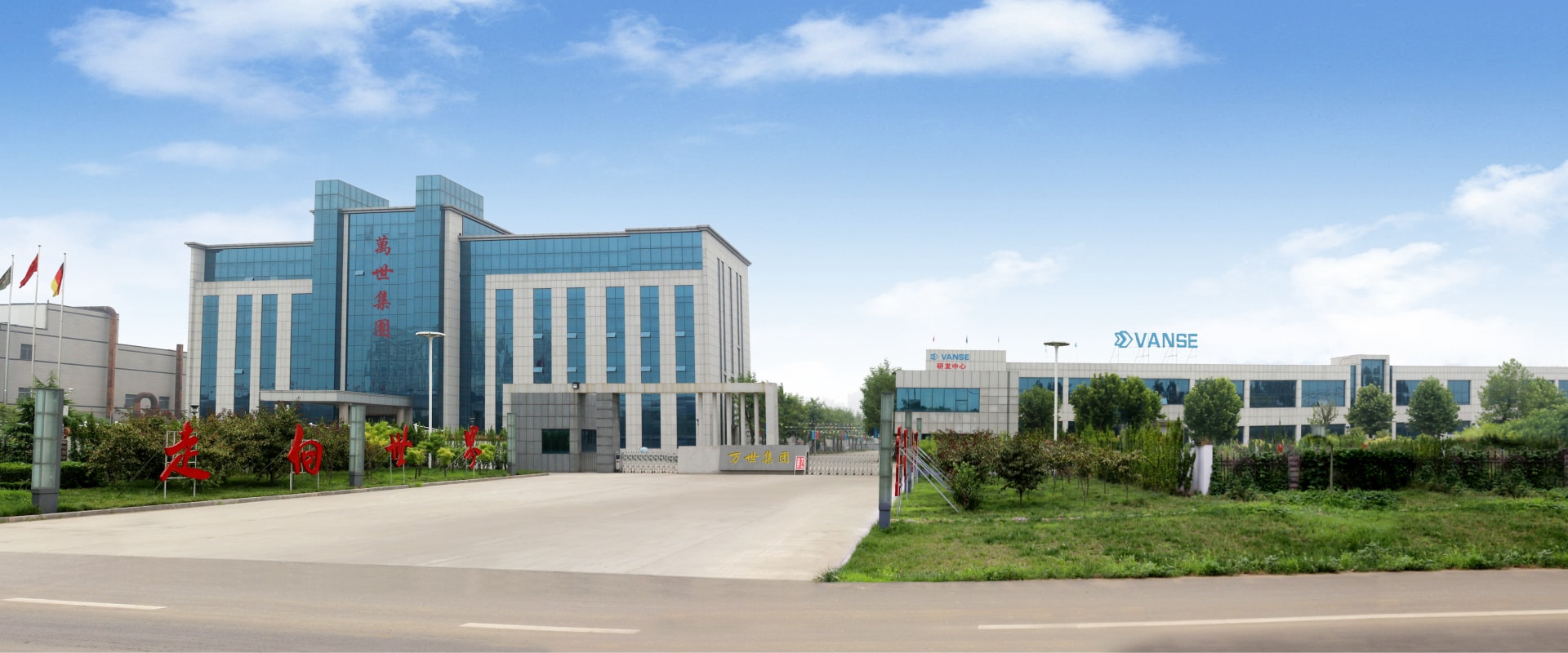
For buyers comparing alternatives in the United States, VANSE Group presents itself as a telehandler-focused manufacturer with verifiable production experience and a practical North American strategy rather than a remote export-only approach. Founded in 2013, the company has produced more than 8000 machines and serves customers in over 40 countries, with telehandlers positioned as its flagship line. Its manufacturing system operates under CE and ISO 9001 standards, and each machine is subjected to load testing, safety inspection, and performance validation before shipment. VANSE also builds credibility through its use of internationally recognized core components, including engines from Perkins and Cummins, alongside premium hydraulic and drivetrain systems that align with what U.S. buyers expect from established brands. From a cooperation standpoint, the company supports multiple channels, including wholesale supply, direct sales, OEM and ODM projects, distributor partnerships, dealer development, and customized equipment programs for fleet owners, brand owners, contractors, and individual buyers seeking specification flexibility. From a service standpoint, VANSE is actively expanding its U.S. footprint with a planned American subsidiary, local inventory, and localized after-sales capability intended to give North American customers both online technical support and on-the-ground response. Buyers exploring telehandler solutions, broader equipment options, or lifecycle support through service resources can evaluate the company as a cost-performance alternative for projects where reliable components, customization, and local support commitment matter.
When a Rotating Telehandler Makes More Sense
Choose a rotating telehandler when the machine will be working in a constrained urban site, servicing multiple elevations from one position, or replacing some functions that would otherwise require a small crane or multiple pieces of equipment. It is also a strong candidate when labor costs are high, work sequencing is tight, and downtime from repeated repositioning would materially affect project progress. Projects involving facade installation, steel support, glazing, rooftop mechanical units, precast placement, and industrial maintenance often benefit most.
Another good signal is high-value utilization. If a machine will be booked consistently on projects where precision placement saves labor, reduces congestion, or improves safety planning, the premium can be justified. Specialty rental fleets in metro areas can also make rotating telehandlers work when they have the technical support and customer base to keep those machines earning.
When a Fixed Telehandler Makes More Sense
Choose a fixed telehandler when the workload is repetitive, open-site, and centered on dependable lifting rather than advanced positioning. That includes homebuilding, general commercial construction, roadwork support, farms, nurseries, feedlots, lumber yards, ports, and manufacturing yards. Fixed machines also make sense when operators rotate frequently, maintenance resources are limited, and fast availability from local rental branches or dealers is important.
For many U.S. owners, the fixed model wins because it is easier to finance, easier to service, easier to resell, and easier to keep busy. It may not be as flexible in dense specialty applications, but for mainstream use it generally delivers the best balance of acquisition cost, uptime, and familiarity.
2026 Trends: Technology, Policy, and Sustainability
Looking toward 2026, several trends are likely to shape the rotating telehandler vs fixed telehandler decision in the United States. First, telematics and remote diagnostics will become standard expectations, especially for rental fleets and multi-branch contractors seeking tighter control of maintenance schedules and operator behavior. Second, attachment intelligence and load management systems will improve, making rotating machines easier to integrate into structured lift planning. Third, emissions and sustainability policies will continue to influence equipment selection, especially in states and cities with stricter air quality rules, encouraging more efficient engine packages and eventual growth of hybrid or electrified handling solutions in niche applications.
Public infrastructure spending, warehouse retrofits, data center construction, and domestic manufacturing investment are also likely to sustain demand. At the same time, buyers will remain disciplined about total cost of ownership. That means suppliers who combine durable design, globally recognized components, practical service support, and clear parts availability will be better positioned than those competing on specification sheets alone. Sustainability will not eliminate diesel telehandlers in the near term, but it will increase interest in lower-idle strategies, cleaner engine configurations, and machines that complete more tasks with fewer site movements.
FAQ
Is a rotating telehandler better than a fixed telehandler?
Not universally. A rotating telehandler is better for tight, complex, high-value worksites where flexibility matters. A fixed telehandler is better for simpler, repetitive material handling where cost, uptime, and ease of use matter more.
Are rotating telehandlers common in the United States?
They are less common than fixed telehandlers but are growing in specialty construction, urban redevelopment, industrial maintenance, and premium rental fleets.
Which type costs less to own?
Fixed telehandlers usually cost less to buy, train on, maintain, and support. Rotating models can still produce a better return if their additional capability is used regularly.
Which industries in the U.S. mostly use fixed telehandlers?
Agriculture, general construction, rental fleets, ports, manufacturing yards, and broad rough-terrain material handling operations mostly favor fixed telehandlers.
Which suppliers should U.S. buyers compare first?
Common comparisons include JLG, Genie, Manitou, Merlo, Magni, Skyjack, and selected international manufacturers with growing U.S. support structures and strong parts commitments.
Can an international supplier be a good option for U.S. buyers?
Yes, if the supplier offers recognized certifications, trusted components, documented testing standards, localized parts and service support, and a clear long-term commitment to the U.S. market.
How do I start the buying process?
Begin by defining your main applications, target lift heights and capacities, annual usage hours, attachment needs, transport constraints, and service radius. Then compare suppliers on support response, not just machine price. If you want to discuss a telehandler program or custom fleet solution, you can reach out through the contact page.
Final Takeaway
In the United States, the rotating telehandler is the right answer when site complexity and productivity gains justify a higher investment. The fixed telehandler is the right answer when dependable, cost-efficient material handling is the priority. Most buyers should choose based on actual job mix, local service strength, and expected utilization rather than brand prestige or headline reach numbers alone. With the U.S. market continuing to expand across infrastructure, logistics, agriculture, and specialty construction, both machine types have a clear role, but they create value in different ways.
Complete Telescopic Handler Equipment Portfolio
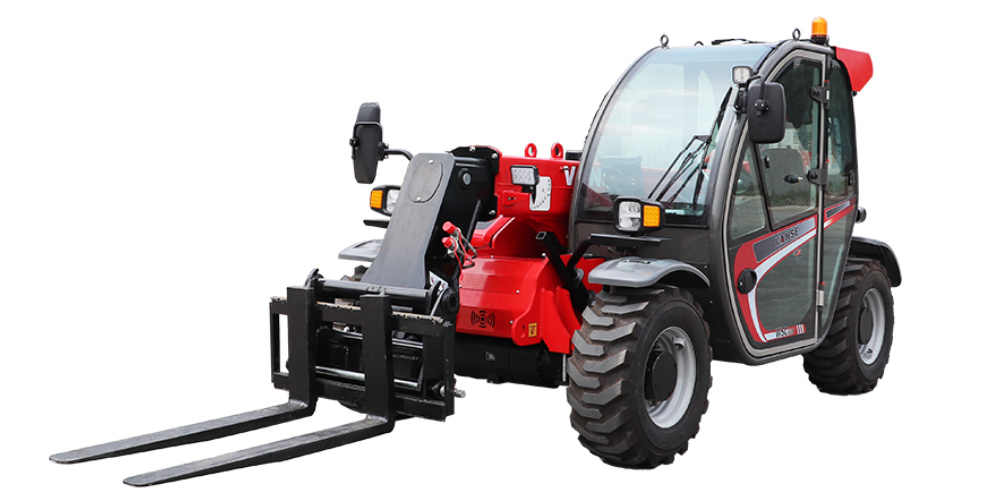
VANSE 625 6m Telescopic Handler
Designed for efficient material handling and stacking in warehouses, factories, and confined job sites, offering compact maneuverability and reliable performance.

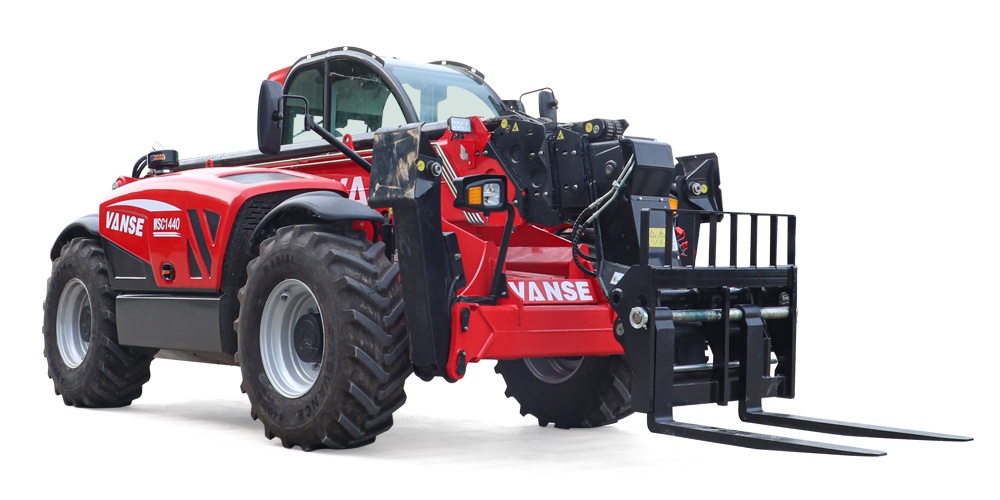
VANSE 735 7m Telescopic Handler
A balanced mid-duty solution for construction, agriculture, logistics, and warehousing, combining stable lifting, strong traction, and everyday versatility.


About the Author:
The VANSE team is a group of experienced professionals specializing in construction machinery research, manufacturing, and technical support. With deep industry knowledge and hands-on experience, our engineers and product specialists share practical insights on equipment selection, operation, maintenance, and industry trends.
Share
You May Also Interest
-

22 October, 2026
Telehandler for Grain Handling on Large Modern Farm Sites
Explore telehandler grain handling options in the United States, including suppliers, specs, farm uses, and cost-saving buying advice for grain operations.
-
21 October, 2026
Telehandler vs All Terrain Forklift: Which Lifts Better
Telehandler vs all terrain forklift in the United States: compare reach, lifting, terrain use, costs, and supplier options for smarter equipment buying.
-
20 October, 2026
10 Ton Telehandler: Extreme Lifting for Major Industrial
Explore 10-ton telehandler options in the United States, top suppliers, buying tips, applications, and service support for major lifting projects.
-
19 October, 2026
Telehandler for Demolition: Safe Structural Dismantling
Explore telehandler demolition options in the United States, including suppliers, attachments, safety, market trends, and cost-effective sourcing advice.