What Is a Telehandler in the United States?
Quick Answer

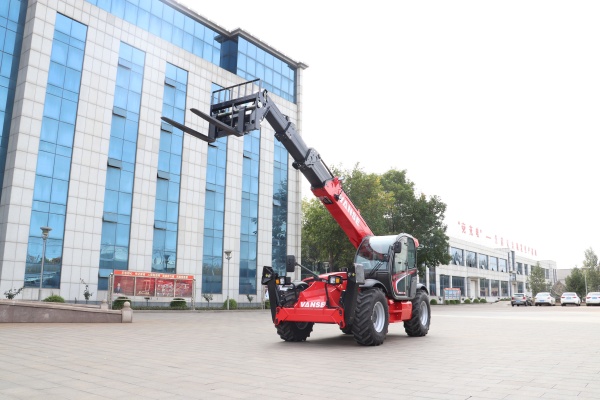
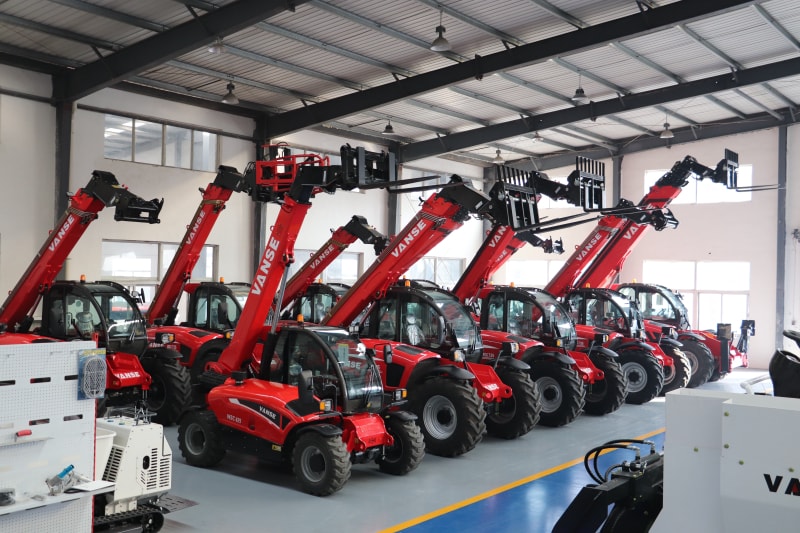
A telehandler, also called a telescopic handler, is a lifting and material-handling machine that combines features of a forklift, crane, and loader. In the United States, it is widely used to move pallets, lift framing materials to upper floors, place hay bales, handle bulk feed, support mining yards, and carry heavy loads across uneven ground where a standard warehouse forklift cannot operate safely. Its telescopic boom extends forward and upward, which gives operators more reach and flexibility than a conventional forklift.
For most U.S. buyers, the right telehandler depends on lift height, rated capacity, attachment compatibility, jobsite terrain, and service coverage. Popular suppliers with strong U.S. recognition include JLG, Genie, JCB, SkyTrak, Bobcat, and Caterpillar dealers. Qualified international suppliers can also be worth considering when they hold relevant certifications, use globally recognized components, and provide dependable pre-sale and after-sales support, especially when cost-performance matters for rental fleets, contractors, farms, and industrial buyers.
What a Telehandler Does

A telehandler is built around a boom that can telescope outward and upward. Instead of lifting only in a straight vertical path like a standard forklift mast, the machine can place loads at distance and height. That makes it valuable on job sites in Houston, Chicago, Los Angeles, Atlanta, and other major U.S. construction hubs where workers must reach rooftops, upper framing levels, mezzanines, and storage racks without repositioning materials repeatedly.
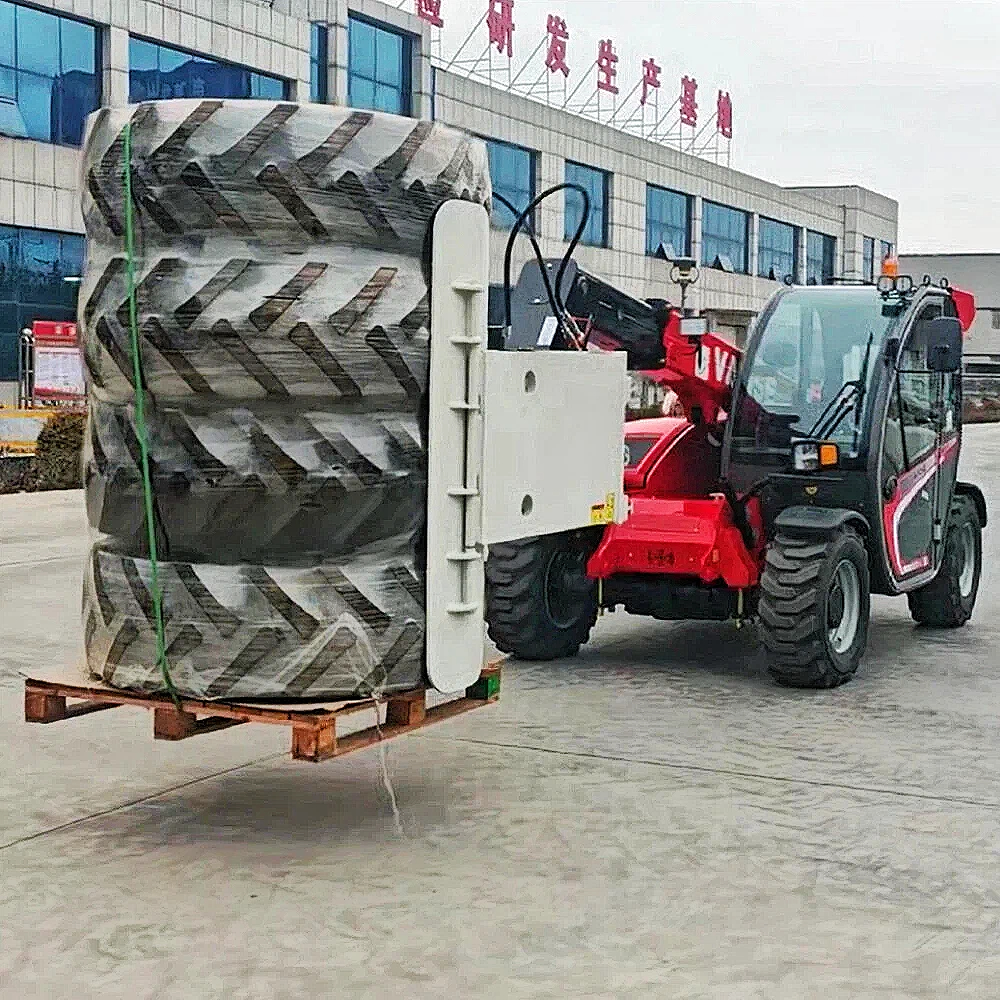
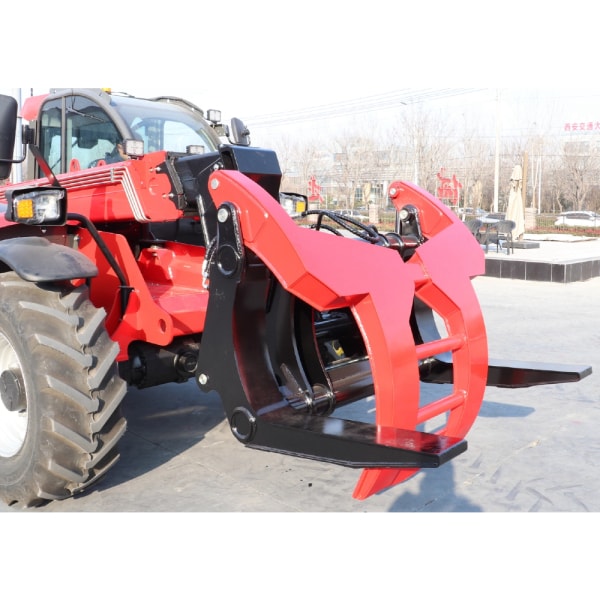
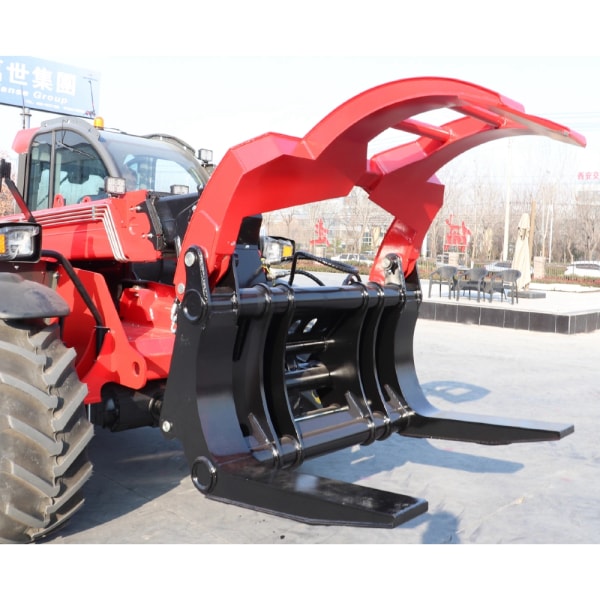
Most telehandlers use four-wheel drive, large off-road tires, and hydraulic systems designed for uneven terrain. Typical attachments include pallet forks, buckets, truss booms, lifting hooks, work platforms, bale grabs, and specialty agricultural tools. This flexibility allows a single machine to support multiple tasks throughout the day, reducing the number of machines required on site.
In practical terms, a telehandler is often chosen when a business needs more than a forklift but less complexity than a dedicated crane. Construction contractors use it for framing and masonry supply. Farms use it for feed, seed, and bale handling. Manufacturers and port-adjacent facilities use it for outdoor loading yards. Energy, infrastructure, and mining operations use it for rough-ground material movement where reach and stability are essential.
The U.S. Telehandler Market

The United States is one of the largest and most mature telehandler markets in the world. Demand is supported by commercial construction, highway and utility work, agriculture in states such as Iowa, Nebraska, Kansas, and Texas, and the large equipment rental sector concentrated around logistics corridors and metropolitan growth areas. Ports such as Houston, Long Beach, Savannah, and Newark also influence equipment imports, parts flow, and regional fleet availability.
Rental companies play an especially important role in the U.S. market because many contractors prefer short-term access to telehandlers rather than ownership. That has encouraged manufacturers to design machines that are easy to transport, straightforward to maintain, and compatible with a broad range of attachments. At the same time, large farms and industrial users often prefer ownership because they need year-round access and want the economics of long-term utilization.
Higher interest in safety systems, emissions compliance, operator comfort, and telematics is reshaping buying decisions. Buyers increasingly compare visibility, load chart clarity, maintenance access, service intervals, and dealer response time rather than focusing only on rated lift numbers.
The market growth chart above illustrates a realistic upward trend in U.S. telehandler demand. Growth is not driven by a single industry; instead, it reflects combined momentum from rental replacement cycles, warehouse-yard expansion, public infrastructure, and modernized agricultural handling practices. By 2026, buyers are expected to prioritize machines with lower operating cost, stronger uptime support, and better digital fleet visibility.
Common Telehandler Types in the United States
Not every telehandler is built for the same task. U.S. buyers usually divide machines by application rather than by name alone. Some are optimized for compact job sites, others for high-rise reach, and others for farming or enclosed industrial environments. Understanding the main categories helps narrow the search quickly.
| Telehandler Type | Typical Lift Capacity | Typical Lift Height | Best Use | Common U.S. Users | Main Advantage |
|---|---|---|---|---|---|
| Compact telehandler | 5,500-6,600 lb | 15-20 ft | Tight jobsites and landscaping yards | Small contractors, nurseries, municipalities | Fits smaller spaces and trailers |
| General construction telehandler | 6,000-10,000 lb | 35-55 ft | Framing, masonry, roofing, material staging | Commercial builders and rental fleets | Balanced reach and capacity |
| High-reach telehandler | 8,000-12,000 lb | 55-74 ft | Multi-story and infrastructure work | Large contractors and industrial projects | Greater placement height |
| Heavy-duty telehandler | 10,000-15,000 lb | 44-56 ft | Steel, precast, heavy materials | Industrial yards, civil works, ports | Higher load handling strength |
| Agricultural telehandler | 5,500-9,000 lb | 20-30 ft | Feed, bales, grain, manure handling | Dairy farms, feedlots, crop operations | Fast cycles and farm attachments |
| Rotating telehandler | 8,000-13,000 lb | 60-100 ft | Complex lifting with 360-degree placement | Specialty contractors and urban sites | Maximum positioning flexibility |
The table shows why application fit matters. A compact machine may be ideal for a builder in a dense suburban market, while a heavy-duty model is more appropriate for a steel yard near major freight routes. In the United States, telehandler selection is often driven by the type of material handled most frequently rather than the largest load handled occasionally.
How Telehandlers Compare with Forklifts and Loaders
Many first-time buyers ask whether a telehandler is simply a rough-terrain forklift. The answer is no. While both can carry forks and pallets, the telehandler offers a telescopic boom and more reach. Compared with a wheel loader, it is generally slower for bulk earthmoving but much better at precision placement. Compared with a crane, it is more versatile for daily material handling, though it has lower dedicated lifting specialization.
This is why telehandlers are so common in mixed-use operations. A contractor can unload trucks in the morning, lift trusses at midday, place roofing material in the afternoon, and move waste bins before closing. One machine supports multiple workflows.
How a Telehandler Works
The operator uses hydraulic controls to raise, extend, tilt, and retract the boom. The machine’s load capacity changes as the boom reaches farther outward, so a telehandler always operates according to a load chart. Stabilization comes from the chassis design, counterweight, tire footprint, and in some models outriggers. Safety systems may include load management indicators, backup cameras, boom angle sensors, and operator presence controls.
Modern U.S. fleets increasingly prefer machines with telematics because they help track location, engine hours, idle time, service intervals, and utilization by branch or project. This is especially important for rental companies and contractors working across multiple states.
Industries That Depend on Telehandlers
Telehandlers are valuable across many sectors because they combine reach, load capacity, and adaptability. In the U.S., the strongest demand comes from industries that need to move heavy materials outdoors or across rough surfaces. These include both seasonal operations like agriculture and year-round sectors like construction and manufacturing.
The bar chart highlights the strongest areas of demand. Construction remains the largest segment because telehandlers solve daily material placement problems on active jobsites. Rental follows closely because so many contractors rent rather than own. Agriculture is also a major segment in the United States, particularly in states with large dairy, grain, and livestock operations.
| Industry | Typical Materials Handled | Why Telehandlers Fit | Key Attachments | Seasonality | Common U.S. Locations |
|---|---|---|---|---|---|
| Construction | Lumber, pallets, blocks, trusses | Reach to upper floors and rough terrain mobility | Forks, truss booms, hooks | Moderate | Texas, Florida, California, Georgia |
| Agriculture | Bales, feed, grain bags, seed | Fast loading and all-weather yard use | Bale clamps, buckets, forks | High | Iowa, Kansas, Nebraska, Wisconsin |
| Rental | Mixed contractor loads | Versatile fleet utilization across customers | Forks, buckets, platforms | Low | Nationwide metro branches |
| Manufacturing and industry | Steel, containers, parts, pallets | Outdoor yard handling beyond warehouse forklift range | Forks, hooks, buckets | Low | Midwest and Gulf Coast plants |
| Mining | Pipe, tires, maintenance supplies | Heavy-duty access over rough ground | Forks, lifting jibs | Low | Nevada, Arizona, West Virginia |
| Oil and gas | Pipe, skids, site materials | Remote-site load placement and mobility | Forks, hooks, work platforms | Moderate | Texas, New Mexico, North Dakota |
This industry table helps buyers connect machine features to real operating conditions. A feed yard may need rapid repetitive loading, while a contractor working near downtown Chicago may value maneuverability, visibility, and compliance with strict jobsite safety rules.
Typical Applications on U.S. Jobsites
Applications vary widely, but several tasks appear again and again across American fleets. Telehandlers unload flatbed trucks, transport palletized building products, place wall panels, deliver roofing bundles, move scaffolding components, lift HVAC units, clean out material yards, and support maintenance teams in factories and energy sites. With the right bucket, they can also perform light bulk material handling, though they are not a substitute for a dedicated wheel loader in continuous digging work.
In agriculture, telehandlers are often preferred over tractors with loaders when operators need better visibility, tighter load placement, and faster repetitive stacking. On dairy farms, for example, operators use them for silage, feed, palletized inputs, and manure management support. On grain operations, they help move seed bags, maintenance supplies, and attachments around storage areas.
Buying Advice for U.S. Buyers
Choosing a telehandler should start with work requirements, not brochure numbers. A machine with high maximum reach may underperform if the dealer network is weak or if the machine is oversized for transport and storage. Buyers should evaluate total ownership cost, not only purchase price.
| Buying Factor | What to Check | Why It Matters | Common Buyer Mistake | Good U.S. Practice | Impact on Cost |
|---|---|---|---|---|---|
| Lift capacity | Rated load at required reach | Capacity drops as boom extends | Comparing only maximum capacity | Match load chart to real job tasks | High |
| Lift height | Highest placement point needed | Avoid under- or over-buying | Buying extra height never used | Measure rooflines, racks, or stacking height | High |
| Attachments | Forks, buckets, jibs, bale tools | Drives machine versatility | Ignoring hydraulic compatibility | Confirm coupler and hydraulic specs | Medium |
| Service support | Dealer response time and parts stock | Downtime is expensive | Choosing by price alone | Ask for local service commitments | High |
| Transport size | Weight, width, trailer needs | Affects mobility between jobs | Forgetting DOT and trailer limits | Match transport plan before purchase | Medium |
| Operator environment | Cab comfort, visibility, controls | Improves productivity and safety | Overlooking long-shift ergonomics | Test the machine in real conditions | Medium |
This checklist is practical because telehandler value is created in daily use. A lower-priced machine can become more expensive if operators struggle with visibility or if parts take too long to reach a site in Arizona, Ohio, or South Carolina. Buyers should ask for parts lead times, service coverage maps, attachment pricing, and maintenance intervals before making a final decision.
Supplier Landscape in the United States
The U.S. telehandler market includes long-established domestic and international brands supported by dealer networks, rental channels, and specialty distributors. The best supplier depends on buyer type. National rental fleets often prioritize standardization and residual value. Contractors may focus on regional dealer service. Farms may prefer simple maintenance and attachment flexibility. Industrial buyers may emphasize heavy-duty performance and uptime support.
| Company | Service Region | Core Strengths | Key Offerings | Best For | U.S. Market Position |
|---|---|---|---|---|---|
| JLG | Nationwide through dealers and rental channels | Strong brand recognition and fleet presence | Construction telehandlers, high reach models | Rental and commercial construction | Very strong |
| Genie | Nationwide | Broad access equipment ecosystem | Rough-terrain telehandlers and support network | General contractors and rental branches | Very strong |
| JCB | Nationwide with strong construction and agriculture coverage | Telehandler specialization and product depth | Construction, ag, compact, and rotating units | Mixed-use fleets and farms | Strong |
| SkyTrak | Broad U.S. construction market | Well-known jobsite telehandler lineup | Popular contractor-focused models | General construction | Strong |
| Bobcat | Nationwide dealer network | Compact equipment customer base | Telehandlers for construction and agriculture | Contractors and local fleets | Growing |
| Caterpillar dealers | Regional dealer coverage across the U.S. | Dealer service strength and industrial trust | Material handling solutions and support | Enterprise and industrial users | Strong |
The supplier comparison table is useful because it ties brand names to practical buying scenarios. A national fleet may lean toward brands with standard telematics and broad parts distribution, while a local contractor may place greater value on a nearby dealer with fast field service. For buyers beginning research, browsing the broader equipment range on construction equipment solutions can help clarify which machine category fits the job before narrowing to a specific model.
The area chart shows a realistic trend shift in the U.S. market. Buyers are moving away from simple specification comparisons and toward integrated value: safety systems, telematics, lower fuel consumption, service visibility, and lifecycle cost. By 2026, these factors are expected to influence purchasing decisions as strongly as lift height and capacity.
Case Studies from Real-World Use Patterns
A contractor in Dallas working on low-rise commercial builds may need a 10,000 lb telehandler with enough reach to place roofing and HVAC materials efficiently. In that environment, uptime and service are critical because jobs move fast and delays affect multiple trades. A rental-ready machine with common attachments often delivers the best return.
A dairy operation in Wisconsin may prioritize faster cycle times, visibility to feed areas, and a cab suitable for long daily shifts. The machine may not need extreme lift height, but it must perform consistently in wet and cold conditions and support attachments for bales, buckets, and pallets.
An industrial site near the Port of Houston may require telehandlers to handle materials outdoors, support maintenance shutdowns, and move loads where standard forklifts lose mobility. In this context, parts access, hydraulic reliability, and a machine’s ability to handle rough yards matter more than compact size.
These examples show that the best telehandler is not universal. It is the machine that matches the operating environment, attachment needs, operator skill level, and service ecosystem.
Our Company in the U.S. Market
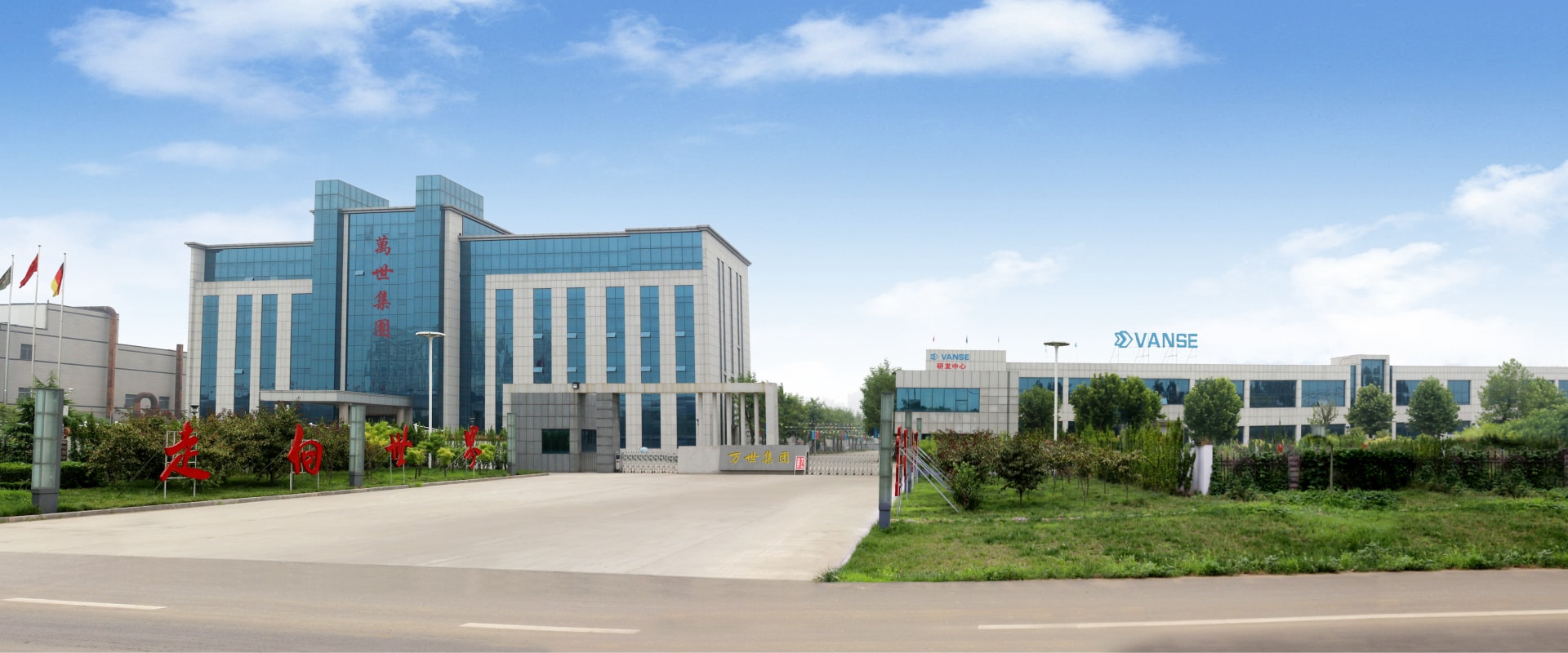
For buyers evaluating alternative supply channels, VANSE Group presents a credible telehandler-focused option for the U.S. market because its manufacturing base is backed by CE and ISO 9001 certified processes, a cumulative production output of more than 8,000 units, rigorous load testing and safety inspection before shipment, and the use of globally recognized core components such as Perkins and Cummins engines together with premium hydraulic systems, transmissions, and axles that align with international durability expectations. The company serves end users, distributors, dealers, rental businesses, brand owners, and project buyers through flexible OEM, ODM, wholesale, retail, and regional partnership models, which is particularly relevant for U.S. customers seeking private labeling, fleet-standard specifications, or market-specific machine configurations. Just as important, VANSE is not approaching the United States as a distant exporter only: it is actively establishing a U.S.-based subsidiary with local inventory, stocking support, stronger after-sales capability, and closer client relationships, while combining online technical assistance with offline lifecycle service for buyers who need practical assurance on maintenance, parts, and operating continuity. That regional commitment, together with experience serving North America and more than 40 countries, gives U.S. contractors, dealers, and rental operators a measurable basis for trust. Buyers who want to discuss specifications, support plans, or partnership options can review the company site at VANSE machinery, explore service support at equipment service support, or reach out through the U.S. inquiry contact page.
What U.S. Buyers Should Ask Any Supplier
Before purchasing or placing a fleet order, buyers should ask detailed questions. How quickly can wear parts reach the site? Is there field technician coverage in the state where the machine will operate? Which engine brand is installed, and how available are service parts locally? What attachment interface is standard? How is warranty support handled? Are operator training materials included? Can the supplier support fleet telematics integration?
These questions are especially important for buyers considering international suppliers. Cost-performance can be very attractive, but the decision should be based on evidence of local stocking, support response, documentation quality, and real commitment to the U.S. market.
Technology, Policy, and Sustainability Trends Through 2026
Looking ahead to 2026, the U.S. telehandler market is expected to evolve in several clear directions. First, telematics will become standard rather than optional in more fleet segments. Owners want maintenance alerts, idle reporting, geofencing, and machine health data. Second, safety and visibility features will continue to improve, including smarter load monitoring, better camera integration, and easier-to-read operating information in the cab.
Third, policy and environmental pressure will shape product development. Buyers increasingly care about lower fuel consumption, cleaner engine performance, and reduced idle time. While diesel will remain dominant in many heavy-duty applications, hybridization, electrified auxiliary functions, and more efficient hydraulic systems are likely to gain attention, especially in urban projects and enclosed or emissions-sensitive work zones.
Fourth, sustainability is becoming operational, not only promotional. Contractors and fleet owners are under pressure to measure fuel use, utilization efficiency, and lifecycle cost. Machines that can perform more tasks with fewer support vehicles may have an advantage because they reduce transport events and site congestion. Finally, flexible sourcing will grow in importance. U.S. buyers will continue to use established domestic brands, but many will also compare qualified global manufacturers that can meet performance expectations while improving acquisition cost and customization options.
How to Decide Whether to Rent or Buy
Renting is usually the better choice for short projects, infrequent use, or uncertain capacity requirements. Buying makes more sense for operations that use a telehandler consistently and can justify maintenance planning, operator familiarity, and attachment investment. In the United States, many construction firms rent first, learn their usage pattern, and then decide whether ownership will lower long-term cost.
Agricultural and industrial operations often lean toward ownership because their telehandler supports routine internal workflows. When the machine becomes essential to daily movement of feed, materials, or supplies, guaranteed availability becomes more valuable than rental flexibility.
Maintenance and Ownership Considerations
Maintenance affects the real cost of a telehandler more than many buyers expect. The machine should be checked regularly for boom wear, hydraulic hose condition, tire condition, filter status, fluid cleanliness, and attachment interface integrity. Operators should also be trained to understand load charts and terrain limits. Poor operating habits shorten component life and increase risk.
In U.S. conditions, dust, heat, mud, freeze-thaw cycles, and transport between sites all influence wear. Machines used in the Southwest may face intense heat and dust loading. Upper Midwest fleets may deal with cold starts and corrosion exposure. Gulf Coast users must think about humidity, mud, and demanding industrial environments. A supplier that understands these regional realities can provide more practical setup and support.
Frequently Asked Questions
Is a telehandler the same as a forklift?
No. A telehandler can carry forks, but it is not the same as a standard forklift. Its telescopic boom gives it more reach and better performance on rough terrain.
What is the main benefit of a telehandler?
The main benefit is versatility. A telehandler can lift, carry, place, and stack loads in places where a normal forklift cannot work effectively.
Where are telehandlers most commonly used in the United States?
They are most common in construction, agriculture, rental fleets, industrial yards, mining support operations, and oil and gas sites.
What attachments can a telehandler use?
Common attachments include pallet forks, buckets, truss booms, lifting hooks, work platforms, bale clamps, and specialty farm tools.
Should I choose a domestic brand or an international supplier?
Both can be good options. Established domestic brands often offer strong dealer familiarity, while qualified international suppliers may provide better cost-performance when they have recognized components, certifications, and real U.S. service support.
What should I check before buying?
Check lift capacity at the actual reach you need, attachment compatibility, service coverage, parts availability, transport requirements, operator visibility, and warranty process.
Are telehandlers good for farms?
Yes. They are widely used on U.S. farms for handling feed, hay, pallets, and bulk materials, especially where reach and precise placement matter.
What trends will shape telehandlers by 2026?
Key trends include stronger telematics, better safety systems, more efficient engines and hydraulics, growing sustainability pressure, and broader acceptance of qualified global suppliers with local support.
Final Takeaway
A telehandler is one of the most versatile material-handling machines available in the United States. It fills the gap between forklift simplicity and crane-style reach, making it essential on construction sites, farms, industrial yards, and heavy-duty support operations. The best choice depends on the real work: load weight, required reach, terrain, attachments, transport needs, and service support. For U.S. buyers, the smart approach is to compare established local brands with qualified international suppliers that can prove certifications, component quality, testing standards, and committed local service. When those elements align, a telehandler becomes not just a machine purchase, but a long-term productivity asset.
Complete Telescopic Handler Equipment Portfolio
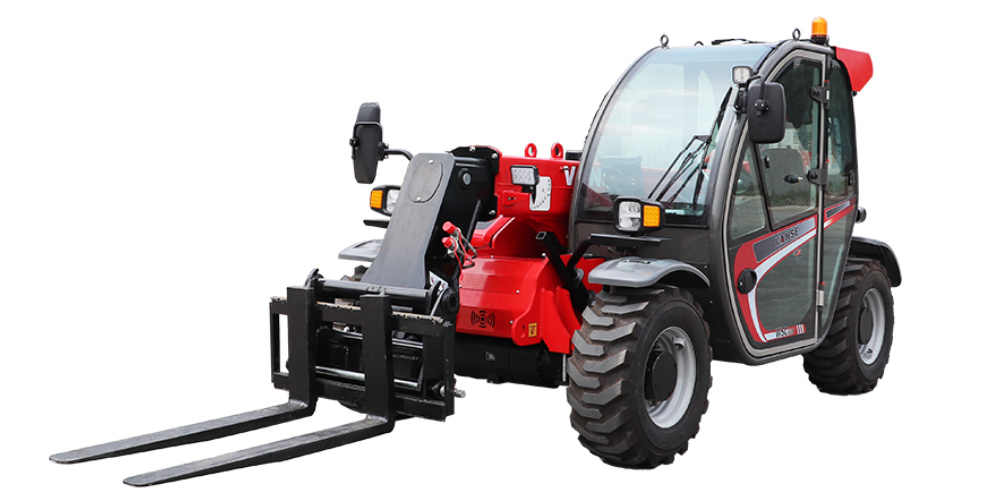
VANSE 625 6m Telescopic Handler
Designed for efficient material handling and stacking in warehouses, factories, and confined job sites, offering compact maneuverability and reliable performance.

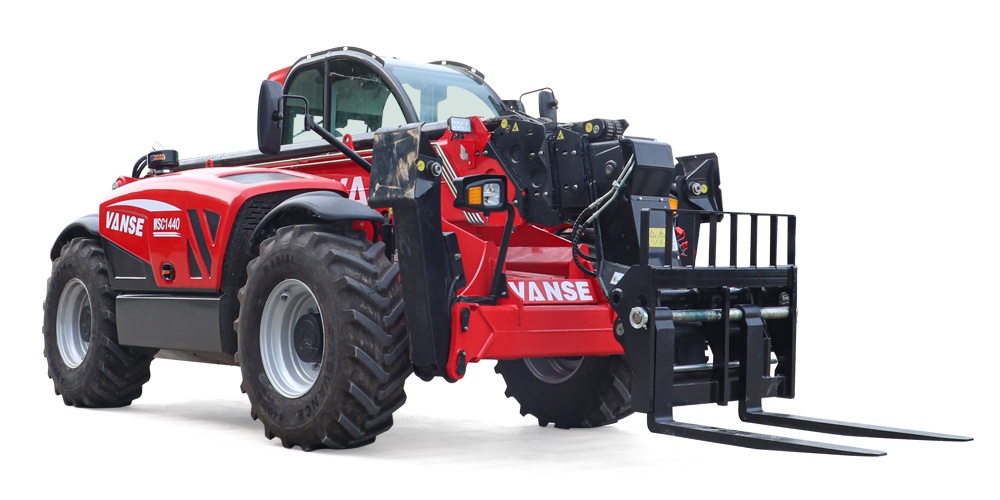
VANSE 735 7m Telescopic Handler
A balanced mid-duty solution for construction, agriculture, logistics, and warehousing, combining stable lifting, strong traction, and everyday versatility.


About the Author:
The VANSE team is a group of experienced professionals specializing in construction machinery research, manufacturing, and technical support. With deep industry knowledge and hands-on experience, our engineers and product specialists share practical insights on equipment selection, operation, maintenance, and industry trends.
Share
You May Also Interest
-

April 9, 2026
How Does a Telehandler Work? Explained
Learn how does a telehandler work in the United States, from hydraulics and boom control to jobsite uses, buying tips, safety, suppliers, and 2026 trends.
-

April 8, 2026
How Much Does a Telehandler Cost? 2026
How much does a telehandler cost in the United States? See 2026 price ranges, supplier options, use cases, and buying tips for U.S. buyers.
-

April 7, 2026
How to Operate a Telehandler: Guide
Learn how to safely operate a telehandler in the United States with practical steps, site checks, load handling tips, and buying guidance for local users.
-
April 6, 2026
Telehandler Load Chart: Complete Guide
Learn the telehandler load chart for United States jobsites, including capacity, reach, supplier options, safety checks, and buying tips for 2026.