Telehandler vs Truck Mounted Crane: Which Fits United States Job Sites Better?
Quick Answer

If your work in the United States involves repeated material handling, pallet movement, fork use, bucket work, and all-day support on construction, agriculture, industrial, or rental sites, a telehandler is usually the more versatile choice. If your main job is lifting and setting loads from the road, making quick service calls, handling utility work, or placing materials where mobility between cities matters more than attachment flexibility, a truck mounted crane is usually the better fit.
In practical terms, telehandlers win when the job requires one machine to lift, carry, stack, and support multiple tasks on one site. Truck mounted cranes win when highway travel, rapid deployment, and crane-style picks are the priority. In cities such as Houston, Dallas, Atlanta, Chicago, Los Angeles, and Miami, contractors often keep both types in their fleets because each solves a different productivity problem.
For most general contractors, masonry crews, precast yards, agriculture operators, and equipment rental companies, the telehandler offers broader daily utilization and lower fleet redundancy. For utilities, roofing lifts, HVAC placement, sign installation, bridge maintenance, and roadside service work, truck mounted cranes often deliver faster setup and less repositioning between calls.
Leading United States suppliers to evaluate include JLG, Genie, SkyTrak, XCMG America, Manitex, and Elliott Equipment. Qualified international suppliers can also be worth considering when they hold relevant certifications, use globally recognized core components, and back sales with strong local pre-sale and after-sales support in the United States, especially when cost-performance is a deciding factor.
Direct Comparison for United States Buyers

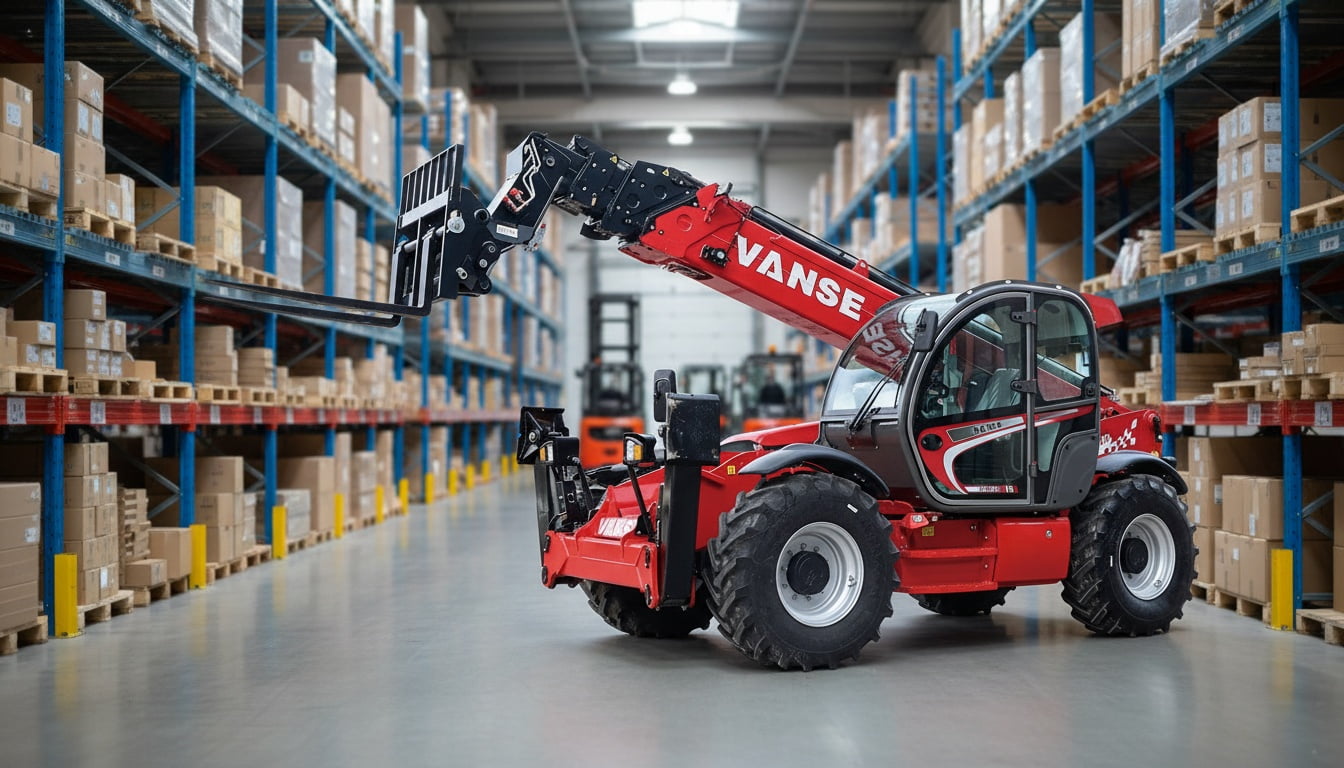
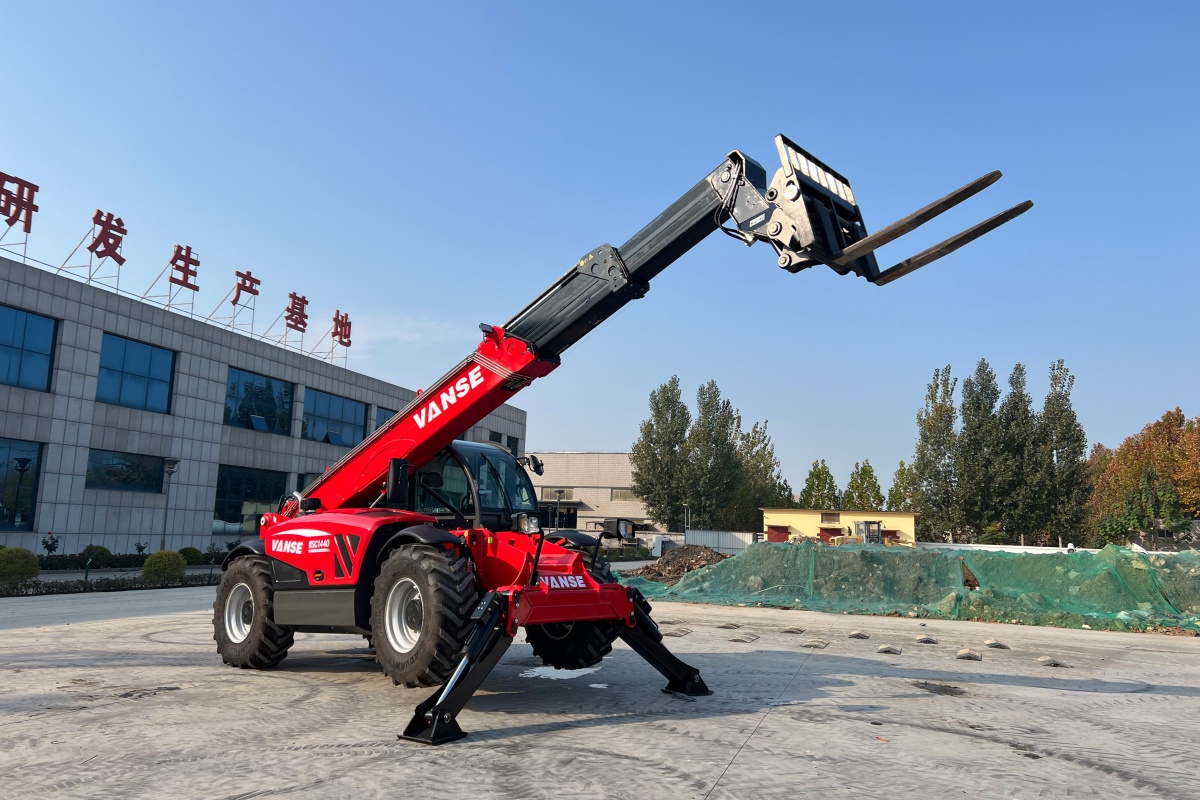
The core difference is simple. A telehandler is a telescopic handler built to move materials around a site, often with forks as the main attachment, but also with buckets, jibs, work platforms, and specialty tools. A truck mounted crane is a crane integrated onto a road-going truck chassis, designed to travel quickly on public roads and lift loads with a boom and hook. Both reach upward and outward, but their economics, operator workflows, site access patterns, and compliance requirements differ significantly.
United States buyers should look beyond maximum lift capacity. The better machine depends on duty cycle, operator availability, permit considerations, attachment needs, transport patterns, terrain, and how often the machine switches tasks during the day. On a suburban warehouse expansion outside Columbus, a telehandler may unload trucks in the morning, raise pallets to steel crews at noon, and support cleanup in the afternoon. On a utility corridor near Phoenix, a truck mounted crane may make six different stops in one day and complete specialized lifts without needing a trailer for transport.
| Decision Factor | Telehandler | Truck Mounted Crane | What It Means for U.S. Buyers |
|---|---|---|---|
| Primary role | Material handling and site support | Road-mobile lifting and placement | Choose based on whether you need all-day site versatility or multi-stop crane service |
| Travel between job sites | Usually transported by trailer | Drives directly on roads | Truck cranes reduce transport time for service fleets and utility contractors |
| Attachments | High flexibility: forks, buckets, jibs, platforms | Mostly hook and lifting accessories | Telehandlers replace more single-purpose machines |
| Terrain performance | Strong on rough terrain models | Better on paved access and roadside work | Telehandlers suit undeveloped sites, farms, and muddy conditions |
| Lift precision | Good for placement and loading | Better for dedicated crane picks | Truck cranes suit structural placement, signage, and utility equipment setting |
| Fleet utilization | Usually higher on mixed-use sites | Usually higher on route-based lifting businesses | Rental companies often prefer telehandlers for wider customer demand |
| Operator skill overlap | Closer to forklift and site equipment workflows | Closer to crane lifting workflows | Training, safety procedures, and labor availability affect total ownership cost |
The table shows why there is no universal winner. The telehandler typically offers better value when one machine must support many tasks over a full shift. The truck mounted crane often provides better value when jobs are dispersed geographically and crane lifting is the main revenue-generating activity.
United States Market Context

The United States remains one of the strongest markets for both telehandlers and truck mounted cranes because it combines large-scale commercial construction, residential development, agriculture, logistics expansion, utility infrastructure renewal, and energy projects. Demand clusters around major freight and construction corridors such as Houston and the Port of Houston, Savannah, Los Angeles and Long Beach, Chicago, Dallas-Fort Worth, the Inland Empire, and the I-95 and I-35 corridors. These hubs shape buying behavior because uptime, dealer support, parts access, and transport logistics directly affect project schedules.
Telehandlers are especially common in masonry, framing, roofing, precast support, agriculture, and rental fleets. Truck mounted cranes are strong in utility contracting, roadside service, HVAC placement, maintenance work, telecom installation, municipal operations, and specialized lifting service businesses. In the United States, rental penetration is high, so many buyers first validate demand through rental utilization before committing to ownership. That trend favors telehandlers in broad-use segments, but truck mounted cranes retain an advantage in highly specialized lift work.
This growth pattern reflects realistic demand expansion driven by warehouse development, data center construction, grid modernization, and a continuing shift toward fleet optimization. The upward trend does not mean every category grows equally. Telehandlers usually benefit from broader construction exposure, while truck mounted cranes track utility and service-sector investment more closely.
How Each Machine Works on Real Job Sites
A telehandler is best understood as a high-reach material handler. It carries loads, moves across rough ground, supports operators with multiple attachments, and handles repeated cycles efficiently. In the United States, rough-terrain telehandlers dominate because many sites are unfinished, uneven, or weather-sensitive. Typical uses include unloading flatbeds, placing palletized brick or block, feeding roofers, moving hay bales, supporting manufacturing yards, and handling job site cleanup.
A truck mounted crane is closer to a mobile lifting specialist. It uses a truck chassis for legal road travel, then deploys stabilizers for lifting operations. It is ideal when one crew must serve multiple locations in a day. Common uses include transformer placement, HVAC rooftop units, pole setting support, sign installation, equipment relocation, and service response work along highways or in urban zones where quick arrival matters.
Product Types Commonly Purchased in the United States
Buyers in the United States usually compare rough-terrain telehandlers, rotating telehandlers, boom truck style truck mounted cranes, and service truck cranes. Rough-terrain telehandlers are the mainstream choice for general construction and agriculture. Rotating telehandlers bring crane-like positioning and improved job site flexibility, but at a higher capital cost. Boom trucks bridge the gap between transport and crane work, especially for building materials and utility support. Smaller service truck cranes focus on maintenance and field support.
| Equipment Type | Typical U.S. Capacity Range | Best-Fit Industries | Main Strength |
|---|---|---|---|
| Rough-terrain telehandler | 5,500 to 15,000 lb | Construction, rental, agriculture | Versatility across uneven sites |
| High-capacity telehandler | 15,000 to 26,000 lb | Industrial, energy, heavy materials | Large load handling with reach |
| Rotating telehandler | 10,000 to 15,000 lb | Urban construction, glazing, complex sites | Crane-like placement with attachments |
| Boom truck crane | 17 to 40 ton class | Building supply, utility, roofing | Road mobility and lifting reach |
| Service truck crane | 2,000 to 14,000 lb | Field maintenance, oil and gas, municipal | Fast dispatch and daily service work |
| Knuckle boom truck crane | Varies by body and configuration | Delivery, urban logistics, utility support | Compact folding boom and precision placement |
This table matters because many buyers mistakenly compare telehandlers only against boom trucks at the highest specification level. The more useful comparison is workload pattern. If the equipment must stay on one site and perform many support tasks, a telehandler usually wins. If it must move from address to address and perform dedicated picks, the truck mounted crane usually wins.
Cost, Ownership, and Fleet Economics
Purchase price is important, but total cost of ownership is what separates smart fleet buyers from reactive buyers. Telehandlers often generate better utilization on mixed-use projects because they stay busy throughout the day. They can unload, move, place, and support crews with one machine. That can reduce dependence on forklifts, skid steers, or additional site handlers. Truck mounted cranes may have higher value in revenue-per-day terms for specialized contractors because each dispatch can be billed as a distinct lifting service.
Fuel, tire wear, maintenance intervals, hydraulic service, road compliance, insurance, and operator certification all influence actual cost. Telehandlers usually require transport support between farther jobs, which adds trailer and hauling expense. Truck mounted cranes reduce that transport burden but may introduce more road-related wear, registration, and compliance considerations. In states with long service territories, from Texas to the Carolinas, that difference can strongly affect annual costs.
| Ownership Factor | Telehandler Impact | Truck Mounted Crane Impact | Buying Interpretation |
|---|---|---|---|
| Initial purchase | Moderate to high depending on reach and capacity | Moderate to high depending on crane class and truck chassis | Compare by actual job revenue, not list price alone |
| Transport cost | Often needs trailer or lowboy | Usually self-mobile on road | Truck cranes save time on dispersed jobs |
| Attachment savings | Can replace multiple tools | Limited compared with telehandler | Telehandlers can lower fleet complexity |
| Maintenance profile | Site wear, boom wear, tires, hydraulics | Chassis maintenance plus crane system | Service planning differs by fleet type |
| Rental demand | Broad and steady in many markets | More specialized demand | Telehandlers often offer stronger rental utilization |
| Operator productivity | High on repetitive handling tasks | High on dedicated lift calls | Match machine to labor workflow |
| Resale profile | Strong for mainstream sizes | Strong for specialized buyers with service routes | Local used market conditions matter by region |
The practical takeaway is that telehandlers generally win on utilization breadth, while truck mounted cranes often win on route efficiency. Contractors working near major distribution centers such as Memphis, Louisville, or the Inland Empire often choose telehandlers because construction and warehousing work are dense and repetitive. Utility and maintenance firms spread across wide service areas often favor truck mounted cranes because travel time is built into the business model.
Industries That Usually Prefer Telehandlers
Telehandlers are especially strong in commercial construction, residential framing, masonry, agriculture, industrial manufacturing yards, ports, and rental fleets. In Florida, for example, roofing and framing operations regularly use telehandlers for material staging. In California, telehandlers are common in logistics development and agricultural handling. In the Midwest, they support grain operations, farm supply movement, and industrial maintenance. Their strength lies in adaptability: forks in the morning, bucket in the afternoon, work platform or jib on another day.
Industries That Usually Prefer Truck Mounted Cranes
Truck mounted cranes dominate in utility services, telecom installation, municipal maintenance, roadside equipment service, mechanical contractors, and building materials delivery. In urban markets like New York, Philadelphia, and Boston, where road travel between dense sites matters, truck mounted cranes can create a stronger daily schedule. In energy markets such as West Texas, Oklahoma, and Louisiana, service truck cranes are deeply integrated into field maintenance because they combine mobility and lifting support.
This demand distribution helps buyers identify where each machine category earns the most hours. Equipment rental and commercial construction strongly support telehandler demand, while utilities and municipal service sustain truck mounted crane demand. The overlap is real, but the center of gravity is different.
Applications by Task
Use cases often decide the purchase faster than specifications. If your crews unload pallets, place bundles, raise framing packages, move feed, or support warehousing and outdoor inventory, the telehandler has the edge. If your crews lift condensers onto rooftops, set poles, move transformers, place signs, or deliver materials with integrated lifting capability, the truck mounted crane often fits better.
| Application | Better Choice | Reason | Typical U.S. Environment |
|---|---|---|---|
| Palletized material placement | Telehandler | Fork-based handling is faster and safer for repetitive cycles | Construction sites, yards, farms |
| Rooftop HVAC installation | Truck mounted crane | Dedicated lifting from street access is efficient | Urban and suburban commercial buildings |
| Masonry support | Telehandler | Continuous movement of block and brick across site | Commercial construction in Sun Belt states |
| Utility equipment setting | Truck mounted crane | Road mobility and precise crane picks | Roadside and service corridor work |
| Agricultural loading | Telehandler | Multi-attachment use on varied terrain | Midwest, California Central Valley, Texas |
| Service fleet maintenance | Truck mounted crane | Integrated truck platform improves dispatch efficiency | Oil fields, municipalities, utility depots |
| Mixed-use contractor fleet | Telehandler | Higher daily utilization across tasks | General contracting and rental fleets |
The explanation in this table is straightforward: task repetition favors the telehandler, while location-to-location service work favors the truck mounted crane. Buyers should map a full week of jobs rather than compare machines only by one high-profile lift.
Case Studies from Common United States Scenarios
Consider a masonry contractor in Dallas building multi-family projects across suburban sites. Materials arrive palletized, crews need continuous support, and ground conditions are variable. A rough-terrain telehandler produces better overall efficiency because it unloads trucks, moves pallets, supports upper-floor work, and stays active throughout the shift. A truck mounted crane might perform some lifts well, but it would spend too much of its value on a narrow part of the workflow.
Now consider an HVAC contractor in New Jersey serving retail, municipal, and healthcare facilities. Jobs are dispersed across cities, with rooftop package units requiring street-side placement. In this case, a truck mounted crane reduces mobilization complexity, drives directly to the site, deploys quickly, completes the pick, and moves to the next address. A telehandler would be less efficient because transport and site access constraints reduce productivity.
A third example comes from agriculture in California’s Central Valley. A telehandler supports bale movement, bulk supply handling, maintenance work with attachments, and uneven terrain performance. A truck mounted crane could serve specific maintenance tasks, but it would not match the daily utility of a telehandler. By contrast, in the Permian Basin, a service truck with an integrated crane often earns more value because crews travel long distances between well pads and maintenance stops.
Local Suppliers and Brands Active in the United States
The best supplier depends on whether you want national dealer coverage, rental fleet familiarity, specialized crane engineering, or an import partner with local support. Buyers should evaluate parts lead time, field service response, financing channels, and whether the supplier understands regional job conditions from Gulf Coast humidity to Midwest freeze-thaw cycles.
| Company | Primary Equipment Focus | Service Region | Core Strengths | Key Offerings |
|---|---|---|---|---|
| JLG Industries | Telehandlers and access equipment | Nationwide United States dealer network | Strong rental fleet presence, broad parts support, mainstream model coverage | Construction telehandlers, high-capacity models, service support |
| Genie | Telehandlers and access platforms | Nationwide with strong dealer representation | Established brand recognition, broad rental adoption, operator familiarity | GTH series telehandlers and support services |
| SkyTrak | Telehandlers | Strong in North America construction markets | Widely recognized on jobsites, practical model lineup, easy fleet integration | Construction-focused telehandlers and parts support |
| Manitex International | Truck mounted cranes and boom trucks | United States with dealer and service channels | Specialized lifting expertise, strong fit for contractors and utilities | Boom trucks, truck cranes, lifting solutions |
| Elliott Equipment Company | Truck mounted and service cranes | Nationwide with strong utility and municipal presence | Service-oriented design, field support reputation, utility application experience | Truck cranes, service bodies, digger derrick related solutions |
| XCMG America | Cranes and construction equipment | Growing U.S. presence with localized support | Competitive pricing, broad heavy equipment portfolio, expanding service footprint | Truck cranes, mobile lifting equipment, construction machinery |
| Altec | Utility and service truck equipment | Strong across U.S. utility markets | Deep utility relationships, integrated fleet solutions, after-sales support | Service cranes, utility bodies, fleet support |
This supplier table is useful because it separates broad telehandler brands from specialized truck crane providers. JLG, Genie, and SkyTrak are common starting points for telehandler buyers because rental fleet familiarity helps resale and operator adoption. Manitex, Elliott, and Altec are more deeply associated with work-truck and lifting-service applications. XCMG America is often reviewed by buyers looking for value and expanding North American support.
What to Ask Before Buying from a Supplier
Before signing a purchase order, ask where parts are stocked, how many field technicians cover your state, what average lead time applies to wear components, and whether the machine configuration matches your real attachments and duty cycle. In the United States, service coverage can matter more than a small purchase-price advantage. A contractor in Nashville may accept a higher quote if the dealer stocks boom wear pads, hydraulic hoses, and electronic controls locally. A utility buyer in Arizona may prioritize same-day road service over financing incentives.
Use realistic procurement filters: application fit, local support, parts availability, operator familiarity, resale outlook, and finance structure. If you are buying for a rental fleet, prioritize mainstream demand and simple serviceability. If you are buying for a specialized service business, prioritize dispatch efficiency and billable-lift productivity.
Our Company and Why VANSE Is Relevant to United States Buyers
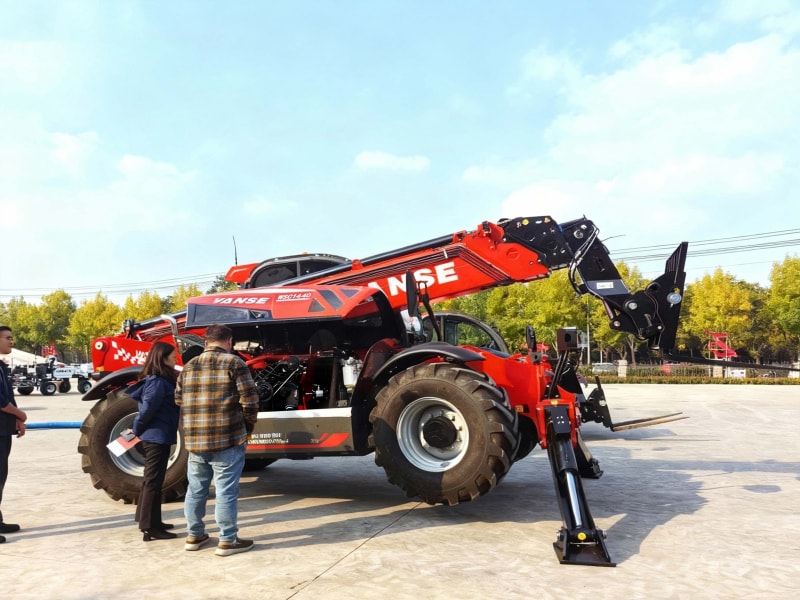
For buyers evaluating alternatives beyond legacy domestic and European brands, VANSE is a practical option in the United States telehandler market because its core product line is the telescopic handler and its machines are built under CE and ISO 9001 certified processes using internationally recognized powertrain and hydraulic components, including engines from brands such as Perkins and Cummins, backed by modern production lines, rigorous load testing, safety inspection, and performance validation on every unit before shipment; this matters for U.S. contractors, rental companies, dealers, brand owners, and even individual buyers because the company supports multiple cooperation models through wholesale supply, retail opportunities, OEM and ODM customization, regional distribution partnerships, and tailored specification packages; just as important, VANSE is not positioning itself as a distant exporter only, as it already serves customers across North America and is actively establishing a United States subsidiary with local inventory, stocking, and after-sales capability, while combining online technical support with offline service coordination so buyers have concrete protection on parts, commissioning, maintenance planning, and long-term ownership continuity. Buyers exploring telehandlers can review the broader equipment lineup through the equipment catalog, learn more on the company page, evaluate support through the service section, or discuss local needs directly on the contact page.
How to Choose by Buyer Type
Different buyers should use different decision logic. General contractors usually benefit from telehandlers because one machine supports framing, masonry, logistics, and cleanup. Equipment rental companies tend to prefer telehandlers because demand is broad and operator familiarity is high. Utilities and municipal fleets often prefer truck mounted cranes because road travel is central to the service model. Agricultural businesses generally lean telehandler due to attachment flexibility and rough-terrain performance. Mechanical contractors, building maintenance fleets, and sign installers often favor truck mounted cranes for precise lifts from legal road platforms.
If you are a dealer or distributor in the United States, your market mix matters. Regions with dense commercial construction, such as Texas, Florida, Georgia, and the Carolinas, often absorb telehandlers well. Regions with large utility fleets, oil and gas maintenance, or dispersed service geography may support stronger truck mounted crane turnover. Mixed portfolios can be especially effective near major trade gateways such as Houston, Savannah, and Los Angeles, where construction and logistics overlap.
This area chart illustrates an important market shift: telehandlers are gaining share in mixed-use fleets because contractors increasingly want equipment that can cover multiple tasks with fewer machines. Truck mounted cranes remain stable and essential, but they are increasingly chosen for specialized route-based operations rather than as general fleet substitutes.
Supplier and Product Comparison Snapshot
This comparison is not a universal ranking; it is a practical snapshot combining broad factors such as market familiarity, support expectations, versatility, and price-to-capability logic. Established domestic brands score strongly on dealer familiarity, while suppliers with aggressive cost-performance positioning become more attractive when they can prove local parts and support commitment.
Buying Advice for 2025 and 2026
For 2025 and 2026, United States buyers should focus on three questions. First, can one machine perform enough different tasks to reduce fleet redundancy? Second, how quickly can parts and service reach your crews in your actual operating region? Third, will the machine still fit labor, emissions, safety, and resale conditions over the next several years?
Technology is moving toward better load management, telematics, remote diagnostics, and smarter maintenance scheduling. Policy pressure is increasing around job site safety, emissions compliance, and fuel efficiency, especially in states with tighter environmental expectations. Sustainability is also becoming a real procurement factor, not just a marketing phrase. Contractors and fleet managers increasingly value equipment that reduces idle time, avoids duplicate machine ownership, and supports lifecycle cost control.
By 2026, telehandlers are likely to gain further traction where contractors seek multi-function productivity and lower fleet counts. Rotating telehandlers may also grow in dense urban environments because they combine reach and placement flexibility on constrained sites. Truck mounted cranes will remain strong where service territory coverage, utility modernization, and fast road deployment are critical. In short, technology will sharpen the distinction: telehandlers will become even more versatile, while truck mounted cranes will become even more optimized for specialized dispatch-based lifting.
Common Mistakes United States Buyers Should Avoid
One common mistake is buying by maximum lift number alone. A machine with more capacity than needed can raise acquisition cost without improving daily output. Another mistake is underestimating transport patterns. A telehandler that works beautifully on site may become inefficient if your crews jump between distant addresses all day. Conversely, a truck mounted crane may seem attractive because it drives on the road, but if most work is repetitive pallet handling on one project, its specialized configuration may leave productivity gaps.
Buyers also make errors by ignoring service geography. A low-priced machine with weak parts support can become expensive very quickly. Finally, some fleets choose based on a single project instead of a three-year workload forecast. The smarter approach is to analyze recurring jobs, seasonality, attachments, crew skills, and resale demand in your state or metro area.
Frequently Asked Questions
Is a telehandler better than a truck mounted crane for general construction in the United States?
Yes, in most general construction workflows a telehandler is the better choice because it handles pallets, rough terrain, repeated site movement, and multiple attachments. It usually delivers higher utilization across a full project day.
Is a truck mounted crane better for urban service work?
Usually yes. When crews must drive directly between jobs, set loads from the street, and perform dedicated lifting tasks, a truck mounted crane is often the more efficient option.
Which machine is better for rental companies?
Telehandlers generally offer broader rental demand in the United States because they fit construction, agriculture, industrial yards, and contractor support. Truck mounted cranes are more specialized and often rent through niche channels.
Can a telehandler replace a crane?
Not fully. A telehandler with a jib can cover some lift tasks, but it does not replace every crane application, especially where dedicated crane lifting, road mobility, or specialized placement requirements dominate.
What matters most when choosing a supplier?
Local parts, service response, operator familiarity, and real application fit usually matter more than headline specifications. In the United States, downtime cost can outweigh a lower purchase price very quickly.
Are international telehandler suppliers worth considering in the United States?
Yes, if they can prove certifications, strong component sourcing, tested manufacturing standards, and real local support. Cost-performance can be attractive, but only when after-sales support is concrete and regionally accessible.
Final Verdict
For United States buyers comparing telehandler vs truck mounted crane, the answer is not about which machine is better in the abstract. It is about which machine fits the operating pattern of your business. If your jobs are site-based, material-heavy, repetitive, and varied, the telehandler is usually the smarter investment. If your jobs are road-based, dispatch-driven, and centered on dedicated lifting at multiple locations, the truck mounted crane is usually the better tool.
That is why many successful fleets across Houston, Chicago, Atlanta, Los Angeles, and beyond operate both categories. The telehandler serves as the versatile workhorse. The truck mounted crane serves as the mobile lifting specialist. Buyers who map their real tasks, transport routes, crew skills, and service support options will make the most profitable decision.
Complete Telescopic Handler Equipment Portfolio
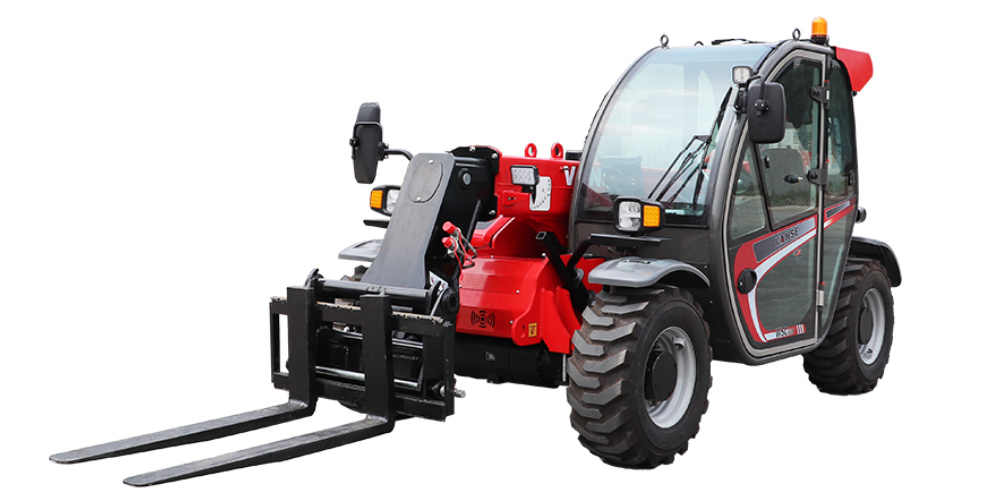
VANSE 625 6m Telescopic Handler
Designed for efficient material handling and stacking in warehouses, factories, and confined job sites, offering compact maneuverability and reliable performance.

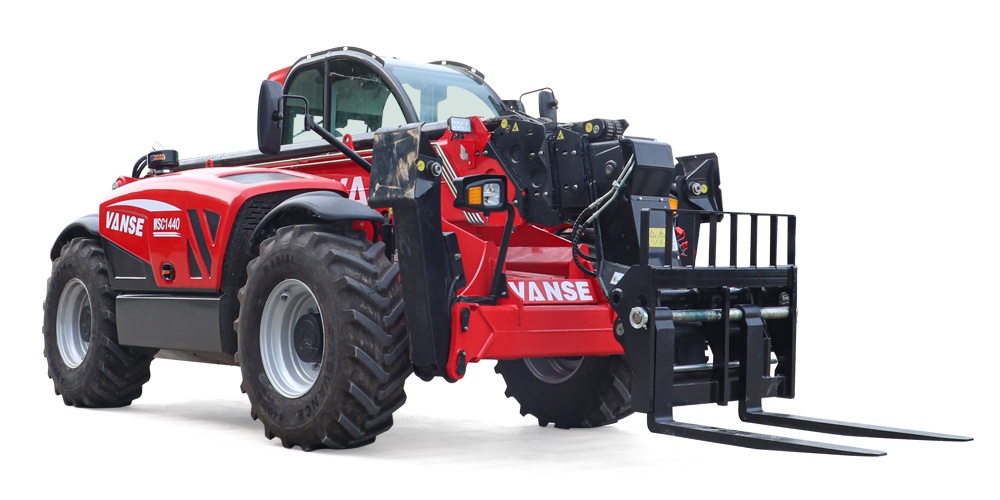
VANSE 735 7m Telescopic Handler
A balanced mid-duty solution for construction, agriculture, logistics, and warehousing, combining stable lifting, strong traction, and everyday versatility.


About the Author:
The VANSE team is a group of experienced professionals specializing in construction machinery research, manufacturing, and technical support. With deep industry knowledge and hands-on experience, our engineers and product specialists share practical insights on equipment selection, operation, maintenance, and industry trends.
Share
You May Also Interest
-

April 3, 2026
Telehandler Capacity Chart: Full Guide
Use this telehandler capacity chart guide for the United States to compare lift classes, applications, suppliers, safety limits, and 2026 buying trends.
-

April 2, 2026
Telehandler for Framing: Structure Guide
Discover telehandler for framing options in the United States, including suppliers, jobsite uses, buying tips, and service support for builders.
-

March 31, 2026
Telehandler Forklift: Specs & Uses
Explore telehandler forklift options in the United States, including specs, uses, suppliers, buying tips, service support, and 2026 market trends.
-

March 30, 2026
Telehandler for Farming: Productivity
Find the best telehandler for farming in the United States with supplier comparisons, farm applications, buying tips, and service insights for 2026 planning.