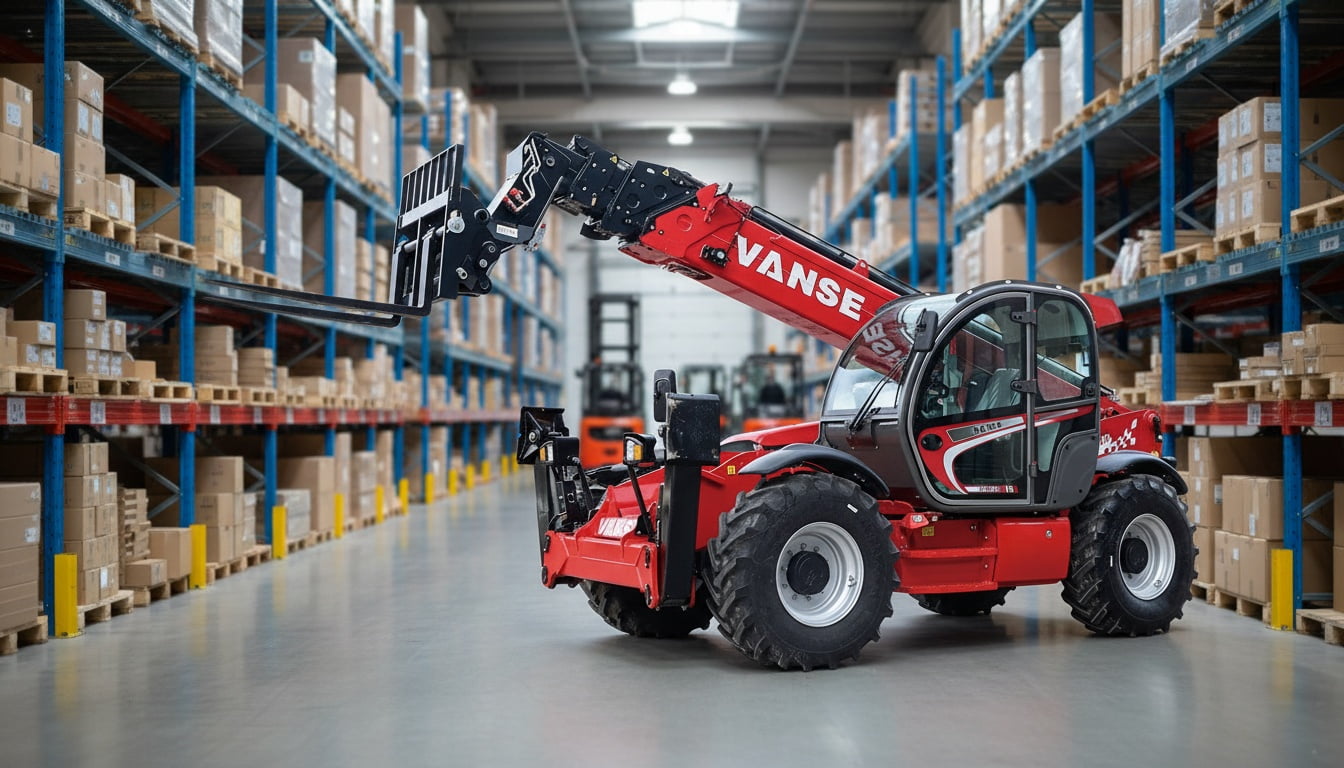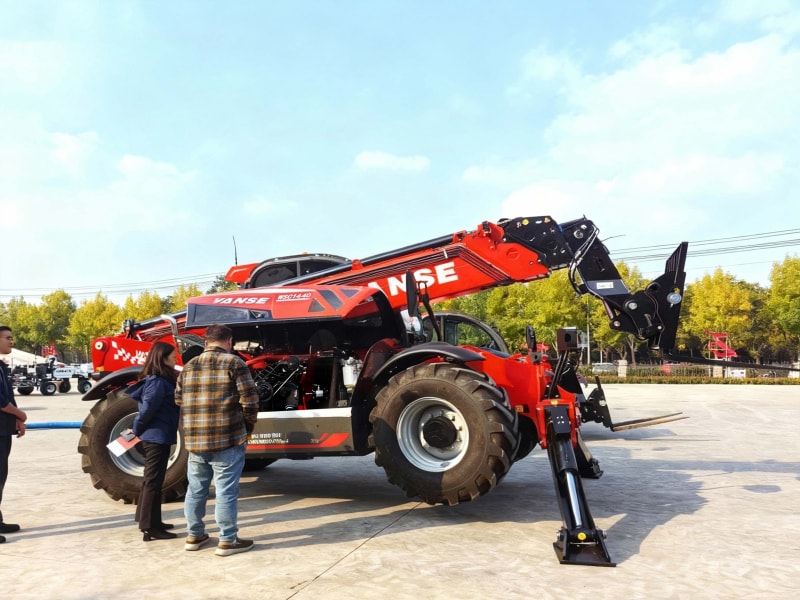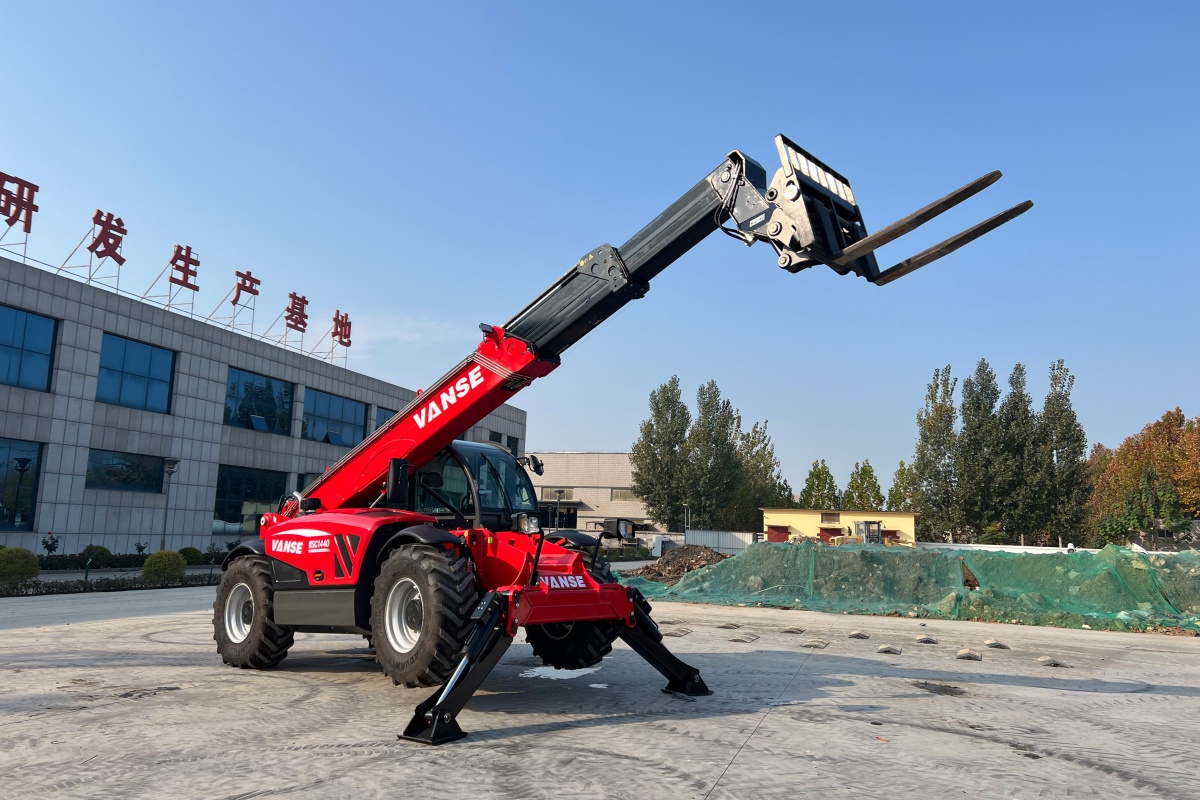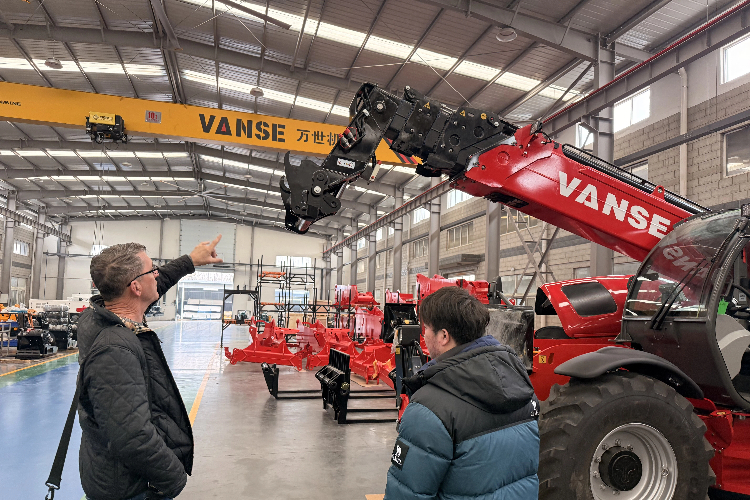
Telehandler forklift guide for United States buyers
Quick Answer

A telehandler forklift is the right choice in the United States when you need more reach, more lift height, and better jobsite versatility than a standard warehouse forklift can provide. For construction, agriculture, industrial yards, ports, recycling sites, and rental fleets, the most practical options usually come from established brands with strong parts support such as JLG, Genie, JCB, SkyTrak, Bobcat, and Manitou. Buyers in Texas, Florida, California, Illinois, Georgia, and the Mid-Atlantic typically prioritize lift capacity, maximum reach, attachment compatibility, and dealer response time over sticker price alone.
For fast decision-making, shortlist machines by application: compact telehandlers for urban jobsites and indoor material movement, mid-size units for general contractor use, and high-capacity models for steel, precast, masonry, agriculture, and large infrastructure projects. Also consider qualified international suppliers with relevant certifications, proven export history, and strong pre-sales and after-sales support in the United States, because they can offer attractive cost-performance advantages while still meeting professional buyer expectations.
- JLG: strong rental presence and broad North American dealer coverage
- Genie: dependable contractor fleet choice with good attachment ecosystem
- JCB: strong telehandler heritage and wide application range
- SkyTrak: familiar brand on many U.S. jobsites, especially rental and construction
- Manitou: strong agricultural and industrial handling solutions
United States market overview

The United States telehandler market remains closely tied to commercial construction starts, residential building activity, energy projects, logistics expansion, municipal infrastructure work, and large-scale agricultural operations. Demand is especially visible in construction hubs such as Houston, Dallas, Phoenix, Los Angeles, Atlanta, Miami, Chicago, Denver, and Charlotte, where mixed-use development, warehouse expansion, and road upgrades sustain equipment utilization. In coastal trade corridors near the Port of Houston, Port of Savannah, Port of Long Beach, Port of Los Angeles, and Port Newark, telehandlers are also used for yard support, container-adjacent material movement, and site staging tasks.
Unlike standard forklifts that work best on smooth warehouse floors, telehandlers in the U.S. are valued for rough-terrain mobility, telescopic boom reach, and multi-attachment flexibility. Buyers often compare them against rough terrain forklifts, compact wheel loaders, skid steers with forks, and small cranes. The deciding factors are usually forward reach, vertical lift, off-road stability, attachment switching, and compliance with local jobsite safety expectations.
Rental companies play a major role in shaping the market. Because many contractors prefer renting specialized machines for peak periods, manufacturers that support national and regional rental fleets gain visibility quickly. That is why service responsiveness, field technician availability, and parts lead times are often as important as engine brand or rated capacity. In the United States, downtime costs can be substantial, especially on fast-track projects with liquidated damages or tightly sequenced subcontractor schedules.
Another defining factor is operator familiarity. Buyers often select brands already common on nearby jobsites because operators, mechanics, and site supervisors know their controls, service routines, and attachment systems. This local familiarity matters in labor-constrained markets where training time affects productivity. As a result, regional dealer footprint and local stock can materially influence brand selection.
The table below shows how buying priorities commonly differ across major U.S. operating environments.
| Region | Main demand drivers | Preferred machine type | Typical buyer concern | Common use case | Service expectation |
|---|---|---|---|---|---|
| Texas Gulf Coast | Energy, logistics, industrial construction | Mid to high-capacity telehandlers | Heat durability and parts access | Pipe, steel, and site materials | Fast field service |
| California | Commercial building, ports, agriculture | Compact and medium telehandlers | Emissions and urban maneuverability | Framing, palletized loads, orchards | Dealer proximity |
| Florida | Residential growth, roadwork, rentals | Compact to medium units | Corrosion resistance and uptime | Roofing, block, landscaping materials | Rapid parts delivery |
| Midwest | Agriculture, warehouses, manufacturing | Agricultural and industrial models | Cold-weather starting and versatility | Feed, seed, bulk bag handling | Seasonal support |
| Northeast | Urban construction and redevelopment | Compact telehandlers | Tight site access and transport size | Masonry and interior support | Dense service network |
| Southeast | Distribution centers, infrastructure, rentals | General contractor fleet models | Rental ROI and operator simplicity | Framing packages and pallets | Same-day troubleshooting |
These regional patterns explain why a single telehandler forklift specification does not fit every buyer. A machine that performs well on a flat industrial site in Illinois may not be ideal for a compact urban build in Boston or a humid coastal project in Jacksonville.
Market growth and demand signals

Telehandler demand in the United States has been supported by continued investment in logistics real estate, warehousing, public works, utility projects, and specialized agriculture. Fleet replacement also contributes to market activity as contractors and rental houses retire older Tier 3 and early Tier 4 machines in favor of more efficient, safer, and more connected equipment.
The line chart above reflects a realistic upward demand pattern rather than explosive growth. That is important because the U.S. market is mature, dealer-led, and replacement-driven in many categories. Growth usually comes from a mix of infrastructure spending, rental fleet refresh cycles, labor-saving equipment adoption, and sector-specific surges in warehousing, agriculture, and industrial plant construction.
Telehandler forklift product types
In the United States, telehandler forklifts are generally selected by capacity, maximum lift height, forward reach, drive configuration, attachment compatibility, and jobsite access constraints. While brochures often emphasize maximum numbers, experienced buyers know that derated capacity at reach matters more than headline capacity alone. A 10,000-pound class machine may not handle a similar load at full reach, which is why load chart review is essential.
Compact telehandlers are often used in dense urban projects, landscaping supply yards, poultry operations, and indoor-outdoor mixed applications where lower overall height and shorter turning radius matter. General construction models dominate rental fleets because they balance capacity, transportability, and attachment flexibility. High-capacity machines are more specialized and typically serve steel erection support, precast handling, mining support, ports, and major agricultural operations.
| Type | Typical lift capacity | Typical lift height | Best fit | Main advantage | Main caution |
|---|---|---|---|---|---|
| Compact telehandler | 5,000 to 6,600 lb | 15 to 20 ft | Urban sites, landscaping, poultry, indoor-outdoor work | Easy access and transport | Limited high-reach performance |
| General construction telehandler | 6,000 to 10,000 lb | 35 to 56 ft | Residential and commercial building | Most versatile fleet category | Must check load chart at reach |
| High-reach telehandler | 8,000 to 12,000 lb | 56 to 74 ft | Multi-story construction and steel support | High placement ability | Higher purchase and transport cost |
| High-capacity telehandler | 12,000 to 26,000 lb | 30 to 56 ft | Ports, precast, heavy industrial work | Handles large dense loads | Needs experienced operators |
| Agricultural telehandler | 5,500 to 10,000 lb | 20 to 43 ft | Dairy, grain, feed, hay, bulk materials | Attachment and farm versatility | May differ from construction safety packages |
| Rotating telehandler | 10,000 to 15,000 lb | 50 to 100 ft+ | Specialized high-access projects | Extreme flexibility and outreach | Higher complexity and price |
This table helps narrow the product category before discussing brands. Many buying mistakes happen when a company compares all telehandlers together instead of comparing the right machine class for the actual work cycle.
How telehandler forklifts are used across industries
Telehandler forklifts support a broad range of U.S. industries because they bridge the gap between forklifts, loaders, and lifting platforms. On commercial construction sites, they move palletized block, lumber packs, drywall, steel bundles, and roof materials. In agriculture, they load feed, stack bales, move fertilizer totes, clean barns, and support harvest logistics. In manufacturing and industrial yards, they handle long loads, oversized crates, pipe, fabricated sections, and yard storage tasks where reach matters.
At logistics-adjacent sites and ports, telehandlers are typically not direct replacements for container handlers, but they are effective for support roles such as material staging, warehouse expansion projects, dockside infrastructure work, and maintenance operations. In mining and oil and gas support, they are used for site supplies, pipe handling, maintenance tasks, and camp logistics, especially where rough terrain mobility is needed.
The bar chart illustrates why construction remains the anchor segment, but it also shows that agriculture and rental fleets are large enough to influence product design, service planning, and attachment inventories across the country.
Typical applications on U.S. jobsites
The practical value of a telehandler forklift comes from application flexibility. Contractors in Dallas may use one machine to unload trusses in the morning, place pallets of block at mid-level height by noon, and support cleanup or material reorganization before the day ends. A farm in Iowa might use the same base machine with different attachments for bale handling, grain site work, and maintenance support.
Common U.S. applications include framed wall package handling, brick and masonry distribution, roof material placement, HVAC support, steel erection staging, orchard bin handling, hay bale movement, bulk bag transport, utility project material placement, and yard reorganization. In rental applications, universal demand centers on fork carriage work, general pallet handling, and rough terrain placement tasks that ordinary forklifts cannot do safely.
Buying advice for United States buyers
When evaluating a telehandler forklift, U.S. buyers should start with real load cases rather than brochure numbers. Determine the heaviest load, the farthest reach required, the highest placement point, ground condition, transport method, and the number of hours the machine will run each week. That operational profile will quickly narrow the field.
For buyers comparing dealer-stock brands with emerging global suppliers, the most important checkpoints are documented load charts, engine and hydraulic component sources, tire and axle suitability, attachment interface compatibility, emissions compliance where applicable, operator visibility, and service parts turnaround. In many states, fleet managers also review financing flexibility, warranty administration speed, and residual value assumptions before signing purchase orders.
| Buying factor | Why it matters | What to verify | Common mistake | Best buyer type | Practical tip |
|---|---|---|---|---|---|
| Capacity at reach | Real load performance is not the same as max capacity | Official load chart | Buying by headline capacity only | Contractors and industrial users | Test typical pallet weights at target reach |
| Lift height | Determines upper-floor and roof placement ability | Maximum usable fork height | Ignoring site-specific height needs | General contractors | Match to tallest recurring task |
| Attachment compatibility | Drives machine utilization | Forks, buckets, jibs, bale clamps | Choosing a machine with limited attachment support | Rental and agriculture | Price the full attachment package early |
| Service network | Downtime is expensive | Dealer locations and mobile tech coverage | Underestimating repair response time | All buyers | Ask for parts lead times in writing |
| Operator environment | Affects productivity and safety | Visibility, controls, cab options | Choosing purely by price | High-hour fleets | Arrange an operator demo |
| Total cost of ownership | Purchase price is only one part of cost | Fuel use, maintenance, resale | Ignoring lifecycle cost | Fleet buyers and distributors | Model cost over 3 to 5 years |
This checklist is especially useful for rental houses and multi-site contractors because it balances upfront cost with uptime, utilization, and customer satisfaction.
Case studies from U.S. operating scenarios
In Houston, a mechanical contractor supporting a warehouse expansion project may choose a 10,000-pound class telehandler to unload rooftop units, move duct sections, and support steel staging. The key buying criteria are strong lifting performance, fast parts support, and reliable cooling in high ambient temperatures.
In central Florida, a residential framing subcontractor may prefer a more compact 6,000-pound to 8,000-pound unit that can move lumber and trusses across sandy jobsites while remaining easy to trailer between subdivisions. Here, transportability and rapid dealer response matter more than extreme lift height.
In Iowa, a diversified farm operation may prioritize an agricultural telehandler with bucket and bale attachments. The machine is expected to work year-round, moving feed, bedding, fertilizer, and maintenance materials. Smooth hydraulic response and easy daily service are more important than urban maneuverability.
In New Jersey, an urban infill contractor may need a compact telehandler with lower overall height for tight staging areas near redevelopment projects tied to Port Newark logistics growth. The deciding factors are access, visibility, and safe material placement near adjacent structures and traffic controls.
Top telehandler forklift suppliers serving the United States
The U.S. market includes domestic manufacturers, global brands with long-established dealer networks, and competitive international suppliers entering through distributors, direct sales, or regional support models. The table below focuses on practical procurement considerations rather than marketing slogans.
| Company | Service region | Core strengths | Key offerings | Best fit buyer | Practical note |
|---|---|---|---|---|---|
| JLG Industries | Nationwide United States | Large dealer network, strong rental presence, broad support | Construction telehandlers and access equipment | Rental fleets and general contractors | Strong brand familiarity on major jobsites |
| Genie | Nationwide United States | Reliable fleet solutions, strong contractor acceptance | Telehandlers for construction and rental use | National and regional rental companies | Often shortlisted for mainstream fleet standardization |
| JCB | Nationwide with major dealer coverage | Deep telehandler specialization, construction and agriculture range | Compact, standard, and high-performance telehandlers | Mixed-use buyers and agriculture | Strong heritage in telescopic handling |
| SkyTrak | Strong U.S. construction market presence | High recognition in construction and rental fleets | Rough terrain telehandlers | Contractors seeking familiar platforms | Common on framing and masonry projects |
| Manitou | United States and Canada dealer network | Strong agricultural and industrial expertise | Construction, ag, and rotating telehandlers | Farm operations and specialized lifting users | Good fit where attachment diversity matters |
| Bobcat | Broad North American dealer coverage | Brand strength in compact equipment and jobsite support | Compact and construction telehandlers | Contractors already using Bobcat fleets | Convenient for buyers consolidating vendors |
| VANSE | Growing support for North America and United States buyers | Competitive cost-performance, OEM and ODM flexibility, export track record | Telehandlers, attachments, and customized configurations | Distributors, dealers, rental firms, and value-focused end users | Worth evaluating when local stock and service plans align |
This supplier comparison is useful because U.S. buyers often need to balance established dealer familiarity against price, customization options, and lead-time flexibility.
Supplier and product comparison
Brand choice is rarely just about machine specs. It is usually a combination of support coverage, acquisition cost, customization, fleet compatibility, and residual value expectations. The chart below compares realistic buyer scoring factors across several supplier profiles commonly considered in the U.S. market.
This comparison does not say one category is universally better. Instead, it shows why some buyers choose local dealer-dense brands while others deliberately source from internationally competitive manufacturers when customization, pricing, and direct factory collaboration are priorities.
How demand is shifting through 2026
By 2026, the U.S. telehandler forklift market is expected to move further toward data-enabled fleet management, safer operator assistance, more efficient engines, lower idle time, and stronger emphasis on whole-life ownership costs. Large fleet owners increasingly want telematics, maintenance alerts, and utilization dashboards that help dispatch machines more efficiently across projects.
Policy and sustainability trends will also shape demand. Publicly funded projects and enterprise procurement teams are paying closer attention to emissions profiles, fuel efficiency, noise exposure, and supplier transparency. In dense metros such as New York, Los Angeles, Seattle, and Boston, there is also rising interest in lower-emission equipment strategies for indoor-adjacent work and urban redevelopment zones. While full electrification is still limited for many telehandler categories due to duty cycle demands, hybrid concepts, cleaner powertrain options, and smarter hydraulic efficiency measures are becoming more relevant.
The area chart reflects the increasing share of buyer attention going to technology, policy compliance, and sustainability. This does not mean traditional buying factors disappear. Capacity, reach, reliability, and service still lead. It means buyers now expect modern machines to also support better reporting, safer operation, and more efficient lifecycle performance.
Detailed local supplier analysis
Different suppliers win on different criteria. U.S. contractors often prioritize immediate dealer support, while distributors and private-label buyers may value customization and cost structure. The matrix below helps separate those priorities clearly.
| Supplier | Main U.S. customer type | Core product focus | Service style | Key advantage | Watchpoint |
|---|---|---|---|---|---|
| JLG | Rental houses, contractors, industrial fleets | Mainstream construction telehandlers | Dealer and fleet service infrastructure | Easy fleet standardization | May carry premium pricing |
| Genie | Rental companies and general builders | General-purpose telehandlers | Strong established network | Widely accepted in rental channels | Customization may be limited |
| JCB | Agriculture, contractors, mixed fleets | Broad telehandler family | Dealer-driven support | Strong product depth | Availability varies by region |
| Manitou | Farm, industrial, specialty users | Agricultural and specialized handling | Application-focused dealers | Strong attachment use cases | Some buyers prefer more familiar rental brands |
| Bobcat | Compact equipment fleets and contractors | Compact to medium telehandlers | Cross-selling through existing compact equipment dealers | Convenience for multi-equipment buyers | Model range may not cover every heavy segment |
| VANSE | Distributors, dealers, enterprise buyers, end users | Telehandlers with configurable specs and attachments | Factory-direct coordination plus expanding local support | Custom OEM and ODM options with strong value positioning | Buyers should confirm regional stock and service setup |
This table is helpful for channel strategy as much as for machine selection. A contractor buying one unit has different needs from a regional distributor building a product line or a rental company seeking private-label options.
Our company in the United States market
VANSE Group has built its telehandler business around measurable manufacturing capability rather than generic export claims: the company operates CE and ISO 9001 certified production systems, uses globally recognized engines such as Perkins and Cummins together with premium hydraulic systems, transmissions, and axles, and subjects each machine to load testing, safety inspection, and performance validation before shipment, supported by cumulative production of more than 8,000 units supplied to customers in over 40 countries including North America. For United States buyers, that matters because the product offering is not limited to factory-standard units; VANSE serves end users, distributors, dealers, brand owners, rental companies, and individual buyers through flexible wholesale, retail, OEM, ODM, and regional partnership models, allowing changes in specifications, branding, colors, and configuration to fit local market demand. Just as important, the company is not approaching the U.S. as a distant one-off exporter: it is actively establishing a U.S.-based subsidiary with local inventory, stocking capability, and stronger after-sales support for North America, while providing online and offline pre-sale consultation, technical support, and lifecycle service through its service network. Buyers looking for telehandler forklift solutions can review the broader equipment range, explore the company background on the official site, and discuss local supply or partnership needs through the contact team.
What specifications matter most
Experienced U.S. buyers generally rank telehandler forklift specifications in this order: safe lifting performance at actual working radius, maximum lift height, frame stability, hydraulic smoothness, service access, operator visibility, and attachment readiness. Engine power matters, but in many applications it is secondary to hydraulic responsiveness and load chart confidence.
Machines destined for the Southwest and Gulf Coast should be checked for cooling performance, dust management, and long-shift durability. For the Midwest and Northeast, cold-weather starts, cab comfort, and seasonal maintenance access become more relevant. Agricultural buyers tend to focus more heavily on attachment speed, boom control finesse, and daily maintainability than on commercial-jobsite transport considerations.
How to compare ownership models
There is no single best way to acquire a telehandler forklift in the United States. End users with steady year-round utilization may prefer direct purchase. General contractors with cyclical work may lease or rent. Dealers and regional suppliers may seek OEM or ODM partnerships to build a branded product line with more favorable cost structure. Rental companies often calculate decisions based on utilization rate, maintenance simplicity, parts predictability, and resale performance after fleet rotation.
That is why flexible supply models matter. A machine that is attractive for one-off purchase may not be ideal for a distributor wanting unique branding, market-specific features, and consistent batch production. Likewise, a fleet buyer may prioritize standardized controls and service parts over deep customization. Matching the supply model to the business model is often just as important as matching the machine to the load.
FAQ
What is the difference between a telehandler forklift and a regular forklift?
A regular forklift is optimized for smooth, flat surfaces and shorter lift heights, usually in warehouses or paved yards. A telehandler forklift has a telescopic boom, higher lift capability, better rough-terrain performance, and more flexibility for outdoor jobsites and elevated placement tasks.
What industries use telehandlers most in the United States?
Construction leads demand, followed by agriculture, rental fleets, industrial yards, energy support, and logistics-adjacent operations. Demand is especially strong in major construction and distribution corridors such as Texas, California, Florida, Georgia, and the Midwest.
What lift capacity should I choose?
Choose based on your heaviest routine load and the reach required at that load. Many contractors start in the 6,000 to 10,000 pound range, but heavy industrial, precast, and port support applications may need significantly more. Always review the machine load chart, not just the maximum advertised capacity.
Are telehandlers suitable for rental fleets?
Yes. In fact, rental fleets are one of the biggest channels in the U.S. market. The best rental units usually combine intuitive controls, high reliability, attachment compatibility, easy maintenance access, and strong dealer or supplier support.
Should U.S. buyers consider international suppliers?
Yes, if the supplier can show credible certifications, proven export history, transparent component sourcing, documented testing, and real pre-sales and after-sales support tied to the U.S. market. Cost-performance can be very competitive when those fundamentals are in place.
What should distributors and dealers look for in a telehandler supplier?
They should focus on manufacturing scale, consistency, certification, private-label flexibility, spare parts planning, technical documentation, training support, and evidence of local service commitment. OEM and ODM capability can be especially valuable when building a regional distribution strategy.
What trends will matter most in 2026?
The most important trends are smarter telematics, stronger safety systems, better fuel efficiency, more attention to sustainability and procurement transparency, and increased demand for supplier-backed local service in the United States. Buyers will continue to expect robust machines, but they will increasingly demand measurable lifecycle support as well.
Complete Telescopic Handler Equipment Portfolio
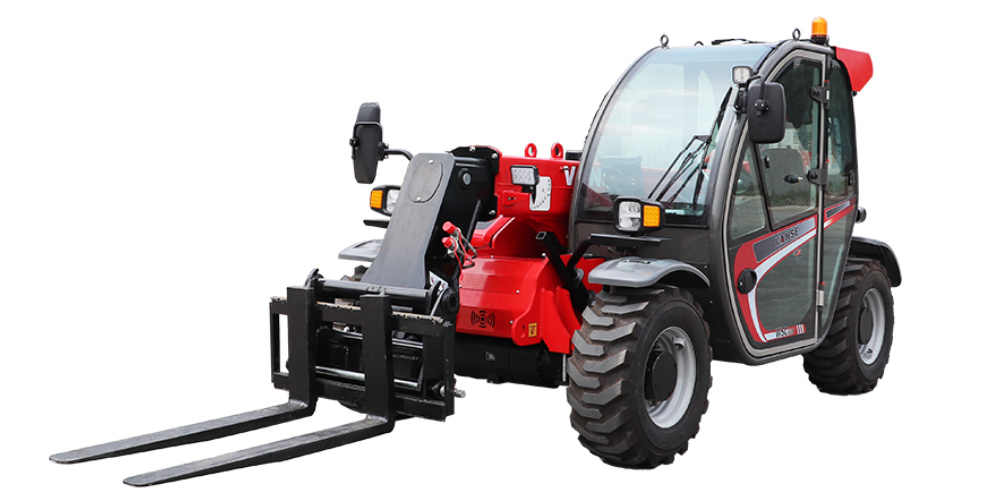
VANSE 625 6m Telescopic Handler
Designed for efficient material handling and stacking in warehouses, factories, and confined job sites, offering compact maneuverability and reliable performance.

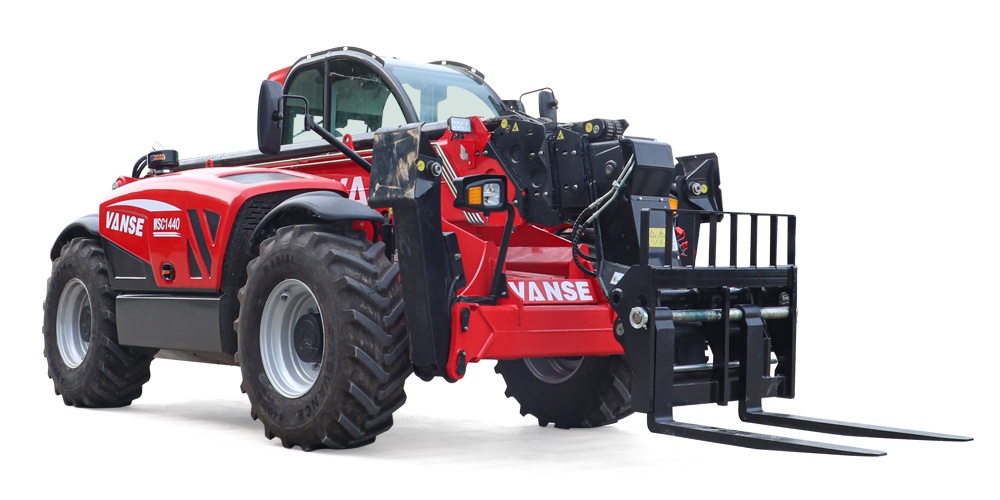
VANSE 735 7m Telescopic Handler
A balanced mid-duty solution for construction, agriculture, logistics, and warehousing, combining stable lifting, strong traction, and everyday versatility.


About the Author:
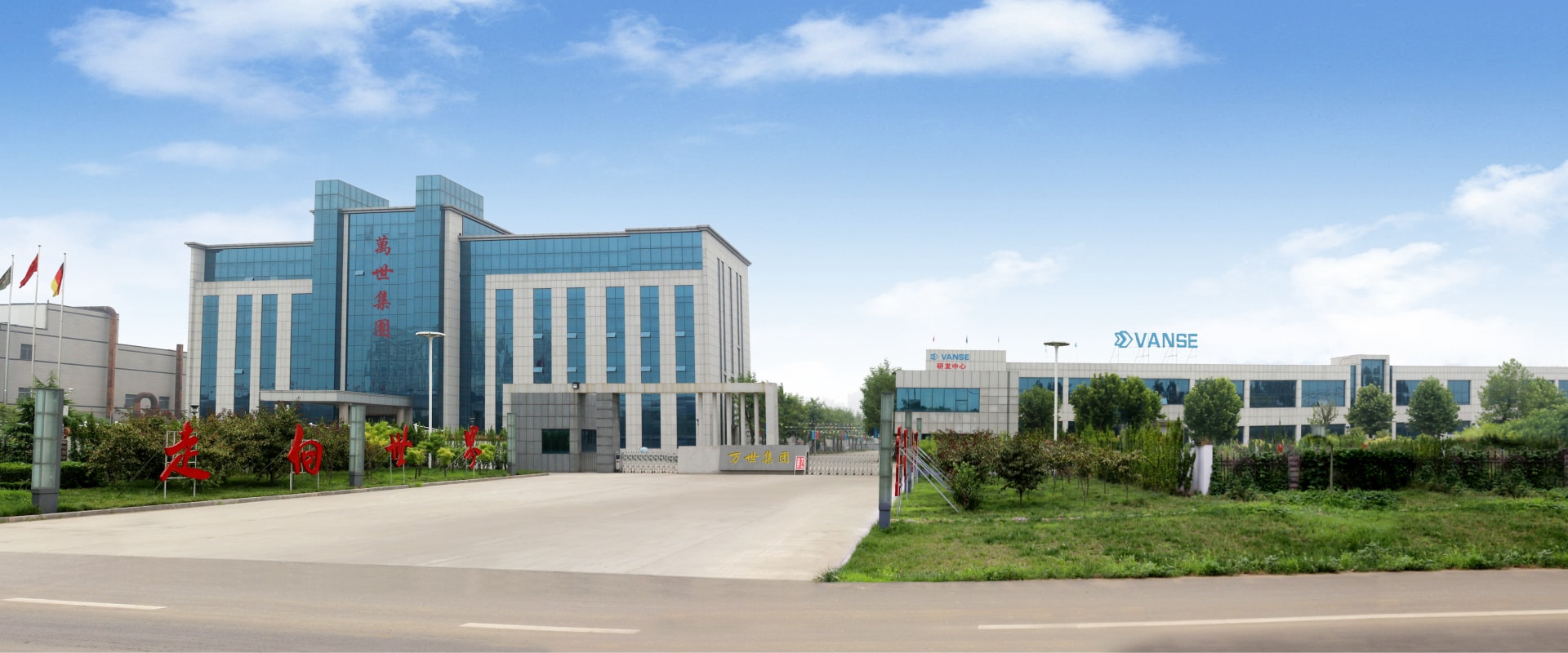
The VANSE team is a group of experienced professionals specializing in construction machinery research, manufacturing, and technical support. With deep industry knowledge and hands-on experience, our engineers and product specialists share practical insights on equipment selection, operation, maintenance, and industry trends.
Share
You May Also Interest
-

April 3, 2026
Telehandler Capacity Chart: Full Guide
Use this telehandler capacity chart guide for the United States to compare lift classes, applications, suppliers, safety limits, and 2026 buying trends.
-

April 2, 2026
Telehandler for Framing: Structure Guide
Discover telehandler for framing options in the United States, including suppliers, jobsite uses, buying tips, and service support for builders.
-

April 1, 2026
Telehandler vs Truck Mounted Crane
Compare telehandler vs truck mounted crane in the United States with costs, applications, suppliers, service coverage, and 2026 buying trends.
-

March 30, 2026
Telehandler for Farming: Productivity
Find the best telehandler for farming in the United States with supplier comparisons, farm applications, buying tips, and service insights for 2026 planning.