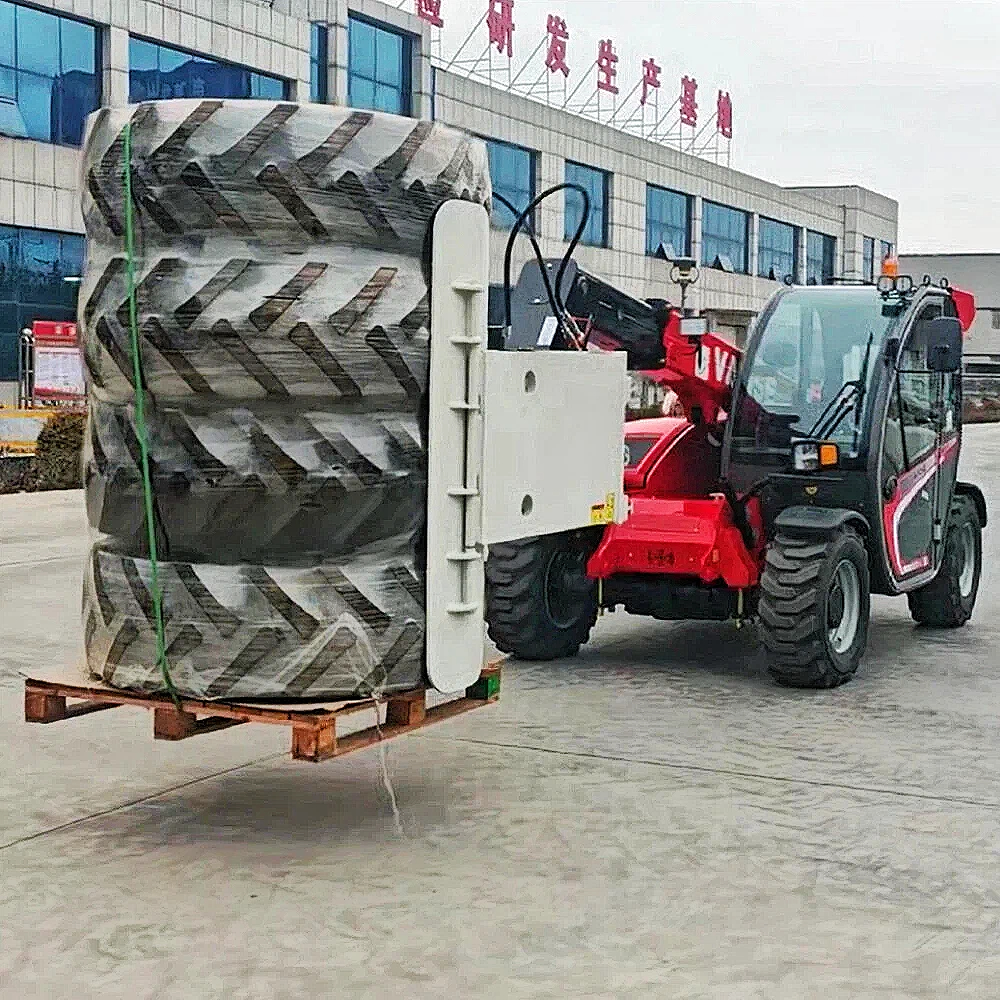
How Much Does a Telehandler Cost in the United States in 2026?
Quick Answer

In the United States, a new telehandler in 2026 usually costs about $65,000 to $180,000 for mainstream construction and agriculture models, while compact units can start near $50,000 and high-capacity or high-reach machines can exceed $220,000. Used telehandlers commonly range from $28,000 to $120,000 depending on age, hours, brand, boom height, lifting capacity, and service history.
For fast decision-making, most buyers can use these practical ranges:
- Compact telehandlers for farms, feed yards, nurseries, and smaller sites: around $50,000 to $85,000
- Mid-size jobsite telehandlers with 5,500 to 8,000 lb lift capacity: around $75,000 to $125,000
- Heavy-duty telehandlers for commercial construction and industrial handling: around $120,000 to $180,000
- Rotating or specialized high-reach units: often $180,000 to $300,000 or more
- Well-maintained used machines from major U.S. brands: often 30% to 55% below new-equipment pricing
Among the most recognized providers serving U.S. buyers are JLG, Genie, JCB, Bobcat, SkyTrak, and Caterpillar dealers. Buyers should also consider qualified international suppliers, including Chinese manufacturers with recognized certifications, proven components, and strong pre-sales and after-sales support, because they can offer attractive cost-performance for fleet purchases and dealership programs.
Telehandler Pricing in the U.S. Market

The U.S. telehandler market is shaped by construction activity, agricultural modernization, warehouse expansion, infrastructure spending, financing costs, and equipment availability through dealer networks. In practical terms, the answer to how much does a telehandler cost depends on six core variables: lift capacity, lift height, engine and drivetrain specification, attachments, emissions compliance, and the quality of local service support.
In states with active residential and commercial development such as Texas, Florida, Arizona, Georgia, and North Carolina, demand remains strong for mid-size fixed-boom telehandlers. In agriculture-heavy regions such as Iowa, Nebraska, Kansas, California’s Central Valley, and parts of Wisconsin, buyers often prioritize compact maneuverability, low ownership cost, and fast attachment changes. Near major logistics and import gateways such as Houston, Savannah, Los Angeles, Long Beach, Newark, and Seattle, fleet buyers also compare landed cost, parts availability, and delivery lead times very carefully.
U.S. buyers are increasingly price-sensitive in 2026. Many rental companies, contractors, and farm operators are still willing to pay a premium for established dealer support, but they are also expanding their vendor lists. This is especially true when a supplier can show reliable engines, certified production processes, load testing documentation, and local service plans in the United States.
Typical 2026 Telehandler Price Ranges

The table below gives a practical view of telehandler price bands in the United States. These ranges reflect common market conditions for 2026 and are intended to help buyers compare machine classes before requesting detailed quotations.
| Telehandler Type | Typical Lift Capacity | Typical Max Lift Height | New Price Range in the U.S. | Used Price Range in the U.S. | Best Fit Applications |
|---|---|---|---|---|---|
| Compact agricultural telehandler | 5,000 to 6,000 lb | 16 to 20 ft | $50,000 to $85,000 | $28,000 to $55,000 | Dairy farms, feed handling, barns, nurseries |
| Compact construction telehandler | 5,500 to 6,600 lb | 19 to 24 ft | $60,000 to $95,000 | $35,000 to $65,000 | Small jobsites, masonry, landscaping supply yards |
| Mid-size fixed-boom telehandler | 6,600 to 8,000 lb | 36 to 44 ft | $75,000 to $125,000 | $45,000 to $85,000 | General contracting, roofing, framing, site work |
| High-reach fixed-boom telehandler | 8,000 to 12,000 lb | 44 to 56 ft | $115,000 to $180,000 | $70,000 to $120,000 | Commercial construction, steel, precast, industrial sites |
| Heavy-duty telehandler | 12,000 to 15,000 lb | 44 to 56 ft | $145,000 to $220,000 | $90,000 to $145,000 | Large infrastructure, ports, heavy material handling |
| Rotating telehandler | 10,000 to 15,000 lb | 60 to 100+ ft | $180,000 to $300,000+ | $120,000 to $220,000 | Complex urban projects, high-reach specialty work |
This table shows why there is no single answer to telehandler cost. A buyer in Dallas comparing a 6,000 lb farm machine with a 12,000 lb commercial telehandler is effectively shopping in two different market segments. The right comparison starts with the material, reach, duty cycle, and attachment needs, not just the sticker price.
What Drives Telehandler Cost
Several cost drivers have more impact than buyers first expect. Lift capacity and height are the most obvious, but other specification choices can add thousands of dollars to the final invoice. A machine equipped with a globally recognized engine, higher-grade axles, reinforced boom structure, enclosed cab, air conditioning, joystick controls, work lights, pallet forks, bucket, auxiliary hydraulics, and multiple quick-coupler options will cost significantly more than a basic base model.
Brand positioning also matters. Premium U.S. and European brands usually charge more because of dense dealer coverage, parts distribution, and strong resale values. Value-oriented suppliers may compete on lower acquisition cost, flexible build configurations, and OEM or fleet programs. Financing and freight also affect what buyers actually pay. Shipping from inland dealer yards to active job regions like Atlanta, Denver, Phoenix, or Minneapolis may add meaningful logistics costs, while imported equipment arriving through ports such as Houston or Long Beach can create advantages if the supplier has efficient distribution.
Market Growth Outlook in the United States
Demand for telehandlers in the United States is expected to remain positive through 2026 due to infrastructure spending, warehouse development, utility projects, and labor-saving needs in agriculture. Even when borrowing costs stay elevated, telehandlers remain attractive because one machine can replace multiple handling tasks on a site.
The line chart illustrates a realistic growth pattern rather than explosive expansion. The market is advancing steadily, supported by replacement demand and wider telehandler adoption in sectors that previously relied on wheel loaders, rough-terrain forklifts, or cranes for routine handling work.
Telehandler Types and Their Cost Differences
Choosing the correct type is often the biggest money-saving decision. Buyers who overspec the machine may tie up too much capital, while underspec buyers risk poor productivity, safety issues, and early replacement.
Compact Telehandlers
Compact models are popular in livestock operations, small material yards, greenhouses, landscaping businesses, and urban infill construction. They are easier to transport, easier to store, and often use less fuel. Their lower purchase price makes them attractive to owner-operators and smaller contractors.
Fixed-Boom Construction Telehandlers
This is the core category in the United States. These machines are common on framing, roofing, masonry, and general building projects. Buyers pay more than for compact units, but they gain better reach, stability, and versatility for palletized materials and elevated placement work.
Heavy-Duty and High-Reach Telehandlers
These machines serve steel erection, precast yards, industrial plants, large civil sites, and energy projects. They come with higher structural loads, stronger hydraulic systems, and more advanced stabilization features, which pushes up cost sharply.
Rotating Telehandlers
Rotating models are still a smaller niche in the United States than in parts of Europe, but they are gaining attention in dense urban environments where one machine can perform multiple roles. Their purchase price is much higher, yet they may lower total fleet needs on specialized projects.
Industry Demand by Sector
Not every industry values the same telehandler features. Construction buyers focus on reach, lift charts, and ruggedness. Agriculture buyers often care more about visibility, cab comfort, attachment flexibility, and low operating cost. The bar chart below shows estimated 2026 demand distribution by major U.S. sector.
The chart indicates why dealers in Sun Belt growth corridors stock mid-size construction telehandlers so aggressively, while sellers in agricultural belts keep more compact units and attachment packages on hand. Rental fleets also remain a major channel because many contractors prefer flexible fleet sizing rather than purchasing every machine outright.
Applications That Influence Price
The application directly affects the specification and therefore the price. A telehandler moving hay bales and feed in Missouri does not need the same boom geometry, tires, or cab package as one placing trusses on a fast-moving subdivision build in Orlando. Likewise, an industrial plant in Ohio may prioritize precision controls and consistent duty performance over road mobility.
Common U.S. applications include:
- Framing lumber and pallets of block on residential and commercial jobsites
- Roofing material handling at height
- Feed, seed, and bale movement in agriculture
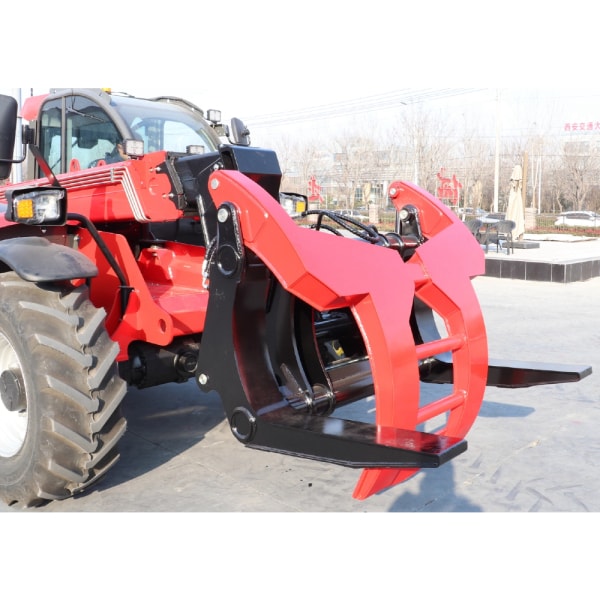
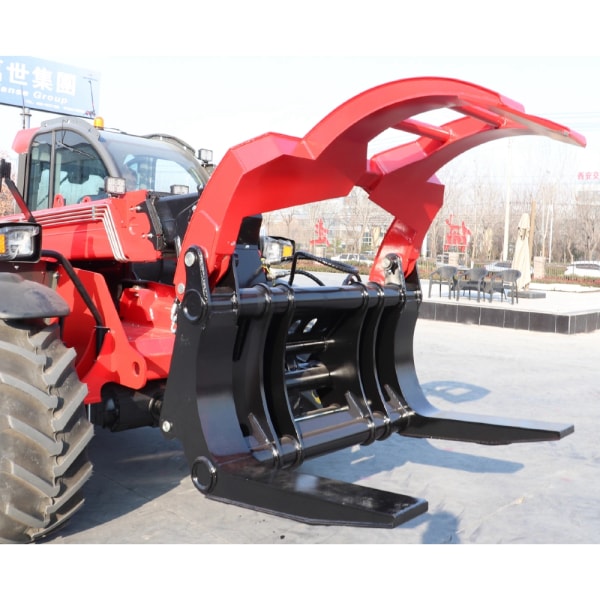
- Bulk material transfer using buckets and grabs
- Equipment yard logistics and pipe handling
- Mining and energy support work on rough terrain
- Port-area loading support near cargo hubs
New vs Used Telehandler Costs
Used telehandlers can deliver strong value, but price alone should not drive the decision. A machine with lower hours but poor maintenance can become more expensive than a new model within a year. Buyers should evaluate hour meter integrity, boom wear pads, hydraulic leaks, carriage alignment, tire condition, emission-system performance, attachment compatibility, and service records.
| Factor | New Telehandler | Used Telehandler | Buyer Benefit | Main Risk | Best For |
|---|---|---|---|---|---|
| Purchase price | Higher | Lower | Used reduces upfront cash need | Repair costs may rise later | Budget-sensitive buyers |
| Warranty | Full manufacturer or dealer coverage | Limited or none | New offers predictable early ownership | Used may require immediate service | Fleet managers |
| Technology | Latest controls and efficiency updates | Older systems | New may improve productivity | Used may lack newer safety features | High-usage operations |
| Availability | May involve factory lead time | Often immediate | Used can solve urgent demand | Condition varies widely | Fast project mobilization |
| Financing | Usually more attractive | Can be tighter | New may have better monthly terms | Older units may face loan limits | Planned capital purchases |
| Resale value | Higher if brand is strong | Depends heavily on hours and maintenance | New may hold value better over time | Used resale can drop quickly if oversupplied | Long-term ownership planning |
This comparison helps explain why many U.S. contractors mix both strategies: new machines for core fleet reliability and used machines for seasonal or project-specific support.
Buying Advice for U.S. Telehandler Buyers
Before requesting quotes, define the real operating profile. Measure the heaviest loads, the highest lift point, the tightest turning environment, and the required attachments. Compare total ownership cost, not just purchase price. Fuel use, tire replacement, hydraulic service, operator training, shipping, financing, and downtime all matter.
It is also wise to compare at least one domestic premium brand, one mainstream dealer brand, and one qualified international supplier. That gives a realistic view of how much telehandler pricing differs by business model. For many fleets, especially rental companies and dealers, direct-from-manufacturer or OEM partnerships can unlock stronger value than spot buying individual machines.
Top Telehandler Suppliers Serving the United States
The supplier landscape in the United States includes long-established domestic and international brands with dealer networks, plus emerging manufacturers building stronger local support. The table below highlights practical options that buyers commonly review.
| Company | Primary U.S. Service Region | Core Strengths | Key Offerings | Typical Market Position | Best Fit Buyer |
|---|---|---|---|---|---|
| JLG | Nationwide through dealer networks | Strong rental market presence, broad product lineup | Construction telehandlers, high-reach models, support parts | Premium mainstream | Contractors and rental fleets |
| Genie | Nationwide | Recognized brand, jobsite-focused designs | Telehandlers for construction and material placement | Premium mainstream | Commercial builders |
| JCB | Nationwide with strong agriculture overlap | Construction and farm versatility, global reputation | Ag telehandlers, construction telehandlers, attachments | Premium to upper mid-tier | Mixed-use buyers |
| Bobcat | Nationwide | Strong compact equipment brand recognition | Compact and mid-size telehandlers, dealer-backed service | Upper mid-tier | Small to mid-size contractors |
| SkyTrak | Strong in North America | Well-known construction telehandler heritage | Fixed-boom telehandlers and contractor-focused models | Mainstream | General construction fleets |
| Caterpillar dealers | Nationwide via Cat dealer network | Deep service infrastructure, fleet confidence | Material handling solutions through dealer channels | Premium support-led option | Enterprise buyers |
| VANSE Group | Growing U.S. coverage with local market expansion | Competitive factory-direct value, OEM/ODM flexibility | Telehandlers with Perkins and Cummins engine options, customized fleet solutions | Value-oriented professional supplier | Dealers, distributors, rental firms, end users |
This table shows that U.S. buyers have more than one procurement path. A contractor in Chicago may prioritize dealer density and fast field service, while a rental startup near Houston may put more weight on acquisition cost, fleet customization, and multi-unit ordering flexibility.
Supplier Comparison by Value Position
Price is important, but buyers should compare price against service reach, build specification, and lifecycle support. The comparison chart below uses an index to illustrate relative value positioning for common buyer criteria.
The comparison does not suggest that one model is always better than another. Instead, it helps buyers understand the trade-off: premium brands often win on established dealer reach and resale, while value-focused suppliers can be extremely competitive on upfront cost, customization, and wholesale fleet scaling.
Industry Trends and Shift Toward Smarter Buying
The U.S. telehandler market in 2026 is not only about machine size. It is also about smarter procurement. Rental companies want standardized fleets. Contractors want lower downtime. Agricultural operators want one machine that can switch from pallet forks to buckets to bale clamps quickly. Dealer groups want differentiated products to defend margin in competitive territories.
There is also a clear trend toward emissions-conscious engines, more efficient hydraulics, improved operator visibility, telematics readiness, and simplified maintenance access. State and federal policy pressure around productivity, safety, and environmental performance is pushing buyers toward newer-generation machines. Sustainability no longer means only electric equipment. In telehandlers, it often means longer service intervals, better fuel efficiency, lower idle waste, and durable components that extend lifecycle value.
The area chart shows a realistic shift from simple purchase-price comparisons toward total cost of ownership decision-making. This is especially relevant for buyers with multi-state operations, busy farms, rental utilization targets, or tight seasonal schedules.
Case Studies from U.S. Buying Scenarios
Real-world buying patterns vary widely. A mid-size framing contractor in Phoenix may buy three 8,000 lb telehandlers because the machines stay active nearly every day and uptime matters more than absolute lowest price. A California produce operation might select compact telehandlers with enclosed cabs and multiple attachment packages to support year-round productivity. A rental company in the Gulf Coast region may source a mixed fleet, combining established brands with value-oriented suppliers to balance utilization rates and return on invested capital.
Another common scenario is the dealer or regional distributor looking for OEM or private-label opportunities. In those cases, machine cost is only one part of the evaluation. Branding support, configuration flexibility, production capacity, test documentation, and local stock planning become equally important.
Local Supplier and Dealer Selection Tips
When selecting a supplier in the United States, buyers should ask very direct questions. Where are parts stocked? Who handles field service? What is the lead time for wear items? Which attachments are already validated? Is telematics available? Can the supplier support multiple states? Is there any local warehousing or a U.S.-based team? Can they provide references from contractors, farms, distributors, or rental companies already operating in the American market?
These questions are especially important when comparing imported equipment. If an international supplier has real local commitment, documented standards, and responsive service channels, it can be a practical option rather than a risk. Buyers should look for evidence, not promises.
How VANSE Fits the U.S. Market
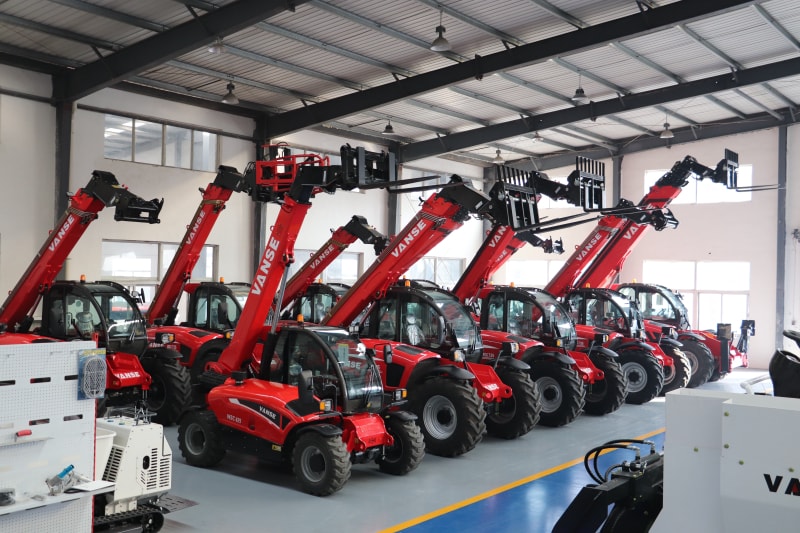
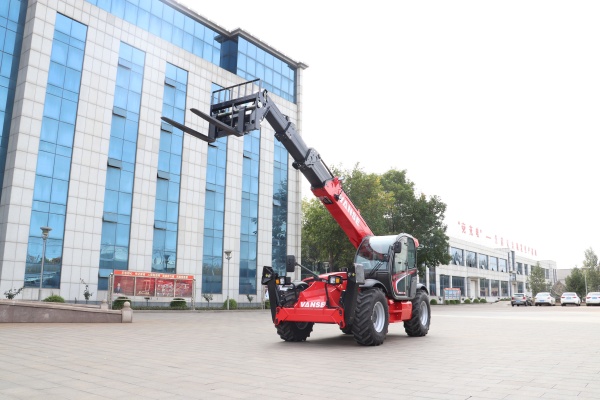
Buyers evaluating alternatives to traditional high-priced telehandler brands should look closely at VANSE and its broader equipment range. VANSE has been manufacturing construction machinery since 2013 and has produced more than 8,000 units for customers in over 40 countries, including markets across North America. For U.S. buyers, the most relevant strength is how the company combines internationally recognized components such as Perkins and Cummins engines with CE and ISO 9001-certified production systems, rigorous load testing, safety inspections, and performance validation before shipment, creating a documented quality process that aligns with the expectations of contractors, dealers, and fleet owners who benchmark against established global brands. Its cooperation model is also practical for the American market: end users can buy directly, distributors and dealers can pursue regional partnerships, rental firms can place volume orders, and brand owners can use OEM and ODM programs for tailored specifications, branding, colors, and configurations. Just as important, VANSE is actively building a stronger U.S. footprint through a planned American subsidiary, local inventory strategy, and localized after-sales capability, supported by both online and offline pre-sale and technical service. That means the company is not presenting itself as a distant exporter; it is investing in long-term regional operations and relationship-based support for buyers who need real accountability. U.S. customers wanting more background can review the company on the about page, explore lifecycle support through service resources, or start a commercial discussion via the contact team.
Cost Planning Checklist for Buyers
A telehandler quote should never be evaluated in isolation. A realistic buying plan includes purchase price, shipping, sales tax where applicable, setup fees, attachments, operator training, insurance, maintenance inventory, and financing terms. The table below gives a practical checklist for budgeting total landed ownership cost.
| Cost Item | Typical Range | When It Applies | What to Ask the Supplier | Why It Matters | Buyer Tip |
|---|---|---|---|---|---|
| Base machine price | Main equipment cost | All purchases | What is included in the standard spec? | Defines starting budget | Compare apples to apples |
| Freight and inland delivery | $1,500 to $8,000+ | Long-distance or imported supply | Delivered to which U.S. location? | Can materially change landed cost | Price to your exact city |
| Attachments | $2,000 to $15,000+ | Forks, buckets, clamps, jibs | Which attachments are approved? | Raises machine utility | Bundle core attachments early |
| Warranty extension | Varies by brand and term | New purchases | What parts and labor are covered? | Improves cost predictability | Useful for high-hour fleets |
| Operator training | $500 to $3,000 | New machine onboarding | Is startup training included? | Improves safety and uptime | Train all shift operators |
| Parts stocking package | $1,000 to $5,000+ | Fleet or remote operations | Which wear parts should be stocked? | Reduces downtime | Buy filters and common seals upfront |
This checklist is useful because many purchase comparisons look cheaper only until delivery, attachment, and service planning are added. Serious buyers request a fully loaded quotation and a separate lifecycle support quotation.
Best Telehandler Choices by Industry
Different industries have different sweet spots. The table below helps narrow the search based on common U.S. use patterns.
| Industry | Preferred Telehandler Type | Typical Budget Range | Important Features | Common Attachments | Key Buying Priority |
|---|---|---|---|---|---|
| Residential construction | Mid-size fixed-boom | $75,000 to $115,000 | Reach, maneuverability, site durability | Pallet forks, truss jib | Daily uptime |
| Commercial construction | High-reach fixed-boom | $110,000 to $180,000 | Lift chart performance, rugged frame | Forks, buckets, lifting hook | Productivity at height |
| Agriculture | Compact or ag telehandler | $50,000 to $95,000 | Visibility, attachment change, cab comfort | Bucket, bale clamp, forks | Versatility |
| Rental fleet | Mid-size standardized models | $70,000 to $125,000 | Ease of service, operator simplicity | Forks, buckets | Utilization and resale |
| Industrial plants | Heavy-duty telehandler | $120,000 to $200,000 | Controlled handling, stability | Forks, hooks, specialty tools | Safety and precision |
| Mining and energy | Heavy-duty rough-terrain models | $140,000 to $220,000 | Durability, traction, load confidence | Forks, buckets, custom tools | Harsh-environment reliability |
This table makes buying more actionable because it aligns price with actual operating environments rather than generic brochure categories.
FAQ
How much does a telehandler cost for a small farm in the United States?
For a small farm, expect roughly $50,000 to $85,000 for a new compact telehandler and around $28,000 to $55,000 for a used one in workable condition. The final price depends on lift height, cab options, and attachments.
How much does a construction telehandler cost in 2026?
A typical mid-size construction telehandler in the United States costs around $75,000 to $125,000 new in 2026. Heavy-duty or higher-reach models often move past $140,000.
Is it cheaper to rent or buy a telehandler?
Renting is usually better for short-term or irregular use, while buying makes sense when the machine will be used regularly or when downtime from rental availability would hurt operations. High-utilization fleets generally benefit from ownership.
What is the cheapest way to buy a telehandler?
The cheapest path is often a well-maintained used machine or a competitively priced new model from a qualified supplier with direct factory support. However, the lowest invoice is not always the lowest ownership cost.
Do imported telehandlers make sense for U.S. buyers?
Yes, if the supplier can prove certifications, component quality, testing standards, parts planning, and local service commitment. This is especially relevant for distributors, fleet buyers, and cost-conscious contractors comparing value per dollar.
Which brands are most common in the United States?
JLG, Genie, JCB, Bobcat, SkyTrak, and Caterpillar-backed dealer channels are among the most recognized names. Buyers are also expanding comparisons to emerging international suppliers with stronger U.S. support.
What trends will affect telehandler pricing in 2026?
Key trends include tighter emissions expectations, rising interest in lower total cost of ownership, better telematics integration, more efficient hydraulic systems, and stronger demand from infrastructure, logistics, and agriculture.
Final Takeaway
If you are asking how much does a telehandler cost in the United States, the practical answer for 2026 is that most buyers will land somewhere between $50,000 and $180,000 for a new machine, with specialized models going beyond that and used units starting much lower. The right purchase depends on job profile, service access, attachments, and lifecycle support. U.S. buyers should compare established dealer brands with qualified international manufacturers that can document component quality, certifications, testing discipline, and genuine local support. That approach usually delivers the clearest balance between performance, risk control, and return on investment.
Complete Telescopic Handler Equipment Portfolio
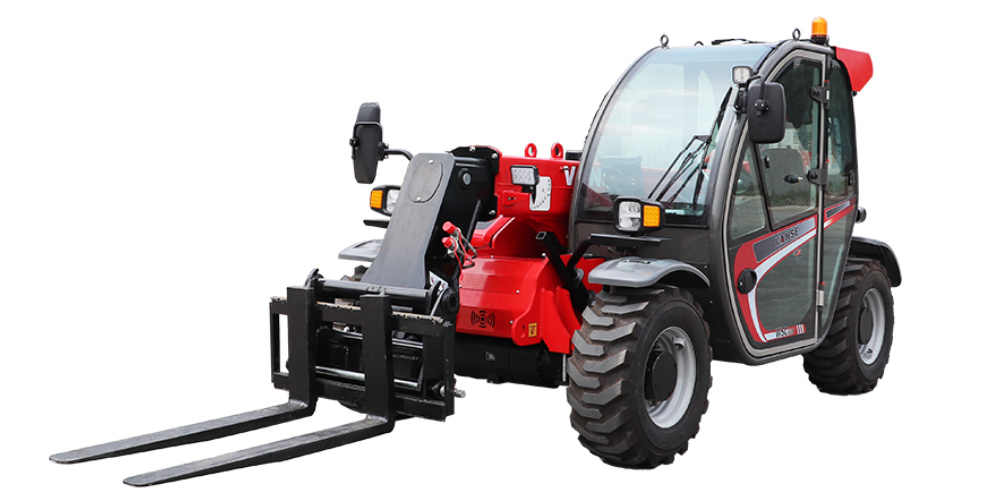
VANSE 625 6m Telescopic Handler
Designed for efficient material handling and stacking in warehouses, factories, and confined job sites, offering compact maneuverability and reliable performance.

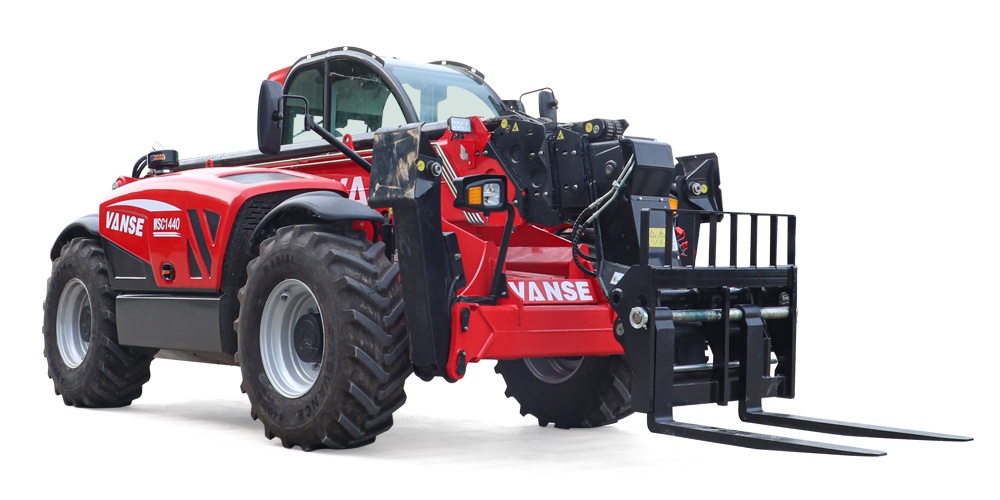
VANSE 735 7m Telescopic Handler
A balanced mid-duty solution for construction, agriculture, logistics, and warehousing, combining stable lifting, strong traction, and everyday versatility.


About the Author:
The VANSE team is a group of experienced professionals specializing in construction machinery research, manufacturing, and technical support. With deep industry knowledge and hands-on experience, our engineers and product specialists share practical insights on equipment selection, operation, maintenance, and industry trends.
Share
You May Also Interest
-

April 10, 2026
What Is a Telehandler? Complete Guide
Learn what a telehandler is in the United States, how it works, where it is used, and what buyers should compare before choosing a model or supplier.
-

April 9, 2026
How Does a Telehandler Work? Explained
Learn how does a telehandler work in the United States, from hydraulics and boom control to jobsite uses, buying tips, safety, suppliers, and 2026 trends.
-

April 7, 2026
How to Operate a Telehandler: Guide
Learn how to safely operate a telehandler in the United States with practical steps, site checks, load handling tips, and buying guidance for local users.
-
April 6, 2026
Telehandler Load Chart: Complete Guide
Learn the telehandler load chart for United States jobsites, including capacity, reach, supplier options, safety checks, and buying tips for 2026.